Grandstream HT813 Hybrid ATA for PSTN and VoIP Integration in Dubai & UAE
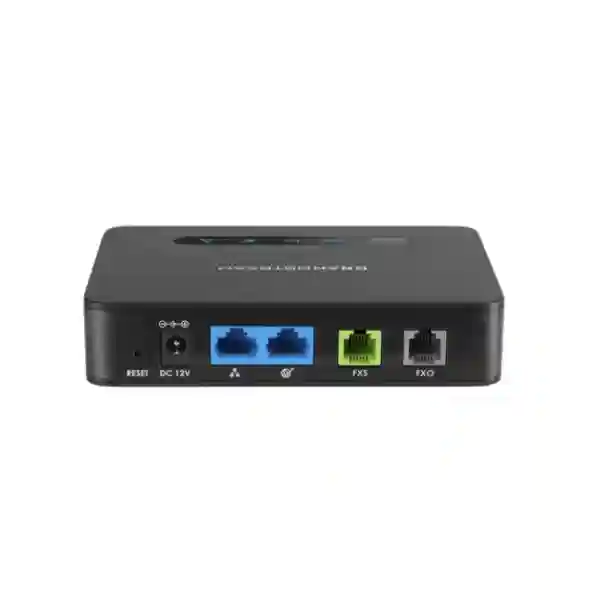
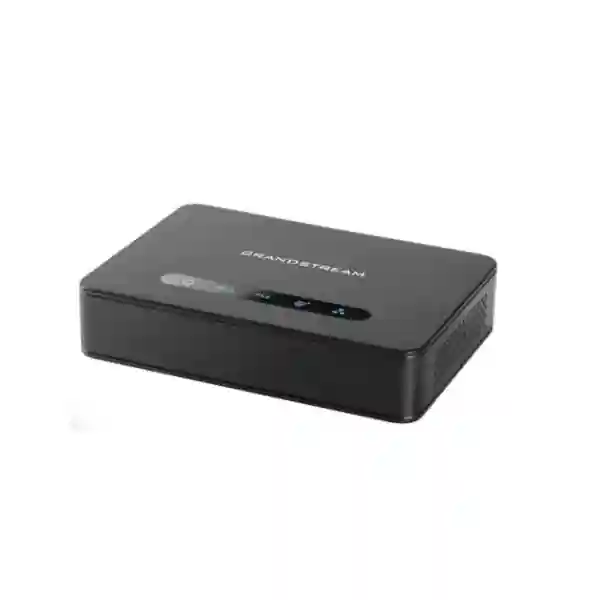
The Grandstream HT813 is a hybrid analog telephone adapter designed for situations where a business, branch, remote office, home office, service provider, or technical integrator needs to connect one analog phone or fax device to VoIP while also retaining access to one traditional PSTN line. Unlike a basic single- or multi-FXS ATA, the HT813 combines one RJ11 FXS interface, one RJ11 FXO interface and IP networking in the same compact device. That architecture makes it particularly useful when the requirement is not simply “convert an analog phone to SIP,” but rather “bridge analog, IP and PSTN services with controlled routing and a practical fallback path.”
Fourteck can assist customers evaluating the HT813 for Dubai and UAE deployments where an existing analog endpoint must remain usable during a VoIP migration, where a PSTN line needs to be exposed to an IP phone system, or where a connected analog phone should have a lifeline path through the FXO port. The correct design depends on the PBX, SIP service, PSTN line behavior, dial plan, fax requirement, network topology and security policy. For that reason, this page is structured around deployment decisions and call flows rather than only repeating a list of specifications.
The buying decision: when the HT813 is the right kind of ATA
The central question is whether you need an FXO port. An FXS port provides analog line service to a telephone, fax machine or similar endpoint. An FXO port connects to an analog PSTN line or another source that behaves like a telephone exchange line. The HT813 has both. This matters because many ATA models only provide FXS ports and therefore cannot directly terminate a PSTN line. If the project requires one analog endpoint plus one PSTN line, the HT813 addresses both sides in a single device.
A typical example is a small office moving toward SIP telephony while keeping one analog line for specific inbound calls, local services or continuity. The analog desk phone can connect to the FXS port and operate as a SIP endpoint. The PSTN line can connect to the FXO port and be used for selected outbound or inbound routing. The two functions can be configured independently enough to create a hybrid call plan, but they still need to be engineered as part of the wider PBX and network design.
Choose the HT813 when
- One analog telephone or fax device must connect to a SIP service or IP PBX.
- One analog PSTN line must also connect to the deployment.
- PSTN-to-VoIP or VoIP-to-PSTN routing is part of the required call flow.
- A local analog lifeline path is useful during a qualifying failure condition.
- A compact branch, residential or remote-site gateway is preferred over a higher-density gateway.
Consider another model when
- The project only needs FXS ports and no PSTN/FXO connectivity.
- Two, four, eight or many analog extensions are required from a single gateway.
- Several PSTN lines must be integrated; a multi-FXO gateway may be more appropriate.
- Gigabit Ethernet is a mandatory interface requirement for the ATA itself.
- The application requires functions outside the confirmed capabilities of a single-port hybrid ATA.
Understand the three networks the HT813 can connect
It is useful to view the HT813 as a bridge between three different domains rather than as a generic “VoIP box.” The first domain is the analog endpoint connected to FXS. The second is the analog PSTN line connected to FXO. The third is the IP network carrying SIP signalling, RTP media, provisioning and management traffic. Successful deployment means each domain is correctly designed and the transitions between them are deliberately controlled.
Connect one supported analog telephone or fax device. The FXS interface supplies the analog service expected by that endpoint and can register a SIP profile for VoIP operation.
Connect one analog PSTN line. The FXO function can participate in call routing between PSTN and the IP side according to configuration and PBX design.
Connect to the data network through 10/100 Mbps Ethernet. SIP, RTP, HTTPS, provisioning, VLAN/QoS and management functions operate here.
Four practical call flows to design before configuration
Most configuration mistakes happen when the installer starts entering SIP credentials before documenting how calls are expected to move. A better approach is to define the call flows first. The HT813 supports multiple hybrid scenarios, but the correct dial plan and security controls differ depending on which flow is required.
Analog phone to VoIP
In the most familiar ATA scenario, an analog telephone connected to the FXS port behaves as a VoIP endpoint. The FXS SIP profile registers to an IP PBX or SIP platform, and calls from the analog handset are converted to SIP/RTP. This is useful when an organization wants to retain a known analog telephone, fax device or legacy endpoint while moving the call-control layer to an IP system. Dial plan design remains important because certain number patterns may need different routing treatment.
Analog phone to PSTN
The connected analog phone can access the PSTN path through the FXO side when configured for that purpose. Grandstream documentation describes PSTN access from the FXS phone and supports route-to-PSTN behavior through dial-plan logic. In a production design, the installer should define exactly which numbers are allowed to leave through PSTN, whether a prefix is required, how emergency or special service numbers are handled, and how the user will recognize which route is active.
VoIP to PSTN
The FXO side can be registered to a SIP system and used as a bridge so an authorized VoIP caller can access the connected PSTN line. Grandstream provides options for staged dialing, PIN protection and one-stage dialing where supported by the SIP server and dial plan. This is a powerful capability and should not be exposed casually. The project should control which users or trunks can reach the FXO SIP identity, whether authentication is required, how destination patterns are restricted and how misuse is prevented.
PSTN to VoIP
An inbound call arriving on the analog PSTN line can be presented locally and can also be routed toward a configured VoIP destination according to the HT813 settings. Grandstream documentation describes configurable ring behavior and forwarding from PSTN toward VoIP. In a business environment, the destination should be chosen deliberately: for example, a reception extension, hunt group, auto attendant, branch user or other PBX resource. Confirm that the PBX dial plan, caller-ID handling and security policy match the intended behavior.
PSTN lifeline: useful continuity, but design it accurately
One of the most important reasons to choose the HT813 is its lifeline design. Grandstream specifies that the FXS port can be hard-relayed to the FXO port in a power-outage condition. This provides a physical path between the connected analog telephone and the connected PSTN line so the phone can still use the traditional line when the ATA itself cannot operate normally. The concept is simple, but it should not be described as a universal business-continuity guarantee.
A lifeline path is only as useful as the PSTN service feeding the FXO port. If the “PSTN line” is actually delivered by another powered gateway, modem, fiber ONT or service-provider CPE, that upstream equipment may also require power. If the analog handset itself depends on external power, its behavior should be considered as well. The correct continuity assessment therefore looks at the complete chain: telephone, HT813, local power, network equipment, upstream PSTN presentation, PBX or SIP service and any UPS systems.
For business deployments in Dubai and across the UAE, Fourteck recommends documenting the desired failure modes during design. Decide what should happen during loss of local power, loss of SIP registration, WAN failure, PBX failure and PSTN-line failure. Test the configured behavior rather than assuming every failure has the same result. A controlled failover test is more valuable than a feature checkbox.
Verified HT813 technical specifications
The following table summarizes key specifications from current Grandstream product documentation. Firmware and configuration can affect available options, so implementation details should be confirmed against the firmware version and the current Grandstream administration documentation used for the project.
| Area | HT813 specification |
|---|---|
| Telephone interfaces | One RJ11 FXS port and one RJ11 FXO PSTN line port with lifeline support. |
| Network interfaces | Two 10/100 Mbps RJ45 interfaces with integrated NAT router functionality. |
| SIP profiles | Two SIP profiles through one FXS and one FXO port. |
| Voice codecs | G.711, G.723.1, G.729A/B, G.726, iLBC and OPUS are listed in Grandstream documentation, together with jitter-buffer and echo-cancellation functions. |
| Fax | T.38 compliant Group 3 fax relay up to 14.4 kbps and G.711 fax pass-through behavior. |
| Telephony functions | Caller ID display/block, call waiting, flash, blind/attended transfer, forwarding, hold, DND and three-way conferencing. |
| QoS | Layer 2 802.1Q VLAN and 802.1p support, plus Layer 3 ToS/DiffServ/MPLS options documented by Grandstream. |
| DTMF | In-audio, RFC2833 and SIP INFO methods. |
| Security | SRTP media protection; TLS/SIPS/HTTPS controls; secure provisioning capabilities including AES encryption. |
| Provisioning | HTTP/HTTPS/TFTP and TR-069 are among the documented provisioning and control methods, with secure automated provisioning options. |
| Power | 100–240 VAC, 50/60 Hz input power adapter; 12 V / 0.5 A output specified for the unit. |
| Operating environment | 0°C to 40°C operating temperature and 10–90% non-condensing humidity in Grandstream documentation. |
| Dimensions / weight | Approximately 130.5 × 90.5 × 29 mm and 0.142 kg according to the current datasheet. |
What the FXS port contributes to a migration project
The FXS side is what allows a legacy analog endpoint to participate in a modern SIP environment. This can be valuable during phased migration because replacing every endpoint at the same time is not always practical. A branch may have a fax machine that remains operationally necessary, a reception handset that users prefer to keep, a door or intercom interface that must be assessed for analog compatibility, or a specialized endpoint whose replacement would create unnecessary project cost.
However, “analog device” does not mean “every device with an RJ11 connector.” Voltage expectations, signalling, modem behavior, caller-ID standards and application-specific timing can differ. The connected equipment should be tested against the HT813 and the SIP environment. Fax is explicitly supported by Grandstream, but even fax reliability depends on codec selection, network quality, service-provider support and whether T.38 is negotiated end to end. For unusual legacy devices, a proof of concept is a sensible procurement step.
The FXS SIP profile also means the analog phone can receive PBX features through the call-control system, but the user experience remains limited by the physical capabilities of the analog handset. An analog endpoint does not suddenly gain a graphical directory, programmable BLF keys, video, presence controls or the interface of a modern IP phone. The HT813 is best viewed as a bridge that preserves useful analog assets while the system around them becomes IP based.
What the FXO port adds that basic ATAs do not
The FXO port is the defining capability of the HT813. It connects toward an analog line source and can expose that line to the IP side. This enables a small deployment to use an existing PSTN line as part of an IP-PBX design without installing a separate multi-port analog gateway. For one-line requirements, this can simplify equipment count and make the call topology easier to understand.
The FXO function also creates more configuration responsibility. The gateway may need to detect ringing, caller ID, line disconnect conditions, busy tones, polarity changes or region-specific analog behavior. Grandstream exposes FXO tuning and call-progress parameters because PSTN characteristics can differ. Installers should avoid blindly copying values from another country or another line. A working configuration should be validated with real inbound, outbound, answered, rejected, busy and remote-party hang-up tests.
Security is equally important because an FXO gateway can become a path from an IP system to the public telephone network. Restrict access using the PBX dial plan, authentication features, network controls and the HT813 options appropriate to the deployment. If staged dialing is enabled, decide whether a PIN is required and how it will be managed. If one-stage dialing is used, validate that only permitted destinations can be passed to the gateway.
Fax over IP with the HT813
Grandstream lists T.38 fax support and G.711 fax pass-through for the HT813. T.38 is generally the preferred mechanism when the full path supports it because the fax signal is handled in a way designed for packet networks rather than treated purely as real-time audio. But successful faxing depends on more than the ATA. The SIP provider, IP PBX, trunk, remote endpoint and network all influence the result.
For a fax deployment, confirm whether the PBX and SIP trunk support T.38, whether transcoding is introduced, which codec is negotiated when pass-through is used, whether jitter or packet loss exists on the WAN and whether the fax machine itself is configured for suitable transmission parameters. A test should include more than a single one-page local fax. Use representative document lengths and destination types to evaluate reliability.
The presence of both FXS and FXO interfaces may be useful in offices that still receive or originate documents over an analog service while gradually adopting SIP for voice. The correct topology depends on whether the fax machine should use the VoIP side, the PSTN side, or conditional routing. Fourteck can help map that requirement before equipment is deployed.
Voice quality, codecs and why the network still matters
The HT813 supports a broad set of codecs including G.711, G.723.1, G.729A/B, G.726, iLBC and OPUS as documented by Grandstream. Codec support provides compatibility and lets the deployment balance voice quality and bandwidth, but selecting a codec is only one part of quality engineering. Packet delay, jitter, packet loss, queueing, WAN congestion, NAT behavior and transcoding can affect the conversation even when the endpoint configuration is correct.
For an office LAN, separate voice traffic logically where the network design supports it, prioritize RTP appropriately, avoid duplex mismatches and investigate oversubscribed uplinks. The HT813 documentation includes 802.1Q VLAN and Layer 2/Layer 3 QoS options, so it can participate in a structured voice network. Those settings must align with the switch, router, firewall and PBX rather than being configured in isolation.
For remote sites using broadband, LTE/5G routers, wireless links or shared WANs, test quality during busy periods. A successful registration does not prove that the call path will remain stable when the link is congested. Monitor latency and loss, test two-way audio, verify DTMF and observe whether the network introduces SIP ALG or other transformations that interfere with signalling.
SIP registration and PBX integration
The HT813 can register its FXS and FXO functions to SIP infrastructure using separate profiles. This allows a PBX administrator to treat the analog endpoint and the PSTN gateway as distinct logical resources. In a Grandstream UCM environment, Grandstream documentation also describes integration and zero-configuration capabilities for supported deployment scenarios. With third-party SIP platforms, standard SIP settings are typically used, but interoperability should still be validated against the actual server and firmware.
A deployment worksheet should record the SIP server address, failover server if used, transport, local SIP ports, authentication identities, outbound proxy requirements, NAT traversal method, codec order, DTMF method, registration interval, caller-ID expectations and dial-plan rules. Keeping the FXS and FXO identities clearly separated avoids confusion during troubleshooting.
The HT813 supports SIP over UDP, TCP and TLS according to Grandstream documentation. Choosing a transport should follow the PBX design. TLS can protect SIP signalling when correctly implemented with certificates and compatible server settings, while SRTP can protect media where supported end to end. Encryption should be planned across the whole call path; enabling it on one hop does not automatically secure every downstream carrier or PSTN segment.
For help with the wider telephone system, customers can also review Fourteck’s IP PBX solutions in Dubai and the broader IP phone and VoIP gateway portfolio. The ATA should be selected as part of the call architecture rather than as an isolated accessory.
Security and provisioning for managed deployments
Grandstream lists SRTP for media, TLS/SIPS/HTTPS for control and management scenarios, secure provisioning, AES encryption, device certificates, TR-069 and other remote-management mechanisms for the HT813. These capabilities are useful for business and service-provider deployments, but secure operation depends on how they are configured. Default credentials, exposed web interfaces, open SIP access and unrestricted FXO calling can undermine the value of built-in security features.
Start with network segmentation. Place voice devices in an appropriate VLAN where practical, restrict management access to trusted subnets, block unnecessary inbound Internet access and use the firewall to permit only the flows required by the PBX or provider. Use strong administrative credentials and align HTTPS/TLS settings with the organization’s certificate and cryptographic policy. Keep firmware under change control rather than performing unscheduled upgrades on production gateways.
For multiple HT813 units, automated provisioning can reduce configuration drift. The goal is not simply faster setup; it is consistent policy. SIP server addresses, codec order, time settings, syslog targets, security controls and dial plans can be standardized and audited. Where TR-069 or other centralized management is used, secure the management channel and define who has authority to change telephony routing.
FXO access deserves extra attention because it can create billable or external call paths. Limit the users who can invoke PSTN routing, restrict destination patterns, apply PIN or PBX-level authorization where appropriate and review logs for unexpected call behavior. Security controls should be tested from both trusted and untrusted network positions.
Network design: WAN, LAN, NAT, VLAN and QoS
The HT813 has two 10/100 Mbps Ethernet ports and an integrated NAT router. That can be useful in simple deployments, but the device does not have to become the main router for a business site. In many managed-office environments, the cleaner design is to connect the ATA behind the existing firewall/router and let the enterprise network handle DHCP, security, VLANs, VPNs and WAN resilience. The integrated routing functions are more relevant where the topology is intentionally simple.
When the HT813 is behind NAT, verify how SIP traversal is handled. Some environments use provider-side mechanisms or SBCs, while others may use STUN or specific NAT keepalive behavior. Avoid assuming that a consumer-router SIP ALG will improve interoperability; many real-world VoIP issues come from inconsistent ALG behavior. The correct approach depends on the PBX, provider, firewall and whether signalling is local, over a VPN or across the public Internet.
VLAN tagging and QoS should match the access switch configuration. If the switch expects tagged voice traffic, ensure the HT813 VLAN parameters and port mode are consistent. If the network uses DSCP marking, confirm that the WAN equipment preserves or remaps it appropriately. QoS is only effective when the congested point honors the policy.
DNS, NTP and provisioning reachability also matter. An ATA that can reach the SIP server but not time services, firmware repositories or provisioning servers may appear healthy while management features fail. Include these dependencies in firewall rules and monitoring.
Dial-plan engineering: make PSTN routing intentional
Because the HT813 can connect both VoIP and PSTN paths, the dial plan becomes a policy engine. Define which calls should use SIP, which calls may use the PSTN line and what should happen if the primary route is unavailable. A loose dial plan can create user confusion or unwanted external calling, while an overly restrictive plan can block legitimate numbers.
Start by collecting the number patterns users actually dial: local numbers, UAE mobile numbers, international destinations, internal extensions, emergency or public-service numbers, PBX feature codes and any business-specific short codes. Then map each class to the intended route. If a PSTN access prefix is used, document it for users and support staff. If certain patterns automatically route to PSTN, test them carefully and ensure they cannot collide with internal extensions.
Inbound PSTN routing should receive the same attention. Decide whether the analog phone should ring first, whether unanswered calls should forward toward VoIP, how many rings should occur, what caller-ID information is expected and how the PBX treats the call. If the line is used mainly as a backup route, the normal and backup behavior should be clearly distinguished in the documentation.
Deployment examples for UAE organizations
Small office preserving one analog line
A professional office may migrate most users to an IP PBX while retaining one existing PSTN line. The HT813 can connect an analog phone to the FXS port and the retained line to the FXO port. The normal user experience can be SIP based, while specific number patterns or a failure policy can use the PSTN side. The key design work is the dial plan, PBX registration and failure testing.
Remote branch with local PSTN access
A remote branch may register the HT813 to a centralized PBX while using a local PSTN line for selected calls. The FXO profile can provide a gateway function back to the PBX, potentially letting authorized users reach the local line. Security controls are essential because the gateway bridges a remote public telephone resource to the IP system.
Fax transition project
An organization replacing an old PBX may still have one operational fax machine. The FXS port can integrate that device with the new SIP environment, while the FXO interface can preserve an analog-line option if the design calls for it. Test T.38 or pass-through behavior with the actual SIP trunk and destinations before removing the legacy path.
Temporary migration bridge
The HT813 can also serve as a transitional component. During a staged migration, it may bridge a legacy analog requirement into a modern PBX without forcing a full replacement on day one. Once the final architecture is stable, the organization can decide whether the analog and PSTN dependencies remain necessary.
HT813 compared with nearby Grandstream gateway choices
Selecting the correct model is primarily about port type and density. The HT813 is unusual in the HT8xx family because it combines one FXS and one FXO port. Other models may provide more FXS capacity or more FXO capacity but serve a different deployment goal. The comparison below is intended as a decision aid; always verify the current manufacturer specifications for the exact hardware revision being ordered.
| Model / family | Port emphasis | Best fit | Key buying question |
|---|---|---|---|
| HT813 | 1 FXS + 1 FXO | Hybrid analog endpoint plus one PSTN line | Do you need both an analog device port and a PSTN line port in one compact ATA? |
| HT812 family | Multiple FXS, no equivalent single FXO role | Two analog endpoints moving to SIP | Do you need two analog extensions rather than PSTN integration? |
| HT814 / HT818 families | Higher FXS density | Several analog phones or fax endpoints | Is the project mainly about connecting more analog devices to VoIP? |
| HT841 / HT881 family | Multi-FXO gateway role plus FXS capability depending on model | Several PSTN lines requiring IP gateway integration | Do you need more than one analog PSTN line presented to the IP system? |
If the requirement statement begins with “one analog phone and one PSTN line,” the HT813 is usually the model to evaluate first. If it begins with “several analog phones,” compare FXS-focused ATAs. If it begins with “several PSTN lines,” compare a dedicated multi-FXO gateway.
Installation workflow that reduces troubleshooting later
- Document the intended call flows. Write down what the FXS phone should do, what the PSTN line should do, which calls use SIP, which calls use FXO and what happens during failures.
- Record the network plan. Identify IP addressing, DHCP/static requirements, VLAN ID, gateway, DNS, NTP, PBX address, firewall rules, SIP transport and QoS policy.
- Confirm analog interfaces. Validate the device connected to FXS and the line connected to FXO. Do not assume every RJ11 source behaves identically.
- Update configuration under change control. Use a supported firmware and configuration baseline. Avoid power interruption during upgrade operations.
- Configure FXS registration. Enter the SIP identity, authentication, codec, DTMF, NAT and dial-plan settings for the analog endpoint.
- Configure FXO registration and line behavior. Add the FXO SIP account and tune PSTN settings according to the actual line and required inbound/outbound routing.
- Apply security controls. Restrict management, secure credentials, limit PSTN access and enable appropriate signalling/media protection where the PBX supports it.
- Test normal calls. Place and receive calls over the intended SIP and PSTN paths. Verify caller ID, DTMF, transfer, hold and hang-up behavior relevant to the use case.
- Test failure cases. Simulate the failures that the project expects to survive, including power and registration conditions where safe to do so.
- Save and document. Keep configuration backups, asset information, PBX extension mapping, line details and tested call-flow results.
Troubleshooting framework for HT813 projects
FXS phone has no dial tone
Check physical cabling, port assignment and whether the connected endpoint is appropriate for an FXS interface. Verify power and LED state. If local analog behavior is present but VoIP calls fail, move to SIP registration and dial-plan checks rather than treating the issue as a cabling fault.
SIP profile does not register
Confirm the server address, username, authentication ID, password, SIP transport, local and remote ports, DNS and routing. Check firewall policy, NAT traversal and whether the PBX sees registration attempts. Review the HT813 status page and PBX logs together; troubleshooting only one side can hide the actual cause.
One-way audio
One-way audio is commonly a media-path problem. Check RTP address translation, firewall rules, NAT handling, VPN routes and SBC behavior. SIP registration can be successful while RTP packets are blocked or sent to the wrong address.
PSTN call does not disconnect cleanly
Analog line disconnect supervision varies. Review busy-tone detection, loop-current, polarity reversal/wink and other FXO disconnect parameters supported by the HT813. Match them to the line behavior and test remote-party hang-up scenarios. Incorrect disconnect detection can leave the FXO port seized longer than expected.
Incoming PSTN call does not reach the expected VoIP destination
Check the FXO ring detection, number-of-rings setting, forward-to-VoIP configuration, SIP registration and the PBX’s ability to receive the resulting call. Confirm that the destination exists and that inbound routing rules do not reject it.
Fax fails intermittently
Determine whether T.38 is negotiated. Check whether the provider and PBX support the same method, whether transcoding occurs, whether the WAN has loss or jitter and whether pass-through calls unexpectedly switch codecs. Test with multiple remote fax destinations before concluding that the local fax machine or ATA is defective.
DTMF works on one route but not another
Compare DTMF methods across the FXS profile, FXO profile, PBX and trunk. In-audio, RFC2833 and SIP INFO are different mechanisms, and a mismatch can affect IVRs, PIN entry and staged PSTN dialing.
Procurement checklist before ordering the HT813
A product code alone is not enough to guarantee a successful deployment. Before requesting a quotation, collect the information below. This reduces the risk of selecting the wrong ATA class or discovering an incompatibility after installation.
- How many analog endpoints must be connected?
- How many analog PSTN lines must be integrated?
- Is the FXS device a telephone, fax machine or specialized analog device?
- Which IP PBX or SIP platform will register the device?
- Will the FXO side register as its own SIP extension or gateway identity?
- Is PSTN-to-VoIP, VoIP-to-PSTN, or both required?
- Which number patterns should use the PSTN line?
- Is fax required, and does the SIP provider support T.38?
- Is VLAN tagging required on the voice network?
- Will SIP use UDP, TCP or TLS?
- Is SRTP required and supported by the PBX/trunk?
- Does the project need centralized provisioning or remote management?
- What failure condition is the PSTN lifeline expected to address?
- Does the network topology require the HT813’s routing function, or will it sit behind the existing enterprise router?
Dubai and UAE deployment considerations
In UAE business environments, the HT813 may appear in small offices, branch migration projects, hospitality back-office systems, clinics, schools, warehouses and remote-site deployments where analog services still have a practical role. The value of the HT813 is its ability to bridge that analog requirement into an IP design without automatically forcing a high-density gateway.
Before connecting any carrier-delivered service to the FXO interface, confirm how that service is presented at the customer premises and whether it is appropriate for an analog FXO connection. Modern fixed-line services may be delivered through fiber or provider equipment even when the customer-facing port behaves like an analog line. Power-resilience expectations should take that upstream equipment into account.
For multi-office organizations, standardize the configuration rather than tuning each branch independently without documentation. A common template for SIP transport, security, codec order, VLANs, syslog and provisioning makes support easier. Keep site-specific values—such as PSTN characteristics, extension numbers and routing rules—separate from global policy.
Fourteck supports wider infrastructure planning through Fourteck UAE and Fourteck global services. Customers with regional projects can also review Fourteck resources for Uganda, Kenya and Kuwait when planning standardized communications deployments across multiple countries.
Operational handover: what support teams should receive
A gateway deployment is not complete when the first test call succeeds. Support teams should receive enough information to diagnose the system later without reverse-engineering the configuration. At minimum, the handover should identify the device, physical location, switch port, IP address or DHCP reservation, VLAN, PBX identities, FXS endpoint, FXO line description, normal call flows, backup call flows, provisioning method and firmware baseline.
Record the meaning of any dial prefixes and special routing patterns. If users must dial a code to seize the PSTN line, include that in the user guide. If certain numbers automatically use PSTN, explain why. If PSTN access is restricted by PBX class-of-service or a PIN, document the control without exposing secret credentials in an insecure location.
Logging should also be planned. PBX CDRs, SIP logs and HT813 syslog information can each contribute to troubleshooting. Ensure timestamps are synchronized through NTP so events can be correlated. When support teams report “the line failed,” accurate logs help determine whether the failure was on the analog line, SIP registration, WAN path, PBX routing or endpoint side.
Questions to ask when replacing an older analog gateway
Replacing an existing gateway should not be treated as a like-for-like hardware swap until the current behavior is documented. Older installations often contain undocumented dial-plan exceptions, carrier-specific disconnect settings, fax workarounds or PBX routes that users rely on without knowing they exist.
Before changeover, capture inbound and outbound call traces where permitted, note caller-ID formats, measure the PSTN line behavior, list all destinations using the gateway and verify whether the old device performs one-stage or two-stage dialing. Confirm whether the PBX expects the gateway to register as an extension, peer by IP, or trunk-like resource. The HT813 supports common SIP deployment patterns, but the target configuration should be designed from requirements rather than copied blindly from an unrelated model.
Plan a rollback path for important lines. If the gateway is supporting reception, emergency communication, fax or another operationally important process, schedule a test window and keep the previous connection details available until acceptance testing is complete.
HT813 configuration acceptance test
A structured acceptance test helps separate product suitability from configuration quality. The exact test cases will differ, but the following sequence covers the core hybrid functions that commonly matter.
Verify FXS and FXO SIP identities register as intended and recover after a controlled network interruption.
Place outbound SIP calls, receive inbound calls and test any required hold, transfer, DTMF and caller-ID behavior.
Test each permitted PSTN routing pattern and confirm restricted destinations remain blocked.
Confirm ringing, forwarding, caller ID and PBX delivery according to the documented route.
Test hang-up from both ends to ensure the FXO line releases reliably.
Validate the intended lifeline or fallback behavior under the agreed safe test conditions.
If required, test representative fax traffic using the configured T.38 or pass-through method.
Confirm management access is restricted and unauthorized users cannot seize the PSTN route.
Frequently asked questions about the Grandstream HT813
What is the Grandstream HT813?
The HT813 is a hybrid analog telephone adapter with one FXS port for an analog phone or fax device, one FXO port for an analog PSTN line, and IP networking for SIP-based VoIP integration. Its design allows analog, PSTN and IP call paths to coexist in a compact gateway.
What is the difference between FXS and FXO on the HT813?
FXS is the interface that provides analog telephone service to a phone or fax machine. FXO is the interface that connects toward an analog PSTN line. The HT813 includes one of each, which is why it is useful for hybrid VoIP and PSTN deployments.
Can the HT813 connect one analog phone and one PSTN line at the same time?
Yes. That is the core hardware design of the HT813: one analog endpoint can connect to the FXS port while one analog PSTN line connects to the FXO port. Configuration determines how calls are routed between those interfaces and the SIP network.
Does the HT813 support PSTN lifeline operation?
Yes. Grandstream specifies lifeline support in which the FXS port can be hard-relayed to the FXO port during a power-outage condition. The usefulness of that path still depends on the connected telephone and the upstream PSTN service remaining operational.
How many SIP profiles does the HT813 support?
Grandstream specifies two SIP profiles through the FXS and FXO ports. In practice, this lets the analog endpoint side and the PSTN gateway side participate in the SIP design as separate logical resources.
Can the HT813 be used with a Grandstream UCM IP PBX?
Yes. Grandstream provides documentation for integrating the HT813 with UCM systems and lists UCM zero-configuration support in product documentation. The exact setup depends on the UCM model, firmware and desired FXS/FXO call flow.
Does the HT813 support T.38 fax?
Yes. Grandstream lists T.38 Group 3 fax relay support and G.711 fax pass-through. End-to-end fax success also depends on the PBX, SIP trunk, network quality and remote fax path.
Does the HT813 have Gigabit Ethernet?
No. The current Grandstream documentation specifies two 10/100 Mbps RJ45 network ports. If Gigabit interfaces are a hard procurement requirement, compare other models whose network specifications match that requirement.
Can the HT813 route VoIP calls to the PSTN line?
Yes. The FXO function is designed to bridge between VoIP and the connected PSTN line, and Grandstream documents staged dialing, forwarding and one-stage dialing scenarios. Access should be restricted with appropriate PBX and gateway security controls.
Can an incoming PSTN call be forwarded to a VoIP extension?
Yes. Grandstream documents forwarding from the FXO/PSTN side toward a configured VoIP destination after the defined ring behavior. The target extension and PBX route should be tested as part of installation.
Does the HT813 support encrypted SIP and media?
Grandstream documents TLS/SIPS/HTTPS controls and SRTP media protection. Encryption must also be supported and correctly configured on the PBX or SIP platform for an end-to-end secure design.
Is the HT813 suitable when several PSTN lines are required?
Usually not as the most efficient architecture, because the HT813 provides one FXO port. If the project requires several analog PSTN lines, compare a multi-FXO gateway such as an appropriate model in Grandstream’s FXO gateway range.
What information should I provide for an HT813 quotation?
Provide the required quantity, project location, PBX or SIP platform, analog device type, PSTN line requirement, fax requirement, expected call flows and whether installation or configuration assistance is needed. Fourteck can then help confirm whether the HT813 is the correct gateway class before quotation.
Discuss your HT813 requirement with Fourteck
The Grandstream HT813 is most valuable when a project genuinely needs the combination of one analog endpoint and one PSTN line. Its FXS/FXO architecture, SIP profiles, T.38 fax support, security options, provisioning features and lifeline path make it a practical bridge between legacy telephony and an IP-based system. The important step is to design the call flow before ordering so that the gateway is selected for the right reason.
Contact Fourteck to discuss an HT813 deployment in Dubai, Abu Dhabi, Sharjah or elsewhere in the UAE. Share your PBX platform, analog endpoint, PSTN-line requirement and expected routing behavior so the technical team can help confirm compatibility, recommend an appropriate architecture and prepare a quotation based on the actual project scope.
For manufacturer reference, see the Grandstream HT813 product page and current Grandstream HT813 user documentation.




Reviews
There are no reviews yet.