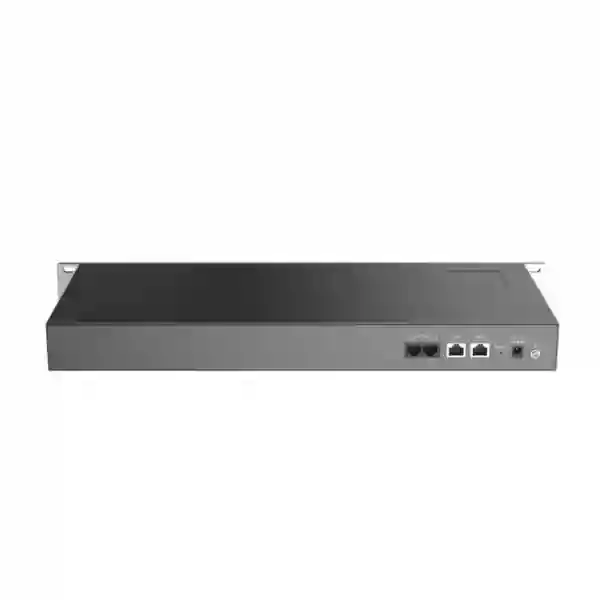
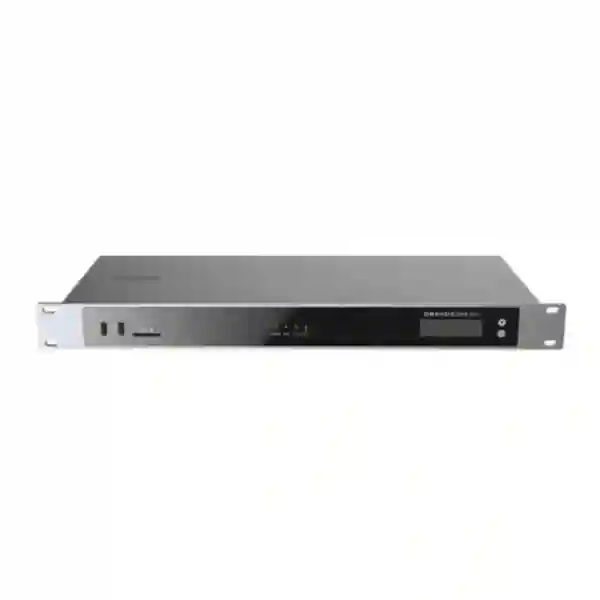
Grandstream GXW4502 Digital VoIP Gateway for UAE Business Networks
The Grandstream GXW4502 is a two-span E1/T1/J1 digital VoIP gateway designed to bridge traditional digital telephony trunks and IP-based voice systems. It is best suited to organizations that still depend on PRI or other digital carrier handoffs but need to connect those circuits to a SIP-capable IP PBX, hosted voice platform, branch communication system, or phased VoIP migration. The GXW4502 sits between the legacy and IP sides of the voice environment, helping IT teams preserve existing investments while moving call routing and communication services toward SIP.
For UAE buyers, the key purchasing question is not simply whether the unit has enough ports. The important checks are trunk type, carrier signalling, number of simultaneous calls, PBX/SIP interoperability, network design, security policy, migration plan, firmware state, and current product availability. Fourteck can help businesses in Dubai, Abu Dhabi, Sharjah and other UAE locations evaluate whether the GXW4502 remains appropriate for an installed-base requirement or whether a newer gateway platform is the better long-term choice.
Software-configurable digital interfaces for connecting supported carrier or PBX trunks.
Capacity aligned with the two-span GXW4502 model in the GXW4500 family.
Dual auto-sensing Gigabit network ports with integrated NAT functionality.
Useful where fax services must continue across an IP-based voice environment.
What problem does the GXW4502 solve?
Many organizations do not migrate from legacy telephony to VoIP in a single project. A hotel may have an older PBX that still handles room extensions while the administrative office has moved to SIP. A head office may have a carrier-provided E1 PRI circuit but wants to connect it to a modern IP PBX. A branch may be replacing its core communications platform while keeping an existing digital trunk during the transition. In these cases, a digital VoIP gateway acts as a protocol and media bridge so that legacy digital telephony and SIP-based systems can coexist.
The GXW4502 is positioned for this middle layer. On one side, it terminates supported E1, T1 or J1 digital interfaces. On the other, it participates in the IP network and exchanges VoIP traffic with compatible SIP systems. This lets a business phase a migration, extend the life of an existing digital service, connect older telephony infrastructure to new applications, or consolidate call routing without replacing every component at once.
Choose a GXW4502-class gateway when the requirement is specifically to bridge two digital E1/T1/J1 spans with SIP/VoIP and the expected call load is within the model’s supported capacity. If the project is a completely new deployment with no legacy digital requirement, or if long-term lifecycle and support are the highest priorities, compare current-generation alternatives before committing to a legacy platform.
Verified GXW4502 capabilities that matter in real deployments
| Capability | GXW4502 relevance | Buyer consideration |
|---|---|---|
| Digital interfaces | 2 software-configurable E1/T1/J1 spans | Confirm the exact carrier or PBX handoff, framing and signalling before deployment. |
| Concurrent call capacity | Up to 60 calls | Size for busy-hour traffic rather than simply counting extensions. |
| Signalling | PRI, SS7 and MFC/R2 support in the GXW4500 platform | Carrier-side parameters must match the service specification and local implementation. |
| IP networking | Dual Gigabit auto-sensing RJ45 ports with integrated NAT | Plan VLAN, addressing, routing, firewall policy and QoS as part of the voice design. |
| Fax | T.38 Fax-over-IP | End-to-end fax success also depends on SIP provider, PBX and network conditions. |
| Voice security | TLS and SRTP are supported | Certificates, SIP peer settings and security policy still need correct configuration. |
| Mounting | Rack mount or desktop | Useful for communications racks, server rooms and telecom cabinets where physical planning matters. |
GXW4502 architecture: where the gateway sits
A typical deployment has three logical layers. The first is the digital telephony side, which may be a carrier PRI/E1 service or a traditional PBX presenting a digital interface. The second layer is the GXW4502, which terminates the digital span and translates call control and media toward the IP environment. The third layer is the SIP side, where an IP PBX, SIP trunk platform, session border design, or other compatible voice system handles call routing and user services.
E1/T1/J1 span from a service provider or legacy PBX. The framing, coding, clock source and signalling values must be matched correctly.
Performs digital-to-VoIP interworking, call routing, codec handling, trunk configuration and network communication between both environments.
IP PBX, SIP provider, branch voice system or another compatible SIP platform receives and sends calls over the data network.
This architecture is especially useful when a business needs staged modernization. Instead of replacing a digital circuit, PBX, endpoints and call routing in one maintenance window, the gateway can provide an interim or long-term interconnection point. That said, every migration should still have an end-state design. A gateway can simplify coexistence, but it should not become an undocumented dependency that nobody knows how to support later.
Who should consider the Grandstream GXW4502?
The GXW4502 is not a general-purpose appliance for every VoIP installation. It is a specialist gateway for environments where digital trunk interworking is required. The most relevant buyer profiles are organizations with installed PRI/E1/T1/J1 infrastructure, telecom integrators managing migration projects, IT teams supporting mixed-generation voice networks, and enterprises with branch locations that cannot all move to SIP at the same time.
- Head offices with existing PRI service: connect a traditional digital carrier handoff to a SIP-capable IP PBX without immediately replacing the carrier circuit.
- Hotels and hospitality groups: preserve an older telephony or PMS-linked PBX while modernizing administrative voice, contact-centre or branch systems.
- Healthcare and clinics: maintain compatibility with established telephony infrastructure during a phased move to IP communications, subject to security and business-continuity design.
- Warehouses and industrial facilities: bridge legacy plant or site telephony to centralized SIP call routing without replacing every endpoint at once.
- Education and institutional campuses: integrate a legacy PBX trunk with a newer IP core while planning a staged migration across buildings.
- System integrators and telecom contractors: use the gateway as a controlled interworking point for migration, testing, temporary coexistence or replacement projects.
Call capacity: why “up to 60 calls” needs proper interpretation
The GXW4502 is the two-span model in a family where one, two and four spans correspond to 30, 60 and 120 concurrent calls respectively. For a buyer, the headline capacity is only the first sizing step. Real-world traffic depends on the number of available B-channels, call direction, carrier configuration, call routing, codec choice, SIP peer behavior and the business’s busy-hour call profile.
A company with 300 extensions may still be comfortable with far fewer than 60 simultaneous external calls, while a contact centre with 80 agents could exceed that capacity during peak periods. Extension count and trunk concurrency are different measurements. The correct design starts with actual or estimated busy-hour call concurrency, expected growth, failover strategy and whether the two digital spans are used independently, grouped, or assigned to different call routes.
For migration projects, it is also important to separate temporary coexistence capacity from the final production requirement. A gateway that is sufficient for a six-month migration bridge may not be the right long-term platform after the organization adds remote users, centralized SIP trunks, multiple branches or contact-centre traffic.
Digital trunk planning: E1, T1, J1 and signalling considerations
Grandstream’s GXW4500 documentation supports E1, T1 and J1 digital hardware types. These standards are used in different markets and environments, and the correct configuration must follow the carrier or PBX specification. E1 is widely used across Europe, the Middle East and many other regions, T1 is common in North America, and J1 is associated with Japan. The gateway also supports multiple signalling approaches, including PRI, SS7 and MFC/R2 within the documented platform capabilities.
For E1 PRI installations, the engineer may need to match parameters such as clocking, line coding, framing, D-channel configuration, switch type and whether the interface operates as network or customer-premises equipment. For T1/J1, framing and coding choices differ. MFC/R2 and SS7 deployments require additional signalling parameters and should be treated as specialist telecom work rather than a basic plug-and-play installation.
Before ordering a GXW4502 for an existing circuit, collect the provider handoff document or current PBX trunk configuration. The product model alone does not guarantee compatibility. The project should confirm physical interface, signalling, clocking, framing, coding, D-channel requirements and the SIP-side expectations of the PBX or provider.
SIP, codecs, fax and interoperability
The GXW4500 platform is designed for SIP interoperability and supports a broad selection of voice codecs, including commonly used narrowband and wideband options. Codec selection affects bandwidth, voice quality, transcoding behavior and interoperability with the connected SIP system. A migration plan should normally minimize unnecessary transcoding, keep codec policy aligned across both ends, and validate DTMF behavior, caller ID presentation, number formatting and call-progress tones.
For organizations that still depend on fax, the documented T.38 support is important. However, T.38 success is an end-to-end matter: the gateway, SIP PBX or provider, intermediate network devices and far-end route must all behave correctly. Businesses with regulated or mission-critical fax workflows should test representative destinations and failure conditions rather than assuming that enabling T.38 alone guarantees reliable delivery.
Interoperability testing should include inbound calls, outbound calls, caller ID, emergency or service numbers where applicable, transfer, hold, DTMF to IVR systems, fax if needed, busy/no-answer handling, call release behavior and recovery after WAN or SIP peer interruption. A short lab test can prevent lengthy troubleshooting after cutover.
Network and security design for a GXW4502 deployment
Voice gateways are infrastructure devices and should be treated with the same security discipline as firewalls, switches, PBXs and servers. Grandstream documents TLS and SRTP support on the GXW4500 platform, along with security controls such as configurable TLS parameters and account protection features. The presence of security features is useful, but the protection level depends on how the gateway is deployed and administered.
A sensible enterprise design places the gateway on a controlled voice or infrastructure VLAN, limits management access to trusted subnets, restricts SIP traffic to known peers where possible, uses strong unique administrative credentials, keeps firmware at an approved level, protects the web interface, synchronizes time correctly and includes the device in configuration backup and monitoring procedures. Internet exposure should be avoided unless it is explicitly required and protected by an appropriate edge-security architecture.
Grandstream’s firmware page currently lists firmware for the GXW4501, GXW4502 and GXW4504 family and includes a security notice advising users to run firmware 1.0.0.35 or later and change web-access passwords for all users after upgrading from older versions. This is a useful reminder for legacy units recovered from storage or purchased through secondary channels: never assume the device is already on a safe or appropriate firmware baseline.
- Place management interfaces behind controlled network access.
- Change default or inherited passwords before production use.
- Validate the approved firmware path before upgrading a legacy unit.
- Use TLS/SRTP only where the connected SIP platform and certificate design are correctly configured.
- Monitor gateway availability, trunk state and call failures as part of the wider voice environment.
- Document digital and SIP trunk parameters so support teams can recover the service after hardware replacement.
Physical and operational considerations
The GXW4502 is intended for rack or desktop installation. Grandstream’s documentation lists common chassis dimensions for the GXW4500 series of approximately 485 mm × 191 mm × 46.2 mm, placing the device in a 1U-style rack form factor, and lists the GXW4502 unit weight at approximately 2360 g. The documented power input uses a 12 V / 2 A adapter, with the supplied power source accepting 100–240 VAC, 50/60 Hz.
These details matter in telecom racks where space, power, grounding and cable management are often overlooked. The digital spans should be clearly labelled, the network interfaces should connect to the intended switching/VLAN design, and the gateway should be installed where technicians can safely access it without disturbing unrelated services. For high-availability environments, the design should also consider what happens if the gateway itself fails, not only whether the SIP platform is redundant.
Operational ownership is equally important. A gateway can sit quietly for years, which makes configuration drift and knowledge loss common. Maintain a current backup, record firmware version, document admin access ownership, capture carrier trunk parameters and preserve a clear topology diagram. These practices reduce outage duration far more than relying on memory during an emergency.
GXW4501 vs GXW4502 vs GXW4504
The GXW4500 family was designed around span count and concurrent-call capacity. The GXW4502 occupies the middle position, which can make it attractive for organizations that need more than a single digital span but do not require the largest four-span model. The decision should be based on current and planned concurrency, redundancy requirements, how spans are allocated and whether the project is a temporary migration bridge or a long-lived production platform.
| Model | Digital spans | Maximum concurrent calls | Typical fit |
|---|---|---|---|
| GXW4501 | 1 | 30 | Single-span legacy integration or smaller migration requirement. |
| GXW4502 | 2 | 60 | Two-span mid-size gateway requirement with greater call concurrency. |
| GXW4504 | 4 | 120 | Higher-density environments requiring more digital spans and call capacity. |
Deployment workflow recommended for business projects
Record digital trunk type, provider, span count, signalling, busy-hour traffic, PBX model, number ranges, fax use, IVR dependencies and special routing.
Identify the IP PBX or SIP peer, addressing, VLAN, QoS, codec policy, security method, failover path and ownership of call routing.
Validate that two spans and up to 60 concurrent calls meet the requirement and that the digital signalling matches the existing service.
Configure the digital interfaces, SIP trunks, routes, security settings and network parameters in a controlled maintenance process.
Test inbound, outbound, caller ID, DTMF, transfers, fax where used, failover behavior and representative international/local call patterns.
Capture the final topology, firmware, credentials ownership, trunk parameters, backup and support escalation process.
UAE deployment guidance: Dubai, Abu Dhabi, Sharjah and branch networks
In Dubai, the GXW4502 is most relevant where organizations are modernizing older office or hospitality telephony but still have a digital trunk or legacy PBX that cannot be removed immediately. Business districts with frequent office relocations and technology refreshes often need temporary coexistence between old and new platforms. A gateway can support a controlled transition if the existing circuit and signalling are properly documented.
In Abu Dhabi, larger enterprise, institutional and multi-site environments may use digital gateways as part of structured migration programs where voice services must remain available while backend platforms change. These projects typically need stronger emphasis on change control, network segmentation, call-route validation and support handover. The product should be evaluated as one component in the communication architecture rather than an isolated box.
Sharjah and Northern Emirates businesses may use a gateway to extend the useful life of an installed PBX while moving selected departments or branches to SIP. This can be cost-effective when the legacy system still performs reliably, but only if the lifecycle risk of the gateway itself is considered. A legacy gateway should not become the single undocumented point of failure for critical business calling.
Fourteck can assist with requirement assessment, compatibility checks, migration planning and quotation guidance for UAE projects. Availability should be confirmed before ordering because current market listings commonly identify the GXW4502 as a discontinued or legacy model, even though Grandstream continues to provide documentation and firmware resources for the family.
Regional project use beyond the UAE
Digital trunk migration is also common across African and GCC markets where organizations may have a mix of legacy PBXs, E1-based carrier circuits and newer SIP services. The GXW4502 can be relevant to installed-base projects in Uganda, Kenya, Tanzania, Nigeria, Ghana and Kuwait when a two-span digital-to-SIP bridge is specifically required. The same engineering rule applies in every country: verify the local carrier handoff and signalling rather than assuming that an E1 label alone is enough.
For export or multi-country rollouts, standardization should include not only hardware but also firmware baseline, configuration template, security policy, numbering plan, SIP peer settings and documentation format. A consistent deployment approach makes it easier to support gateways across branches, but local carrier differences still need to be captured per site.
For regional communication projects, Fourteck’s broader network includes Uganda, Kenya, Tanzania, Nigeria, Ghana and Kuwait. Project suitability, sourcing and lifecycle should be confirmed for each destination before procurement.
Legacy lifecycle and purchasing caution
Current reseller listings in multiple markets identify the GXW4502 as discontinued, while Grandstream still maintains product-family documentation and firmware information. For buyers, this combination means the gateway should be treated as a legacy or installed-base product unless official channel availability is confirmed. Do not assume that a product shown online is new stock, recently manufactured or covered by a particular warranty.
Legacy sourcing can still be valid when the goal is like-for-like replacement, expansion of an existing standardized deployment, or a time-limited migration bridge. In those cases, verify hardware condition, firmware state, accessory completeness, return policy, supportability and whether a compatible current-generation alternative would reduce future operational risk.
For a completely new voice project, it is usually better to compare the GXW4502 requirement against current digital gateway platforms before finalizing the bill of materials. The requirement should drive the product choice: two digital spans, approximately 60-call capacity, specific signalling, SIP interoperability, security, monitoring, lifecycle and support.
Buying checklist for GXW4502 enquiries
- Is the existing circuit E1, T1 or J1?
- How many digital spans are active today and how many will be needed after migration?
- What is the actual busy-hour concurrent call requirement?
- Which signalling type is used by the carrier or legacy PBX?
- What IP PBX, SIP trunk provider or SIP peer will connect to the gateway?
- Are fax, IVR, DTMF-sensitive applications or special number ranges involved?
- Does the network have a dedicated voice VLAN, QoS policy and secure management path?
- Is the gateway a temporary migration bridge or a long-term production dependency?
- Has current availability, product condition and lifecycle been confirmed?
- Is there a current-generation alternative that better fits the desired support horizon?
Why source and plan through Fourteck?
A digital VoIP gateway purchase is most successful when the hardware choice is tied to the real telephony requirement. Fourteck approaches GXW4502 enquiries by looking at the existing trunk, target SIP platform, concurrent-call requirement, migration sequence and lifecycle expectations rather than treating the request as a simple model lookup. This helps reduce the risk of ordering a gateway that is technically capable but unsuitable for the customer’s actual carrier or PBX configuration.
For UAE projects, Fourteck can support requirement discussions around Dubai, Abu Dhabi, Sharjah and wider branch environments. For multi-country deployments, the same methodology can be extended to regional projects where digital trunks and SIP coexist. Because the GXW4502 is a legacy model in current market listings, quotation requests should include the intended use case so that availability and suitable alternatives can be assessed together.
If you already have a GXW4502 installed and need replacement, migration or configuration guidance, provide the current firmware, digital trunk type, number of active spans, signalling, PBX/SIP peer and a brief description of the issue or upgrade objective. This gives the technical team the information needed to recommend the next practical step.
Frequently asked questions about Grandstream GXW4502
What is the Grandstream GXW4502?
The GXW4502 is a digital VoIP gateway in Grandstream’s GXW4500 family. It is designed to connect E1/T1/J1 digital telephony trunks with SIP/VoIP networks, making it useful for legacy PBX integration, PRI-to-SIP migration and mixed telephony environments.
How many E1/T1/J1 ports does the GXW4502 have?
The GXW4502 has two software-configurable E1/T1/J1 digital spans. The connected carrier or PBX settings must be matched correctly during configuration.
How many concurrent calls can the GXW4502 support?
Grandstream’s GXW4500 family maps the two-span GXW4502 to a maximum of up to 60 concurrent calls. Actual project sizing should still consider available channels, traffic pattern and SIP-side design.
Does the GXW4502 support PRI?
Yes. The GXW4500 platform supports PRI signalling as well as documented SS7 and MFC/R2 options. Exact parameters must match the digital service or connected PBX.
Can the GXW4502 connect a legacy PBX to a SIP system?
Yes, this is one of its core use cases. The gateway can provide interworking between a compatible digital PBX/trunk and a SIP/VoIP environment, subject to correct interface and signalling configuration.
Does GXW4502 support encrypted VoIP?
The GXW4500 platform supports TLS and SRTP. Secure deployment still requires correct certificates, SIP peer settings, network restrictions and administrative hardening.
Does the gateway support fax?
Yes, T.38 Fax-over-IP is supported. End-to-end fax reliability should be validated with the actual SIP provider, PBX, route and destination environment.
Is the GXW4502 still a current product?
Multiple current reseller listings identify the GXW4502 as discontinued, while Grandstream continues to host firmware and documentation for the GXW4500 family. Buyers should therefore confirm current sourcing, condition, support expectations and alternatives before ordering.
Can Fourteck help with a GXW4502 project in Dubai or the UAE?
Fourteck can assist with requirement review, compatibility questions, migration planning and quotation guidance for UAE projects. Final availability and suitability should be confirmed against the exact use case.
What information should I provide for a GXW4502 quotation?
Provide the required quantity, destination, trunk type, number of spans, signalling, target PBX or SIP platform, expected concurrent calls and whether the request is for new deployment, replacement or migration. This helps assess both compatibility and lifecycle.
Discuss your GXW4502 requirement with Fourteck
For a Grandstream GXW4502 enquiry, send the quantity, project location, digital trunk type, number of E1/T1/J1 spans, expected concurrent calls, signalling details and the SIP/PBX platform you plan to connect. Fourteck can use this information to help you evaluate compatibility, legacy sourcing risk and suitable alternatives for the project.
Reviews
There are no reviews yet.