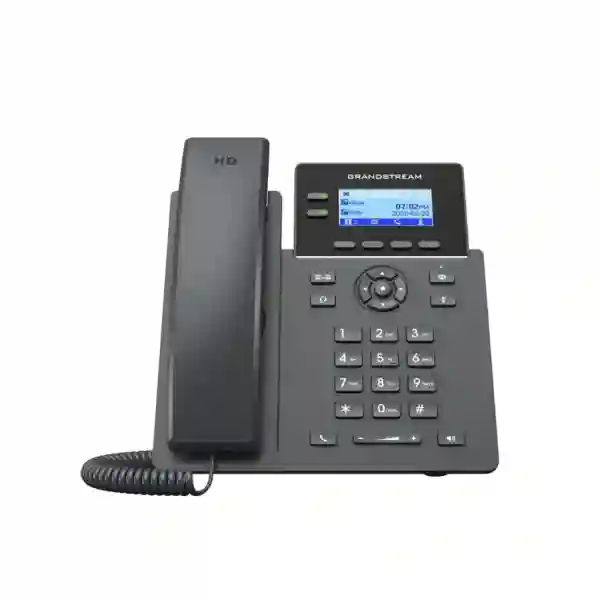
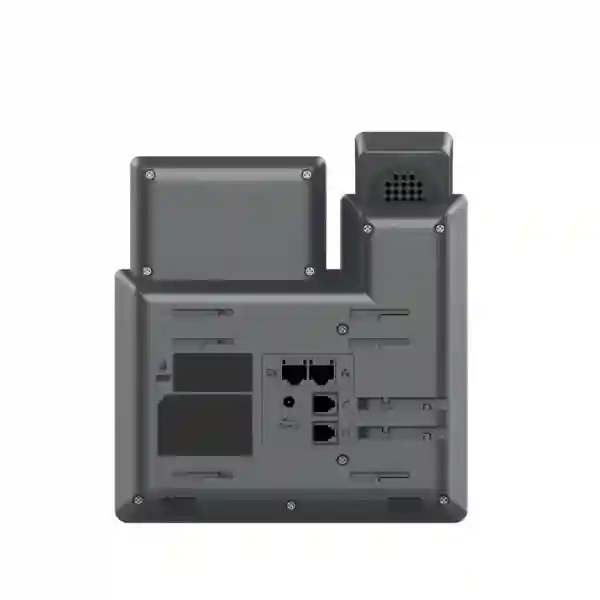
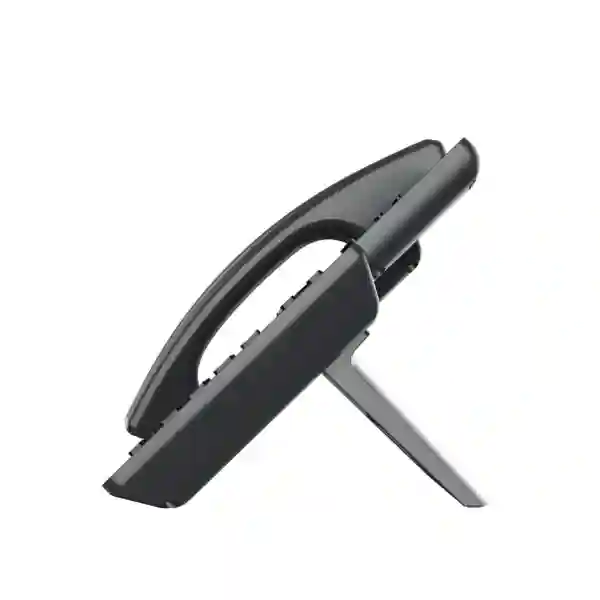
Grandstream GRP2602G IP Phone Dubai UAE
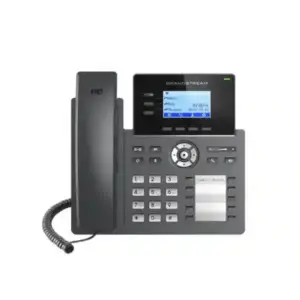
The Grandstream GRP2602G Dubai is a carrier-grade 2-line SIP desk phone designed for organizations that want a simple user experience without compromising wired network performance. Its defining difference within the GRP2602 family is the combination of dual Gigabit Ethernet ports and integrated PoE, making it suitable for modern offices where a computer may share the same network drop through the phone. The model supports four SIP accounts, HD audio, a full-duplex speakerphone, 5-way audio conferencing, Noise Shield technology, wired headset support, enterprise-oriented security controls, and centralized provisioning through Grandstream Device Management System (GDMS).
Fourteck helps businesses evaluate whether the GRP2602G is the right endpoint for their network, PBX, user profile, PoE design, VLAN policy and rollout scale. The emphasis is not simply on buying an IP phone; it is on choosing an endpoint that fits the complete voice environment across Dubai, Abu Dhabi, Sharjah and wider UAE deployments.
Quick decision: who should choose the GRP2602G?
Best fit
Desk users who need reliable SIP calling, Gigabit passthrough for a connected PC, PoE power, straightforward controls and centralized administration.
Typical environments
General offices, reception support positions, service desks, branch locations, retail, hospitality back offices, education, healthcare administration and multi-site organizations.
Choose another model when
You need integrated Wi-Fi, a larger color display, more line keys, expansion modules, Bluetooth-centric workflows or a higher-capacity executive endpoint.
GRP2602G verified technical profile
| Product family | Grandstream GRP Series carrier-grade IP phones |
|---|---|
| Lines / SIP accounts | 2 lines with support for 4 SIP accounts |
| Network | Dual switched 10/100/1000 Mbps Ethernet ports |
| Power | Integrated IEEE 802.3af PoE; power supply support also available for this variant |
| Display | 132 × 48 backlit graphical LCD |
| Audio | HD handset and full-duplex HD speakerphone with wideband codec support |
| Conferencing | Up to 5-way local audio conferencing |
| Headset | RJ9 headset interface with EHS support for compatible headset ecosystems |
| Provisioning | GDMS, TR-069 and encrypted XML configuration workflows |
| Security | Secure boot, dual firmware images, encrypted data storage plus SIP/media security capabilities including TLS and SRTP |
Feature behavior can depend on firmware, PBX platform, provisioning policy and connected infrastructure. Compatibility should be confirmed for the exact deployment before ordering.
Why Gigabit Ethernet matters on an essential desk phone
The most important reason to select the GRP2602G instead of a Fast Ethernet variant is not that voice traffic itself requires Gigabit bandwidth. Voice generally consumes a small amount of bandwidth. The practical reason is the common desk topology in which one structured-cabling outlet serves both the phone and a workstation. The network cable reaches the phone first, and the phone’s second Ethernet port connects to the user’s PC. In that design, the Ethernet capability of the phone can influence the workstation link.
For offices already standardized on Gigabit access switching, the GRP2602G helps maintain a consistent wired desktop architecture. This is particularly relevant when users handle cloud applications, large files, browser-based ERP systems, CRM platforms, video meetings, backups, shared storage or other data-heavy activities from the connected workstation. Organizations can therefore deploy an essential voice endpoint without intentionally introducing a 100 Mbps bottleneck at the desk.
Gigabit capability also gives IT teams a cleaner standard for refresh projects. A business may be replacing older IP phones while keeping existing Cat5e or Cat6 structured cabling and modern Gigabit PoE switches. Choosing a Gigabit phone reduces the need to create exceptions in network documentation and can simplify future troubleshooting because user desks follow the same connection model.
Integrated PoE: cleaner installation and centralized power
The GRP2602G includes integrated Power over Ethernet. When connected to a compatible PoE switch, a single Ethernet cable can provide both network connectivity and power to the phone. This can reduce adapter clutter around desks and can make large deployments easier to document and maintain. In a properly designed network, PoE can also support centralized power continuity when access switches are protected by UPS systems.
PoE planning should still be treated as an infrastructure task rather than an assumed capability. IT teams should verify switch PoE availability, remaining power budget, port configuration, voice VLAN assignment and LLDP-related behavior. In larger deployments, capacity planning becomes important because hundreds of endpoints can collectively affect switch power budgets even when each phone individually has modest requirements.
Where PoE is unavailable, the GRP2602G can also be used with its supported external power approach. This flexibility can be useful during staged migrations, small branch deployments or temporary desk setups. Fourteck can help identify whether an existing switch estate is ready for a PoE phone rollout or whether access-layer upgrades should be considered at the same time.
Voice features designed for everyday business calling
The GRP2602G is positioned as an essential business endpoint, so its value comes from covering the features most users require every day without adding the complexity of an executive-class handset. It supports familiar call handling functions such as hold, transfer, forward, pickup, call waiting, call history and programmable soft-key behavior. The phone also supports local 5-way audio conferencing, allowing small groups to collaborate without requiring a separate conference room for every discussion.
The handset and speakerphone are designed for HD voice operation where the PBX, codec selection and network path also support wideband audio. Full-duplex speakerphone operation is useful for quick hands-free conversations, while the physical headset connection supports users who spend more time on calls. Noise Shield technology helps reduce unwanted background sound, which can be beneficial in shared office areas, service desks and other environments where nearby conversations would otherwise interfere with call clarity.
The key business advantage is consistency. Staff do not need a feature-dense interface simply to place and manage daily calls. A standardized essential phone can reduce the learning curve, simplify user guides and make handset replacement easier when organizations operate many branches or a large number of similar desks.
Four SIP accounts: useful flexibility beyond two physical line keys
The GRP2602G supports four SIP accounts even though the physical interface is built around two line keys. That distinction matters in real deployments. A user may require a primary extension, a secondary identity, a departmental account or another registered SIP profile depending on the PBX design. The exact way accounts are exposed to the user can be adjusted through configuration and programmable behavior.
Multiple SIP accounts can also help service providers and multi-tenant environments where different registration contexts are required. However, configuration should remain purposeful. Adding accounts merely because the phone supports them can increase complexity for users and support teams. Fourteck recommends mapping each configured identity to a real business requirement and documenting dial plans, outbound caller identity, emergency calling behavior, voicemail access and failover expectations.
Before rollout, the organization should also confirm how the selected IP PBX or hosted voice service implements registration, authentication, transport security, codec negotiation, BLF behavior and feature codes. Open SIP support provides broad interoperability potential, but production deployment should always be validated against the actual communication platform.
Centralized provisioning with Grandstream GDMS
Large phone deployments become expensive when technicians configure every handset manually. Grandstream Device Management System is therefore one of the more important capabilities associated with the GRP series. GDMS provides a centralized interface for configuration, provisioning, management and monitoring of supported Grandstream endpoints. This is valuable for IT departments, managed service providers and organizations with many offices because it reduces repetitive local administration.
A centralized provisioning strategy can standardize extension templates, SIP server parameters, time settings, security policies, display behavior, feature keys and firmware policy. It also supports more consistent troubleshooting because administrators can compare endpoint state against an expected template instead of relying entirely on what a user reports over the phone.
For multi-site projects, Fourteck can help structure deployment in stages: define the baseline template, confirm network prerequisites, pilot with representative users, validate PBX registration and calling, confirm VLAN and QoS behavior, then scale the configuration to the broader user population. A controlled rollout is generally more reliable than introducing a large number of endpoints with ad-hoc per-phone settings.
Security features for enterprise-oriented deployments
IP phones are network endpoints and should be included in the same security discipline as other managed devices. The GRP2602G family includes security capabilities such as secure boot, dual firmware images and encrypted data storage. It also supports common SIP and media security mechanisms including TLS and SRTP, subject to PBX and service compatibility.
Endpoint security is only one layer. A secure deployment should also consider voice VLAN segmentation, switch-port controls, strong administrator credentials, protected provisioning channels, restricted management access, firmware governance, DNS and NTP policy, certificate handling, firewall rules and monitoring. When remote provisioning is used, the organization should understand where configuration is stored and who can change it.
Dual firmware images can assist with update resilience, but firmware management still needs planning. Organizations should test new firmware against their PBX, headset workflows and key features before broad deployment. A controlled change process helps reduce the chance that a large endpoint fleet is affected by an untested configuration or compatibility change.
Headset support for service, support and shared-work environments
The GRP2602G includes an RJ9 headset connection and supports Electronic Hook Switch workflows with compatible headset systems. This is useful for roles where users need their hands free while speaking with customers, updating CRM records, checking tickets or handling operational tasks. Compatibility should be confirmed for the exact headset model, cable or EHS accessory because “headset compatible” does not mean every headset works identically.
For call-intensive users, headset selection should be treated as part of the endpoint decision. Consider mono versus stereo, wired versus wireless requirements, wearing style, acoustic protection, microphone noise handling, desk mobility and integration with any softphone applications the user may also run. The GRP2602G itself is primarily a desk SIP endpoint; organizations that need deep Bluetooth integration or native wireless headset features may be better served by a different phone class.
Network design: VLAN, QoS and desk topology
A successful IP phone rollout depends heavily on the LAN. The GRP2602G supports Layer 2 and Layer 3 QoS mechanisms, allowing voice traffic to participate in a properly designed prioritization strategy. The network should also be prepared for voice VLAN assignment, DHCP options where used, DNS resolution, NTP reachability and access to the SIP/PBX or hosted voice platform.
In a typical desk topology, the switch connects to the phone’s LAN port and the user workstation connects through the phone’s PC port. IT teams should verify whether the connected workstation receives the intended data VLAN while the phone joins the intended voice VLAN. Incorrect VLAN or tagging behavior can produce confusing symptoms such as the phone registering while the PC cannot reach the network, or vice versa.
QoS is most effective when implemented end to end. Marking voice packets at the phone is useful only when the switching, routing, WAN and firewall infrastructure handles those markings consistently. For branch offices connected over VPN, SD-WAN or constrained internet links, voice quality should be tested during realistic periods of data usage. Gigabit desk connectivity does not solve WAN congestion, latency, jitter or packet loss by itself.
PBX and SIP compatibility planning
The GRP2602G follows SIP standards and is designed for use with SIP-based communication platforms, but compatibility should be confirmed at the feature level rather than assumed from registration alone. Basic registration and calling may work while advanced behaviors such as BLF, shared line appearance, voicemail indication, provisioning, directory integration, transfer behavior or failover require specific platform settings.
For an on-premises IP PBX, the deployment team should document SIP server addresses, transport method, authentication credentials, extension numbering, codec policy, DTMF mode, outbound routes and emergency calling requirements. For hosted or cloud voice, the service provider may have an approved-device profile or a preferred provisioning method. For multi-site deployments, template consistency becomes especially important because small differences can create support overhead later.
Fourteck can assist with endpoint-side configuration and deployment planning for Grandstream environments and can help customers identify what needs to be confirmed with their PBX vendor or hosted provider before ordering at scale.
GRP2602G vs GRP2602, GRP2602P and GRP2602W
| Variant | Ethernet | PoE | Wi-Fi | Best reason to choose |
|---|---|---|---|---|
| GRP2602 | 10/100 Mbps | No integrated PoE | No | Simple wired deployment where Fast Ethernet is acceptable and local power is available. |
| GRP2602P | 10/100 Mbps | Yes | No | PoE-powered essential phone where Gigabit passthrough is not required. |
| GRP2602W | 10/100 Mbps wired | No integrated PoE | Integrated dual-band Wi-Fi on applicable hardware versions | Desks where wireless network connectivity is a primary requirement. |
| GRP2602G | 10/100/1000 Mbps | Yes | No | Gigabit desktop connectivity plus integrated PoE. |
The correct variant should be selected from the actual cabling, switch capability and user requirement. Choosing the G model solely because it is “higher” in the range is unnecessary when the desktop does not need Gigabit passthrough. Conversely, selecting a 10/100 variant can be a poor fit when the connected workstation depends on a Gigabit uplink through the phone.
When the GRP2602G is better than a more advanced IP phone
Not every employee needs an executive-class phone. In many organizations, the majority of desks require reliable extension calling, transfer, voicemail access, conferencing, a headset option and clear audio. Deploying a more expensive feature-rich endpoint to every user can increase procurement cost and support complexity without creating proportional business value.
The GRP2602G is a strong candidate where the organization wants a standardized essential endpoint but still values Gigabit networking, PoE and centralized management. It can be especially practical for large fleets because simpler user controls reduce the number of features that need to be explained, documented and supported. Higher-end phones can then be reserved for receptionists, executives, supervisors or users with more demanding line-key and display requirements.
This tiered endpoint strategy often works better than trying to force a single premium model across the entire organization. Fourteck can help map user personas to appropriate phone classes so that the endpoint design follows business roles rather than a one-model-fits-all approach.
Customer requirement → capability → practical outcome
“Keep the PC on Gigabit.”
Dual Gigabit Ethernet ports allow the workstation to connect through the phone without intentionally reducing the local desk link to Fast Ethernet.
“Reduce power adapters.”
Integrated PoE allows compatible switches to power the handset over the network cable, reducing local adapter dependence.
“Manage many phones centrally.”
GDMS and mass-provisioning support help administrators build repeatable configuration workflows instead of configuring every unit manually.
“Use a business headset.”
The RJ9 headset interface and EHS support provide a path for compatible wired and EHS headset deployments.
“Keep users on a simple interface.”
An essential two-line layout can be easier to train and support than a feature-dense executive endpoint for standard desk users.
“Improve consistency across branches.”
Central templates, standardized hardware and documented network requirements can simplify support across distributed locations.
Use cases across business environments
General office users
The GRP2602G fits users whose daily work revolves around a primary extension, occasional secondary identity, transfer, voicemail, short conference calls and normal handset or headset use. Gigabit passthrough is useful when the employee’s workstation shares the same wall outlet through the phone.
Customer service and internal support desks
For moderate call volumes, the headset interface, Noise Shield technology and simple call controls can support efficient customer or internal support work. High-volume contact centers should additionally evaluate queue integration, recording, supervisor functions and whether a more specialized endpoint or softphone architecture is more appropriate.
Retail and multi-branch operations
Retail environments often need consistent, manageable phones at counters, back offices and administration desks. Central provisioning can reduce configuration differences across branches. Network design should account for POS traffic, guest Wi-Fi, CCTV and voice segmentation so that business services do not compete unpredictably.
Hotels and hospitality administration
The GRP2602G can be relevant for administrative offices, reservations teams, support desks and management areas where SIP calling and Gigabit network connectivity are required. Guest-room telephony may have different requirements and should be designed separately around the hotel PBX and hospitality workflow.
Education and healthcare administration
Schools, training centers, clinics and healthcare administration teams can use standardized SIP phones for staff areas where reliable fixed calling is needed. Deployment planning should prioritize network segmentation, extension naming, emergency calling procedures and operational continuity.
Deployment checklist before ordering
- Confirm the user profile. Verify that a two-line essential desk phone is sufficient and that the user does not require a larger screen, many BLF keys, expansion modules or wireless connectivity.
- Confirm PBX or hosted SIP compatibility. Validate registration, transport, codecs, feature behavior, provisioning and any provider-specific requirements.
- Check the switch. Confirm Gigabit capability, PoE availability, PoE budget, VLAN design and port configuration.
- Check cabling. Verify structured cabling quality when using Gigabit Ethernet through the phone.
- Define QoS. Make sure voice markings and prioritization are implemented consistently across LAN, WAN and security infrastructure.
- Plan provisioning. Decide whether GDMS, TR-069 or another supported configuration workflow will be used.
- Validate headset needs. Confirm exact headset and EHS accessory compatibility for users who depend on headsets.
- Define firmware governance. Establish how firmware will be tested, approved and rolled out.
- Pilot first. Test representative users and network locations before a large-scale deployment.
- Document the final template. Record SIP, VLAN, provisioning and user settings so support teams have a consistent reference.
Installation and configuration approach
A controlled installation process starts before the phone reaches the desk. The network team should prepare the switch port, voice VLAN, DHCP and security policies, while the voice team prepares the SIP extension and provisioning profile. When the phone powers up, it should obtain the correct network parameters, reach the provisioning service, receive its approved configuration and then register to the PBX or SIP platform.
After registration, validation should include inbound and outbound calling, transfer, hold, conference, voicemail indication, caller ID, audio in both directions, DTMF, time and date, headset behavior, workstation connectivity through the PC port and failover behavior where applicable. Administrators should also confirm that the device appears correctly in the management platform and that unauthorized changes are restricted.
For a large rollout, asset labeling and extension mapping are worth planning in advance. A simple spreadsheet or deployment system should associate device identity, extension, user, branch, switch port and support notes. This makes later moves, replacements and troubleshooting significantly easier.
Buying the GRP2602G in Dubai and the UAE
Organizations evaluating the Grandstream GRP2602G Dubai should focus on the complete deployment requirement rather than only the handset model. The right quotation may need to account for quantities, PoE switching, PBX licenses or extensions, compatible headsets, network readiness, installation, provisioning and support. Stock status, lead time and commercial terms should be confirmed at the time of quotation because they can change.
Dubai businesses frequently operate across multiple offices, warehouses, retail sites or free-zone locations, so consistency matters. A branch may use the same GRP2602G hardware but require different extension ranges, outbound caller IDs, VLAN IDs or local network settings. A standardized provisioning template with site-level variables can reduce deployment errors.
In Abu Dhabi, enterprise and institutional projects may place greater emphasis on controlled change management, structured network documentation and security review. In Sharjah and Ajman, many growing businesses value cost-effective standardization across administration, sales and operations teams. The phone can serve all of these scenarios when the surrounding SIP and network architecture is designed correctly.
Regional procurement considerations beyond the UAE
Fourteck’s broader regional coverage can support organizations that operate across the Gulf and Africa. The endpoint requirement may remain similar, but local procurement, connectivity, support arrangements and network conditions can differ. A multinational rollout should therefore use a common technical standard while allowing site-specific implementation details.
Kuwait
For Kuwait deployments, buyers should confirm local availability, PBX interoperability and whether branch connectivity uses private WAN, internet VPN or cloud communications. PoE and VLAN standards should be documented centrally so phone configuration remains predictable between locations.
Uganda and Kenya
Organizations in Uganda and Kenya may combine headquarters, branch and remote-site requirements. Network reliability and WAN design can have a greater influence on voice quality than the phone itself. Local teams should validate SIP reachability, failover expectations and UPS protection for switches and routers.
Nigeria, Ghana and Tanzania
For distributed organizations in Nigeria, Ghana and Tanzania, standardized endpoint templates can reduce support complexity across offices. The GRP2602G is most useful where wired Gigabit LAN and PoE infrastructure are available or planned. Sites with different connectivity constraints should be assessed individually rather than forcing the same desk topology everywhere.
Why businesses work with Fourteck for IP phone projects
Fourteck approaches IP phone selection as part of a communication and network design rather than as an isolated product purchase. That means reviewing the user requirement, PBX environment, switching, PoE, VLANs, QoS, provisioning, security and support model together. This is especially useful when a customer is replacing legacy phones, opening a branch, migrating to SIP, moving to a hosted PBX or standardizing endpoints across many locations.
For GRP2602G projects, Fourteck can help identify whether the Gigabit and PoE capabilities are genuinely required, compare adjacent GRP variants, confirm the information needed for compatibility checks and plan a phased rollout. This helps reduce two common procurement mistakes: buying a phone that is under-specified for the desk network, or buying a higher-end phone whose additional capabilities the user never needs.
Customers can also discuss related IP telephony, switching, firewall, server and IT support requirements through the Fourteck network, including Fourteck UAE, Grandstream UAE solutions and IT services.
GRP2602G procurement questions to ask before requesting a quote
- How many phones are required now, and what growth should be allowed for?
- Which PBX, hosted SIP provider or Unified Communications platform will register the phones?
- Does each desk require Gigabit workstation passthrough?
- Are the access switches PoE-enabled, and is sufficient PoE budget available?
- Will phones use a dedicated voice VLAN?
- Is centralized GDMS provisioning required?
- Do users need wired or EHS-compatible headsets?
- Are there branches that require different SIP, VLAN or dial-plan settings?
- Is installation and configuration support needed?
- Should the project include switches, PBX configuration, firewall rules, cabling checks or ongoing IT support?
Frequently asked questions
What is the main difference between GRP2602G and GRP2602P?
Both variants support integrated PoE, but the GRP2602G adds dual Gigabit Ethernet ports. The GRP2602P uses 10/100 Mbps Ethernet. The G model is therefore a better fit when a connected workstation needs Gigabit passthrough through the phone.
Does the Grandstream GRP2602G support PoE?
Yes. The GRP2602G supports integrated IEEE 802.3af PoE, allowing a compatible PoE switch to provide power and network connectivity over the Ethernet cable.
How many SIP accounts does the GRP2602G support?
The phone supports four SIP accounts and is designed around two line keys. Exact account presentation and behavior depend on configuration and the connected SIP platform.
Does the GRP2602G have Wi-Fi?
No. The GRP2602G is the Gigabit wired variant. Customers who need integrated Wi-Fi should evaluate the GRP2602W and verify that its network and power characteristics fit the deployment.
Can the GRP2602G connect a PC through the phone?
Yes. Its dual switched Gigabit Ethernet ports are designed for a common desk topology where one port connects to the LAN and the second port connects to a workstation.
Does the GRP2602G support headsets?
Yes. It includes an RJ9 headset interface and supports EHS workflows for compatible headset ecosystems. The exact headset and required cable or EHS accessory should be confirmed before purchase.
Can the GRP2602G be centrally managed?
Yes. It is supported by Grandstream Device Management System, which provides centralized provisioning, configuration, management and monitoring functions for supported Grandstream endpoints.
Is the GRP2602G suitable for a large rollout?
It can be a strong fit for large essential-phone deployments because it supports mass provisioning, centralized management and a standardized feature set. The organization should first validate PBX compatibility, firmware, switch PoE capacity, VLAN design, headset requirements and user fit through a pilot.
Request a GRP2602G solution review from Fourteck
If you are planning a new SIP deployment, replacing older desk phones or standardizing endpoints across multiple locations, share the approximate user count, PBX or hosted voice platform, switch model, PoE availability and headset requirement. Fourteck can help determine whether the GRP2602G is the correct model and what supporting network or configuration work should be included.
Recommended next step: request a quotation together with a compatibility and deployment review rather than selecting the handset in isolation.

Reviews
There are no reviews yet.