Grandstream DECT mobility • Dubai & UAE
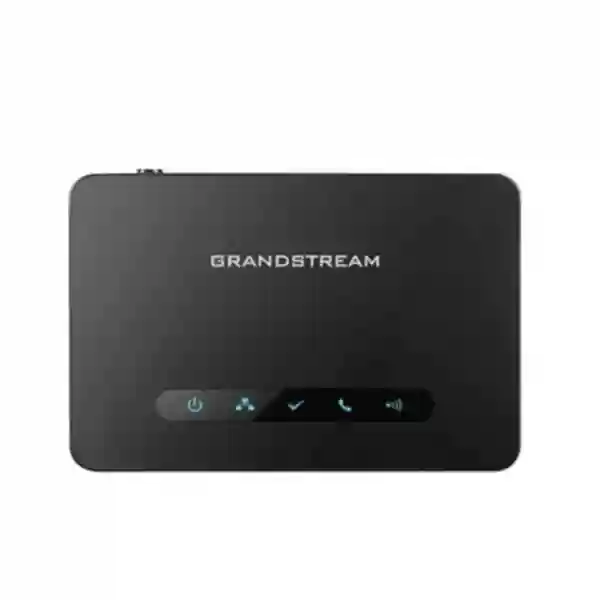
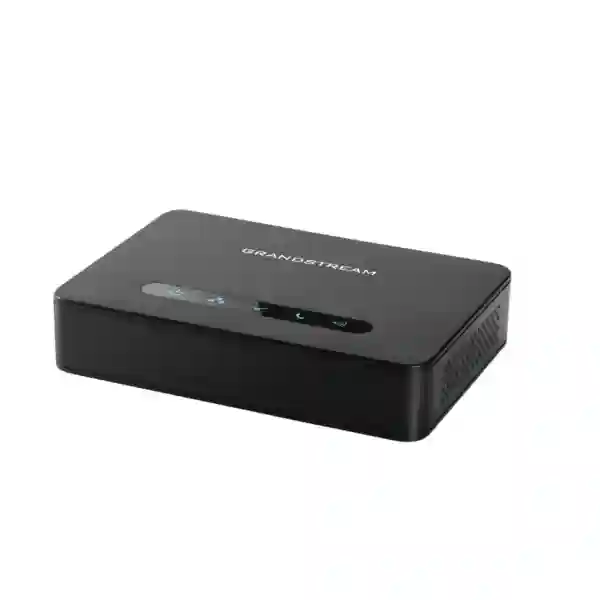
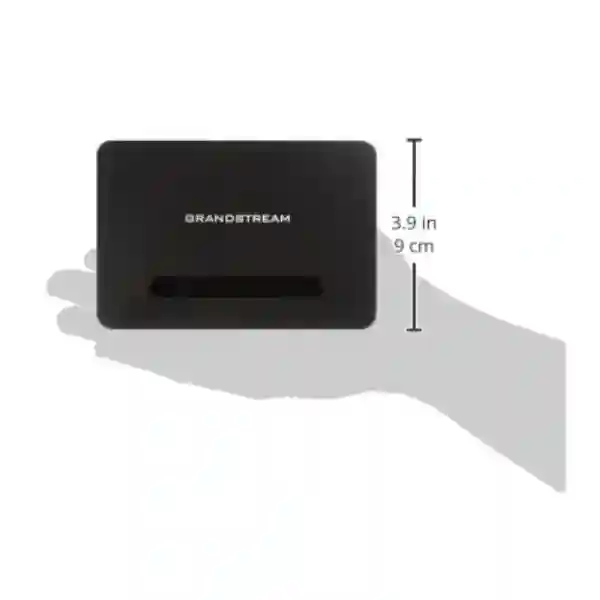
Grandstream DP750 Dubai UAE – Long-Range DECT VoIP Base Station
The Grandstream DP750 is a DECT VoIP base station designed for organisations that need cordless SIP calling without turning every mobile staff member into a Wi-Fi phone user. It can pair with up to five compatible Grandstream DECT handsets, support up to 10 SIP accounts and handle up to five concurrent calls. Grandstream specifies a range of up to 300 metres outdoors and 50 metres indoors, while integrated Power over Ethernet can simplify placement when a suitable PoE switch is available. For Dubai and UAE businesses, the practical value is not simply “cordless calling”; it is the ability to place a base station where staff movement, reception coverage, warehouse aisles, retail floors, hotel service areas, villas, clinics or smaller office zones require dependable DECT mobility linked to an IP PBX or hosted SIP platform.
What the DP750 is—and when it makes sense
The DP750 is the fixed network-side component of a Grandstream DECT cordless VoIP system. It connects to an IP network through Ethernet and then provides DECT radio connectivity to compatible cordless handsets. This separation is useful because the base can be positioned for radio coverage while handsets remain mobile. Unlike a conventional desk IP phone, the user does not need to remain beside an Ethernet outlet. Unlike a Wi-Fi handset, the cordless voice connection between handset and base uses DECT rather than the office Wi-Fi network.
That distinction matters in real deployments. A small office may want reception staff, supervisors or stock-room personnel to move between desks and rooms while keeping a business extension. A retail operation may need sales staff to remain reachable while walking between counters and storage areas. A clinic may need a nurse station extension to follow a staff member without depending on a personal mobile phone. A villa, serviced apartment or small hospitality environment may want several cordless SIP handsets attached to shared or individual lines. In those scenarios, the DP750 can provide a focused cordless voice layer without requiring a large multi-cell DECT design.
Verified DP750 capabilities that affect the buying decision
| Capability | DP750 position | Why it matters |
|---|---|---|
| Handset capacity | Up to 5 compatible Grandstream DECT handsets | Suitable for small cordless teams or shared-area extensions without building a large radio system. |
| SIP accounts | Up to 10 per system | Allows flexible mapping of business lines, users or departments to handsets. |
| Concurrent calls | Up to 5 | Important for judging whether the base can handle expected simultaneous call activity. |
| Coverage | Up to 300 m outdoors / 50 m indoors | Useful planning reference, but walls, metal, glass, shelving and RF conditions can reduce real-world range. |
| Network interface | 10/100 Mbps Ethernet with integrated PoE | Can simplify cabling and allow more freedom in base placement when PoE is available. |
| Voice | HD audio; G.722 and OPUS among supported codecs | Supports wideband voice when the handset, PBX, trunk and network path are configured compatibly. |
| Security | TLS, SRTP, HTTPS, 802.1X and DECT authentication/encryption | Provides building blocks for securing signalling, media, management and access when correctly configured. |
| Provisioning | TR-069, XML provisioning and UCM Zero Config support | Useful where administrators want repeatable configuration rather than handset-by-handset manual setup. |
Handset compatibility and extension design
Grandstream’s current DP750 administration documentation lists compatibility with the DP720, DP722, DP725, DP730 and DP735 handset families. That does not mean every handset behaves identically. Handset display, ruggedness, battery performance, charging arrangement, feature keys, range characteristics and firmware support vary by model. A buyer should therefore choose the base and handset as a system rather than assuming that any DP-series handset creates the same user experience.
The DP750 can map SIP accounts to handsets in flexible ways. A single handset can be associated with one or more SIP accounts, and an account can be mapped to one or more handsets. This supports several practical designs. A reception account can ring several cordless handsets. A manager can have a personal extension while also monitoring a shared departmental number. A hospitality or residential design can place different extensions on handsets in different rooms. A warehouse can assign separate extensions to supervisors while retaining a shared operations number.
Ring-group behaviour is another design decision. Grandstream documents multiple ring modes so administrators can control how multiple handsets react when they share an account. The correct mode depends on the workflow. Parallel ringing can be useful where the first available team member should answer. Sequential strategies can suit distribution or escalation patterns. The important planning point is that the SIP account structure, PBX ring strategy and DP750 handset mapping should be designed together rather than configured independently.
Coverage planning in Dubai offices, shops, villas and warehouses
The published 300-metre outdoor and 50-metre indoor range values are useful maximum planning references, not guaranteed site results. Indoor DECT performance is affected by reinforced concrete, lift shafts, dense shelving, fire doors, metal partitions, reflective glazing, server rooms, electrical equipment and the physical height and orientation of the base. Dubai offices can also vary dramatically: a compact open-plan office in Business Bay is a different RF environment from a warehouse in Dubai Investment Park, a multi-floor villa, a JLT tower unit or a retail outlet inside a mall.
A practical placement process begins with identifying where users actually need voice mobility. Draw the expected movement area, note dense construction and determine whether a central base position can reach the required zones. Avoid hiding the base low inside a metal cabinet merely because the network outlet is convenient. Integrated PoE is valuable because a network cable can power the unit from a compatible PoE switch, making it easier to mount or place the DP750 closer to the radio centre of the required area.
For a simple single-floor office, one DP750 may be sufficient if the area and construction permit. For a split-level office, long warehouse, thick-walled villa or complex property, test coverage before assuming that one base is enough. If roaming across multiple base stations or a higher-capacity multi-cell environment is required, the DP750 should not be selected solely because its headline range looks adequate. Coverage architecture and user concurrency must be assessed together.
SIP, IP PBX and hosted VoIP integration
The DP750 is based on standard SIP and is intended to register to a SIP service or IP PBX. Grandstream specifically highlights Zero Config provisioning with its UCM IP PBX family, while the technical documentation also lists standard provisioning and SIP mechanisms that support integration with other compatible platforms. The exact behaviour always depends on the PBX, SIP provider, firmware version, enabled codecs, security policy, NAT design and feature configuration.
For an on-premises IP PBX, confirm extension credentials, registration transport, outbound proxy requirements, codec order, DTMF method, VLAN policy, DNS/NTP availability and firewall rules. For hosted PBX services, confirm whether the provider certifies or supports the Grandstream DECT endpoint and whether remote provisioning is available. A base that can technically register by SIP may still require provider-specific configuration for directory, transfer, call pickup, voicemail indication or secure transport behaviour.
Grandstream documents common business telephony functions including hold, transfer, forward, call waiting, three-way conferencing, call logs, downloadable phonebook support and server failover/redundancy features. The availability of any end-to-end feature depends on both the DP750 configuration and the PBX/service platform. Buyers who depend on a particular workflow—such as attended transfer, shared line behaviour, LDAP directory access, voicemail notification or feature codes—should validate it during deployment rather than assuming every SIP platform presents features identically.
Network design: PoE, VLAN, QoS and switching
Because the DP750 uses Ethernet, its voice quality depends partly on the LAN. A cordless handset may have strong DECT signal to the base while the call still suffers if the Ethernet path is congested, misconfigured or unstable. The base includes a 10/100 Mbps auto-sensing Ethernet port with integrated PoE. Voice traffic itself does not require high bandwidth, so Fast Ethernet is sufficient for the endpoint’s intended role. The more important considerations are reliability, segmentation, latency, jitter and consistent power.
In managed business networks, placing voice endpoints on a dedicated voice VLAN can simplify policy, troubleshooting and security. Grandstream lists 802.1Q/802.1p Layer 2 QoS and Layer 3 QoS mechanisms including ToS/DiffServ support. QoS is useful only when configured consistently across switches, routers and WAN edges. Marking packets at the endpoint while the rest of the network ignores those markings provides little practical benefit.
PoE can remove the need for a local power socket at the base location and can centralise power backup when the PoE switch is connected to a UPS. That is particularly useful for reception areas, corridors, wall locations and equipment zones where a central position is best for DECT coverage. Before deployment, verify that the switch supports the required PoE standard and that the total PoE budget is adequate for all connected devices.
Voice quality and codec considerations
Grandstream positions the DP750 as supporting full HD audio and lists wideband codecs such as G.722 and OPUS in its technical specifications. Wideband voice can improve clarity when the complete call path supports it. However, the negotiated codec is determined by both endpoints and the PBX or SIP service. A call to the public telephone network may be transcoded or reduced to narrowband depending on the carrier route.
Codec planning matters most when many remote locations share constrained WAN links, when hosted PBX traffic crosses the internet, or when a business has strict interoperability requirements. G.711 uses more bandwidth but is widely supported. Compressed codecs can reduce bandwidth but may involve licensing, processing or platform considerations. OPUS can provide flexible high-quality audio where supported. The deployment goal should be interoperability and stable call quality rather than selecting a codec purely because it appears more advanced.
Voice troubleshooting should separate radio and network causes. If audio breaks only at the edge of the cordless coverage area, DECT signal is a likely factor. If audio degradation occurs everywhere during network congestion, investigate LAN/WAN QoS, packet loss and jitter. If only external calls are affected, inspect the SIP trunk and provider path. This structured approach is more effective than replacing handsets without identifying the actual layer causing the problem.
Security and administration
Grandstream documents several security mechanisms for the DP750, including TLS for SIP signalling, SRTP for voice media, HTTPS management, 802.1X network access control, DECT authentication/encryption and encrypted configuration options. These capabilities are valuable, but security depends on deployment choices. TLS must be supported and correctly configured by the PBX or service. Certificates, passwords, management access and provisioning sources must be maintained properly.
Administrators should change default or initial credentials, restrict management access to trusted networks, keep firmware aligned with vendor guidance, use secure provisioning methods where available and avoid exposing the web interface directly to the public internet. If the organisation uses central authentication, network access control or device-management policies, validate how the DP750 fits those controls before rollout.
The base can also support automated provisioning. This is particularly useful when a company deploys multiple units across branches, stores or customer sites. Standardised templates can reduce configuration drift, but a bad template can also distribute the same error everywhere. Test provisioning on a small pilot group, confirm SIP registration, security, dial plan and handset mapping, then scale the deployment.
Customer requirement → DP750 capability → buying consideration
Mobile reception team
Shared SIP account and multiple handsets can keep a front-desk number reachable while staff move nearby. Confirm ring behaviour and PBX transfer workflow before rollout.
Small warehouse
DECT mobility and PoE can suit supervisors who need a business extension away from fixed desks. Perform an RF walk test around shelving, loading areas and partition walls.
Clinic or professional office
Multiple mapped extensions can support staff who move between rooms. Check privacy requirements, secure SIP transport and whether directories or call groups are needed.
Villa or serviced residence
Several cordless handsets can share or separate SIP accounts. Thick walls and multiple floors may reduce practical range, so placement should be tested before final fixing.
Retail store
Cordless staff can remain reachable while moving between counter and stock room. Verify that building layout, back-room construction and mall infrastructure do not create coverage gaps.
Small branch office
A compact base may be simpler than deploying many fixed desk phones for mobile staff. Confirm total user count and simultaneous-call demand before choosing the DP750.
DP750 versus newer Grandstream DECT base choices
The DP750 remains a capable compact base, but a current procurement decision should consider whether a newer model better matches expansion plans. Grandstream’s DECT portfolio includes newer base stations with higher capacities. For example, the DP755 is positioned with more SIP-account and handset capacity than the DP750. This matters when a buyer expects future growth, more simultaneous calls or a larger cordless user population.
The correct comparison is therefore not simply “which model is newer?” A DP750 may be entirely appropriate for a small five-handset deployment where its capacity aligns exactly with the requirement. Buying a much larger platform would add little value if the environment will remain small. Conversely, selecting a DP750 for an organisation already expecting eight or ten cordless users can create an avoidable replacement project.
| Decision point | DP750 is a good fit when… | Consider a higher-capacity/newer base when… |
|---|---|---|
| Handsets | Up to five meets the requirement | More than five are required or planned |
| Concurrent calls | Five concurrent calls are sufficient | Higher simultaneous call activity is expected |
| Growth | The site is stable and small | Headcount or device count is likely to grow materially |
| Coverage architecture | One properly placed base covers the usable area | The site requires more advanced roaming or multi-cell design |
Deployment checklist before ordering
- Confirm the number of cordless users now and the expected number over the next 12–24 months.
- Estimate simultaneous calls, not just handset count. The DP750 supports up to five concurrent calls.
- Identify the compatible handset model required for each role and confirm firmware compatibility.
- Map the indoor area where users must remain reachable and note concrete, metal and multi-floor obstacles.
- Choose a central base location and verify Ethernet availability plus PoE support or local power.
- Confirm PBX or hosted SIP platform compatibility, credentials, secure transport and provisioning method.
- Plan voice VLAN, QoS, DNS, NTP, firewall and remote-management policy.
- Decide how SIP accounts map to handsets and how shared numbers should ring.
- Pilot the design and walk-test coverage before fixing the final base position.
- Document the final configuration, firmware level, extensions, handset names and support ownership.
Regional planning: UAE and wider Fourteck markets
Dubai and Sharjah
Dubai and Sharjah deployments commonly range from compact professional offices to retail, hospitality, workshops and warehouse facilities. The main DP750 planning issue is usually not the number printed on the range specification but whether one base can cover the actual staff movement path. High-rise offices, internal concrete cores, warehouse racking and back-room walls can all affect coverage. A PoE-enabled central position can be more valuable than placing the base next to the PBX or router.
Abu Dhabi and wider UAE
For corporate branches and larger villas in Abu Dhabi or other UAE locations, check whether the requirement is still truly single-base. Multi-floor buildings and long floor plans can push a compact DECT deployment beyond its comfortable design envelope. Where the user count remains small, the DP750 can still be a practical choice, but coverage validation should be part of installation rather than an afterthought.
Uganda, Kenya and Tanzania
In East African branch, education, hospitality and SME deployments, the DP750 can provide cordless SIP mobility without requiring Wi-Fi voice handsets. Network stability, PoE design, PBX location and internet dependency are important considerations. Where a hosted PBX is used, assess WAN reliability and failover; where an on-premises PBX is used, confirm local network resilience and power backup. Fourteck’s regional properties at uganda.fourteck.com, kenya.fourteck.com and tanzania.fourteck.com can support broader regional solution planning.
Kuwait, Ghana and Nigeria
For Kuwait and West African projects, handset quantity, local PBX design, SIP service compatibility, power continuity and site layout remain the critical variables. The DP750 should be selected only after confirming that five-handset and five-call capacity is sufficient. Regional solution planning can also consider kuwait.fourteck.com, ghana.fourteck.com and nigeria.fourteck.com where relevant.
Common mistakes to avoid
Buying by range alone. Published range is a useful reference but site construction governs real coverage. Test the required areas.
Counting users but not calls. Ten SIP accounts do not mean ten simultaneous calls. The DP750 supports up to five concurrent calls.
Ignoring handset model differences. The base and handset combination determines the practical user experience. Choose handsets by role, environment and feature need.
Placing the base beside the router by default. The best network location may be a poor radio location. PoE can help position the base more centrally.
Assuming SIP equals identical feature support. Registration may work while advanced PBX features behave differently. Validate transfers, voicemail, directory, ring groups and secure transport.
Using insecure remote management. Keep administrative interfaces restricted and use secure provisioning and current firmware practices.
Ignoring growth. If the organisation is likely to exceed five cordless handsets, compare a higher-capacity Grandstream base before committing.
Frequently asked questions about Grandstream DP750
How many handsets can connect to the DP750?
The DP750 can pair with up to five compatible Grandstream DECT handsets. Current Grandstream DP750 documentation lists DP720, DP722, DP725, DP730 and DP735 handset families as compatible options.
How many SIP accounts does the DP750 support?
Grandstream specifies up to 10 distinct SIP accounts per DP750 system. Accounts can be mapped flexibly to handsets, so one account may ring multiple handsets or a handset may be associated with multiple accounts.
How many simultaneous calls can the DP750 handle?
The DP750 supports up to five concurrent calls per DECT system. This concurrency limit should be checked against expected business call traffic before deployment.
What is the DP750 range?
Grandstream’s current product page specifies up to 300 metres outdoors and 50 metres indoors. Actual range can be lower depending on walls, metal, glass, shelving, floor layout and radio conditions.
Does the DP750 support PoE?
Yes. The DP750 includes integrated Power over Ethernet on its 10/100 Mbps Ethernet port. This can simplify installation where a compatible PoE switch is available.
Can the DP750 work with Grandstream UCM IP PBX systems?
Yes. Grandstream specifically documents use with its UCM series and Zero Config provisioning. Configuration and available features depend on the UCM model, firmware and deployment design.
Can the DP750 work with third-party SIP platforms?
The DP750 uses standard SIP and can work with compatible SIP PBXs and hosted services, but provider-specific interoperability and advanced feature behaviour should be validated before a production rollout.
Does the DP750 support secure calling?
Grandstream documents TLS and SRTP support, along with HTTPS, 802.1X and DECT authentication/encryption capabilities. End-to-end secure operation requires compatible PBX/service configuration and correct certificate/security settings.
Is the DP750 suitable for a warehouse?
It can be suitable for smaller warehouse environments where up to five handsets and one-base coverage meet the requirement. Metal racking, long aisles and building materials can affect DECT coverage, so an RF walk test is recommended.
Should I choose DP750 or a newer Grandstream DECT base?
Choose based on handset count, concurrent calls, growth and coverage architecture. The DP750 is a strong compact option for up to five compatible handsets, while newer or higher-capacity bases may suit larger or expanding deployments.
Plan the DP750 around the site—not just the datasheet
Fourteck can help customers evaluate the Grandstream DP750 against handset count, expected simultaneous calls, PBX/SIP platform, network design, PoE availability and real cordless coverage needs. The goal is to select a base that fits the deployment today without creating an avoidable capacity problem tomorrow. For UAE requirements, use the main Fourteck site at fourteck.ae or explore the IP phone portfolio at ip-phone.fourteck.com.
Recommended next step: confirm the number of handsets, PBX or hosted SIP platform, floor layout and whether PoE is available. From those inputs, the DP750 can be assessed against newer Grandstream DECT base options before quotation.

Reviews
There are no reviews yet.