Grandstream UCM6302A Dubai – 500-User Audio IP PBX for Modern Business Communications
The Grandstream UCM6302A is an audio-focused IP PBX for organizations that need SIP telephony, analog connectivity, remote-user support, call handling, audio meetings, centralized management and practical expansion without immediately moving to a larger enterprise communications platform. For a Dubai or UAE buyer, the right decision depends on more than extension count. Busy-hour concurrent calls, SIP trunk capacity, analog lines, remote users, recording, branch connectivity, network quality, resiliency and future growth all influence whether the UCM6302A is correctly sized.
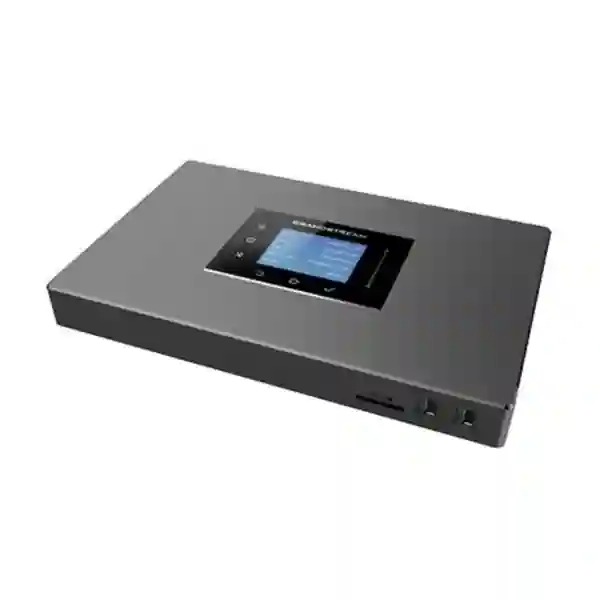
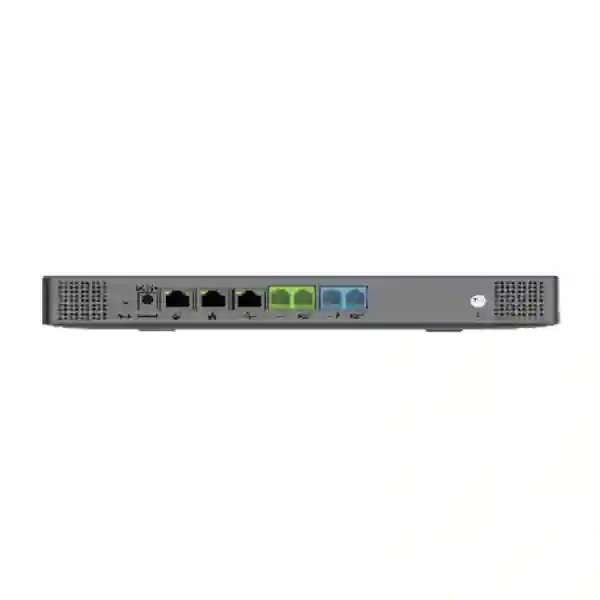
Grandstream specifies the UCM6302A for up to 500 users, up to 75 concurrent G.711 calls and up to 75 concurrent SRTP calls. It includes two FXS ports, two FXO ports, three self-adaptive Gigabit network ports with PoE+, NAT-router capability, Wave support, GDMS compatibility, UCM RemoteConnect integration, call queues, multilingual IVR, meeting functions and APIs for third-party integration. This makes it relevant to growing offices, professional firms, clinics, schools, hospitality sites, retail groups, warehouses, customer-service teams and branch networks that want a locally controlled voice platform with cloud-assisted management.
Plan with headroom for growth, remote users and operational peaks.
Assess real busy-hour demand, not the quiet daily average.
Useful for retained analog devices, fax workflows or suitable PSTN lines.
Supports up to five meeting rooms across the audio meeting environment.
Is the UCM6302A the right size for your business?
PBX sizing should begin with user behavior rather than the largest number on the datasheet. One company may have 300 extensions but only 25 simultaneous external calls at its busiest time. Another may have 120 users but heavy inbound traffic, several queues, call recording, paging, remote agents and frequent transfers. Those environments place different demands on the system. For a Grandstream UCM6302A Dubai project, useful planning inputs include the number of active users, registered endpoints, expected peak concurrent internal and external calls, number of call-center agents, SIP-trunk channels, recording scope, branch links and the likely growth over the next two to three years.
The UCM6302A ceiling of 500 users and 75 concurrent G.711 calls gives many small and mid-sized organizations useful headroom, but a design should not assume that operating permanently at the maximum is ideal. Queue activity, conferencing, codec choices, remote access, integrations and recording can influence the practical environment. If a company expects to grow rapidly toward the 500-user limit or expects a substantially heavier call profile, the UCM6304A may be a more appropriate platform even if the UCM6302A could technically support the current phase.
Fourteck can use extension counts, departmental call patterns, branch requirements and trunk limits to compare models before quotation. That reduces the risk of paying for unnecessary capacity while also reducing the chance that the PBX must be replaced shortly after deployment.
UCM6302A versus nearby Grandstream models
The UCM6302A belongs to the UCM6300 Audio Series. This matters because the audio-series models prioritize voice, instant messaging, audio meetings, mobility and telephony administration. Buyers should not assume that UCM6302 and UCM6302A are essentially the same product. The non-A UCM6302 has a larger user and call-capacity envelope and a broader multimedia focus, while the UCM6302A is an audio-first platform with a different capacity profile.
| Model | Users | Concurrent G.711 | FXS / FXO | Typical fit |
|---|---|---|---|---|
| UCM6300A | 250 | 50 | None / None | Smaller all-IP voice deployments with no built-in analog requirement. |
| UCM6302A | 500 | 75 | 2 / 2 | Growing voice-first deployments needing moderate capacity and analog integration. |
| UCM6304A | 1000 | 150 | 4 / 4 | Larger offices with heavier simultaneous calling and more analog ports. |
| UCM6302 | 1000 | 150 | 2 / 2 | Higher-capacity non-A platform where broader multimedia requirements matter. |
A voice-first organization with moderate capacity and a requirement for two analog subscriber ports and two PSTN ports may find the UCM6302A very well balanced. A customer with substantial video-collaboration requirements, greater simultaneous-call demand or faster projected growth should compare the higher models before purchase.
Why 2 FXS and 2 FXO ports remain useful
Modern offices increasingly use SIP endpoints, but many real sites still have a small number of analog requirements. The UCM6302A includes two FXS RJ11 ports for compatible analog subscriber devices and two FXO RJ11 ports for suitable PSTN lines. Grandstream also documents lifeline behavior for the analog ports in a power-outage scenario. This allows a business to modernize its core telephony while keeping selected analog phones, fax workflows or legacy lines during a phased transition.
In the UAE, the exact line type and provider service should be checked at each site. An old reception line, fax circuit, facility phone or backup PSTN line can require different treatment from a standard SIP extension. The PBX provides the hardware interfaces, but installation still requires line testing, appropriate routing, surge and power considerations, dial-plan rules and failover design. If the project requires more than two FXS or FXO ports, a dedicated gateway or a larger Audio Series model may be the cleaner design.
The practical benefit is flexibility. Most users can move to SIP desk phones, cordless SIP handsets or Wave clients while the small number of analog dependencies remain in service until they can be retired or migrated.
Network design and voice quality
The UCM6302A provides three self-adaptive Gigabit ports that can support switched, routed or dual-mode network configurations and PoE+. It also supports NAT-router operation. These interfaces give an engineer options, but they do not remove the need for a proper voice network. Call quality depends on switching, VLAN design, QoS, firewall behavior, DNS, NTP, WAN stability, SIP-trunk quality and endpoint configuration.
Grandstream documents Layer 2 QoS mechanisms such as 802.1Q and 802.1p and Layer 3 mechanisms including ToS, DiffServ and MPLS. Those markings help only when the rest of the network respects them. A robust deployment normally separates or logically organizes voice traffic, confirms adequate PoE capacity, reviews SIP ALG behavior, tests packet loss and jitter, and establishes stable DNS and time services. Problems such as one-way audio, intermittent registration and broken transfers often originate in NAT, firewall or WAN behavior rather than the PBX itself.
The platform supports Full-Band Opus and Grandstream highlights resilience to difficult packet conditions, but good codecs cannot repair a fundamentally unstable WAN. For multi-site deployments, internet or private-WAN quality should be measured before remote extensions and inter-branch calling are put into production.
Remote work with Wave, GDMS and UCM RemoteConnect
The UCM6302A is part of Grandstream’s wider UCM6300 ecosystem. Wave gives users a software-based way to access business communications from desktop, web and mobile environments using accounts registered to the UCM. This can suit managers, sales teams, remote support staff and travelling users who need to remain reachable without carrying a desk phone.
GDMS provides centralized cloud-based provisioning, monitoring and management for compatible Grandstream devices. For organizations with several branches or a large handset estate, centralized administration can reduce inconsistent configuration and make endpoint support more manageable. UCM RemoteConnect adds cloud-assisted NAT traversal and remote connectivity. Certain RemoteConnect and HA functions can depend on the selected service plan, so the exact entitlement should be verified during design.
Remote access should still follow security policy. Strong credentials, current firmware, controlled administrator access, TLS/SRTP where supported, sensible firewall policy, logging and least-privilege extension permissions should be part of the deployment. The objective is not just to make remote extensions work; it is to make them work predictably and securely.
Reception, IVR, call queues and everyday call handling
The UCM6302A supports a broad range of normal business telephony functions, including call park, transfer, forwarding, call waiting, caller ID, call recording, call history, IVR, music on hold, inbound and outbound routes, DIDs, DODs, DND, ring groups, schedules, pickup groups, paging, intercom, voicemail, voicemail-to-email, fax-to-email, speed dial, follow-me behavior and configurable feature codes. These are the building blocks for reception, departments, branches and after-hours coverage.
For customer-service teams, Grandstream provides multiple configurable queues and automatic call distribution using criteria such as agent availability, skills and workload. A growing service desk can therefore build structured inbound handling before it needs a dedicated contact-center platform. The system still needs a business process: queue membership, wrap-up behavior, overflow, missed-call handling, recording policy and supervisor expectations should be agreed before configuration.
Grandstream supports a customizable auto attendant with up to five IVR layers. A deep IVR should not be built merely because five levels are available. Callers usually benefit from fewer, clearer choices. Multilingual UAE businesses may use multiple prompt languages, but prompts should be tested for clarity, timing, holiday behavior and fallback destinations.
Audio meetings and collaboration
Grandstream specifies up to five meeting rooms and up to 75 parties for the UCM6302A audio meeting environment. This can support management calls, project coordination, supplier discussions, staff training and branch meetings without requiring a separate voice-conference bridge for every use case. Wave access helps users participate from software clients while office staff can continue to use SIP endpoints.
The important design point is that the UCM6302A is part of the Audio Series. If the customer’s requirement is centered on high-volume on-premises video conferencing, the broader non-A UCM6300 family or a dedicated meeting platform should be evaluated. Many organizations already use Teams, Zoom or Google Meet for larger video sessions and can let the UCM6302A remain the dedicated telephony and audio-collaboration core.
Keeping workloads aligned to the platform simplifies capacity planning. Voice reliability should remain the priority when the PBX is primarily being purchased to serve business calling.
Security controls for a business PBX
A modern IP PBX is a networked server and should be treated as security-sensitive infrastructure. Grandstream’s UCM6300 Audio Series includes features such as secure boot, unique certificates, randomized default administrator credentials, TLS and SRTP support, HTTPS, SSH and 802.1X, plus data/file encryption options for selected stored information. These capabilities provide a strong foundation, but secure operation depends on configuration and maintenance.
Administrators should change credentials, restrict management access, maintain current firmware, enforce sensible extension and trunk passwords, disable unnecessary services, review international dialing permissions, monitor unusual traffic and keep backups. SIP services exposed unnecessarily to the internet can attract automated scanning, so remote access should use approved architecture rather than ad hoc port forwarding.
Where call recordings or other sensitive files are retained, the organization should define storage location, retention period, administrator access and backup policy. Grandstream supports encryption for selected data stored internally or on attached media after configuration. That should complement, not replace, the business’s broader information-security and privacy controls.
High availability and resilience planning
Grandstream supports high-availability designs in the UCM630x/A family, including local hot standby and remote disaster recovery. For a business where telephone downtime has a material operational impact, a second compatible unit can form part of a redundancy design. The implementation requires more than buying two PBXs: firmware, network settings, static addressing, storage, heartbeat connections, trunks and remote-access services must be coordinated and tested.
A redundant PBX also does not solve every outage. If the WAN fails, the switches lose power or the SIP provider becomes unavailable, both PBXs may still be unable to deliver the expected service. A meaningful resilience design can include UPS power, redundant switching, dual WAN, alternate SIP routing, tested backups and documented recovery procedures.
Where UCM RemoteConnect is included with HA, plan requirements should be checked in GDMS. High availability works best when the customer schedules periodic failover tests rather than assuming the standby system will perform perfectly after years without being exercised.
Recording, storage and backup
The UCM6302A includes one USB 2.0 port, one USB 3.0 port and an SD-card interface. Those interfaces can support storage-related workflows, but the correct capacity depends on the customer’s recording policy, call volume, codec and retention period. A business that records selected service calls for 30 days has a very different storage profile from an organization that records most external conversations for a year.
Before broad recording is enabled, decide what calls must be recorded, who may listen to them, how long they are kept, where backup copies live and how old data is deleted. Local PBX storage should not become an unmanaged archive. For high-volume environments, external storage or a specialized recording solution may be a better operational model.
Backup planning should include the PBX configuration as well as any critical prompts, certificates and integration settings. A tested restore process is more valuable than an automated backup nobody has ever verified.
Zero Configuration and endpoint rollout
Grandstream supports Zero Configuration provisioning for compatible Grandstream SIP endpoints. This becomes important as deployments grow because administrators can use centralized templates rather than configuring every phone manually. Templates can be organized by role such as reception, standard user, manager, warehouse, security desk or executive, with consistent VLAN settings, BLF keys, directory behavior and firmware policy.
A 20-phone office may tolerate some manual configuration; a 200-phone organization should not depend on one-off changes that only one technician remembers. Standardization makes handset replacement, branch rollout and troubleshooting faster. GDMS can further support centralized management across compatible Grandstream devices.
Third-party SIP phones can be used in standards-based environments, but provisioning and advanced feature behavior can differ. The exact model and firmware should be tested where the customer intends to retain an existing mixed-vendor handset estate.
A practical Dubai deployment sequence
1. Discovery
Count users, numbers, trunks, analog lines, queues, remote staff, recording needs and growth.
2. Network readiness
Review PoE, VLANs, QoS, firewall rules, NAT, WAN links, DNS, NTP and cabling.
3. Call-flow design
Map IVR, DIDs, groups, queues, business hours, holidays, voicemail and failover.
4. Pilot
Test with reception, management and one operating department before mass rollout.
5. Migration
Move users and numbers in a controlled window with rollback planning and escalation.
6. Handover
Provide diagrams, backups, credentials policy, extension lists and support procedures.
This sequence reduces rework because the business requirements are understood before hundreds of extensions are created. A law firm, clinic, warehouse and hotel may all use the same PBX model but need completely different routing, security and support structures.
Customer environments that can fit the UCM6302A
Professional offices
Legal, consulting, accounting and engineering firms often need receptionist coverage, direct numbers, transfer, voicemail, remote access and predictable after-hours behavior. The UCM6302A can centralize those workflows while supporting remote users through the Grandstream ecosystem.
Clinics and healthcare administration
Appointment and billing teams can use queues, schedules and IVR to organize incoming traffic. Recording should be governed carefully because healthcare workflows can involve sensitive information.
Schools and training centers
Administration, finance, reception, security and staff areas can use structured extension dialing, paging and departmental ring groups. Network segmentation and future building growth should be considered during sizing.
Retail, warehouses and distributed operations
These sites may combine desk phones, cordless handsets, paging, security stations and remote management. The analog ports can also help during a phased migration from older equipment.
Dubai, Abu Dhabi, Sharjah and UAE deployment context
A Grandstream UCM6302A Dubai deployment should begin by identifying who controls the internet service, firewall, switching and structured cabling. In many commercial buildings these responsibilities are split among different vendors. Before SIP trunks and remote users are configured, the project team should confirm public addressing or NAT behavior, voice VLANs, PoE capacity, firewall access and backup connectivity. That avoids a situation where the PBX is configured correctly but production traffic is affected by an unprepared network.
In Abu Dhabi, large corporate or multi-building sites may place more emphasis on fiber uplinks, VLAN separation and redundancy. Sharjah and Ajman projects can include mixed office and warehouse environments where cordless coverage, paging, analog migration and power protection matter. In Deira and Bur Dubai, established businesses may be replacing long-serving hybrid or analog PBX systems, making number retention, staged migration and continued support of selected legacy devices important.
A complete UAE quotation may include the UCM6302A, SIP phones, cordless devices, PoE switches, gateways, headsets, UPS equipment, cabling, installation, configuration, remote access and support. Price, stock and lead time change, so current commercial details should be confirmed when the quotation is prepared rather than hard-coded into the product page.
Regional projects: Kuwait, Kenya, Uganda, Tanzania, Ghana and Nigeria
Multi-country buyers often want a repeatable communications standard while still accounting for local connectivity, carrier rules, import processes and support. Fourteck’s regional network includes the UAE, Kuwait, Kenya, Uganda, Tanzania, Ghana and Nigeria. A UCM6302A rollout can therefore use standardized extension plans, endpoint templates, security controls and firmware policy while validating trunk and emergency-calling requirements separately in each country.
Connectivity can be a decisive factor in African branch environments. Remote extensions and inter-site calling may depend on fiber, fixed wireless or LTE/5G backup, and the correct architecture may include local survivability, alternate trunks or independent branch PBXs. These choices should follow measured network conditions rather than assumptions.
For regional enquiries, see Fourteck Kuwait, Fourteck Kenya, Fourteck Uganda, Fourteck Tanzania, Fourteck Ghana and Fourteck Nigeria.
UCM6302A versus an older PBX or a fully hosted cloud PBX
Older PBX systems may continue to deliver basic calling, but they can become restrictive when a business needs remote users, SIP trunks, centralized provisioning, branch connectivity, modern reporting or easier endpoint changes. The UCM6302A can support a phased migration because its analog ports allow selected legacy devices or lines to remain temporarily while most users move to SIP.
A fully hosted cloud PBX takes a different approach by minimizing on-site communications infrastructure. That may suit organizations with strong internet connectivity and a preference for subscription-based service. The UCM6302A gives the customer a local PBX while still allowing cloud-assisted management and remote access. The correct choice depends on operating model, control, integration, analog requirements, cost structure and resilience expectations.
A fair comparison should look beyond first-year price. Consider five-year hardware, support, subscriptions, SIP trunks, remote-access plans, administrator effort, redundancy and replacement strategy. The lowest monthly cost is not always the lowest lifecycle cost.
CRM, PMS and application integration
Grandstream provides API support for third-party platform integration across the UCM family, including CRM and PMS scenarios. This can support workflows such as click-to-call, call logging, screen pops or hospitality processes. The presence of an API does not mean every application has a ready-made connector, so the exact software name, version and integration method should be validated before it becomes a contractual requirement.
Integration projects are easier when requirements are divided into core, desirable and future phases. A hotel may treat PMS integration as essential, while a sales department may prioritize CRM call logging. Each interface should document what data moves, which system owns the record, how users authenticate, what happens during an outage and how upgrades will be tested.
This avoids turning the PBX into a collection of undocumented scripts that become difficult to maintain.
Physical installation
Grandstream lists the UCM6302A at approximately 270 × 175 × 36 mm, with a unit weight of about 725 g. It supports desktop or wall mounting. The power adapter accepts 100–240 VAC, 50/60 Hz and outputs 12 V DC at 1.5 A. The documented operating range is 0–45°C with 10–90% non-condensing humidity.
The appliance should still be installed like communications infrastructure. Use a secure, ventilated area with controlled access, reliable power and organized cabling. Protect the PBX, switching and internet edge with suitable UPS capacity. Putting only the PBX on UPS is not enough if all phones depend on switches that lose power at the same time.
Label network, FXO, FXS and HA connections clearly. Good physical documentation reduces downtime during future maintenance and troubleshooting.
What to include in a UCM6302A quotation request
- Current user count and expected growth over two to three years.
- Peak concurrent calls and required SIP-trunk channels.
- Existing numbers, DID ranges and whether number migration is required.
- Existing SIP phones to retain, including model and firmware where known.
- Analog phones, fax devices or PSTN lines that must remain connected.
- IVR, queue, recording, paging, after-hours and receptionist requirements.
- Remote workers, branches, Wave use and UCM RemoteConnect expectations.
- Switching, PoE, firewall, internet links and backup connectivity.
- CRM, PMS or other integration requirements.
- High availability, disaster recovery and storage requirements.
This information allows Fourteck to quote a complete communication solution rather than an isolated PBX appliance. Current price, stock and lead time should be confirmed at quotation time.
Technical specification summary
| Product | Grandstream UCM6302A Audio Series IP PBX |
|---|---|
| Users | Up to 500 |
| Concurrent calls | Up to 75 G.711 and up to 75 concurrent SRTP calls |
| Audio meeting capacity | Up to 5 meeting rooms and up to 75 parties |
| Analog ports | 2 × FXS RJ11 and 2 × FXO RJ11 |
| Network | 3 self-adaptive Gigabit ports, switched/routed/dual mode, PoE+, NAT router |
| Peripheral interfaces | 1 × USB 2.0, 1 × USB 3.0 and 1 × SD-card interface |
| Voice / fax codecs | Opus, G.711 A-law/U-law, G.722, G.722.1C, G.723.1, G.726-32, G.729A/B, iLBC, GSM and T.38 |
| QoS | Layer 2 802.1Q/802.1p and Layer 3 ToS/DiffServ/MPLS |
| Security | Secure-boot and credential protections; support for SRTP, TLS, HTTPS, SSH and 802.1X |
| Management ecosystem | Wave, GDMS and UCM RemoteConnect; plan-dependent functions should be verified |
| Telephony platform | Based on Asterisk version 16 |
| Power | 100–240 VAC adapter input; 12 V DC, 1.5 A output |
| Dimensions | Approx. 270 × 175 × 36 mm |
| Mounting | Desktop or wall mount |
Firmware behavior and service-plan capabilities can change. Final design should be checked against current Grandstream documentation and the exact configuration being deployed.
When the UCM6302A may not be the best choice
The UCM6302A may be too small if the organization expects to approach 500 users quickly, has sustained call demand near or beyond 75 concurrent calls, needs more than two FXS or two FXO ports without an external gateway, or wants larger meeting capacity. The UCM6304A or UCM6308A should then be evaluated.
It may also be the wrong platform if the collaboration strategy depends heavily on on-premises video conferencing. The non-A UCM6300 series has a broader multimedia orientation. Conversely, a very small office with limited call traffic and no analog requirement may not need the UCM6302A and can compare the UCM6300A or another smaller design.
Finally, a company committed to eliminating all on-site telephony infrastructure may prefer a fully hosted PBX. The model should follow the operating requirement, not the other way around.
Frequently asked questions
How many users does the UCM6302A support?
Grandstream specifies the UCM6302A for up to 500 users. Practical sizing should also consider concurrent calls, remote users, queues, recording, integrations and expected growth.
How many simultaneous calls can it handle?
The official specification lists up to 75 concurrent G.711 calls and up to 75 concurrent SRTP calls.
Does the UCM6302A have analog ports?
Yes. It provides two FXS RJ11 ports and two FXO RJ11 ports for compatible analog endpoints and PSTN services.
What is the difference between UCM6302 and UCM6302A?
The UCM6302A is an Audio Series model rated for up to 500 users and 75 concurrent G.711 calls. The non-A UCM6302 is rated for up to 1000 users and 150 concurrent G.711 calls and has a broader multimedia focus.
Can remote staff use the UCM6302A?
Yes. Grandstream supports remote-user workflows through Wave and the UCM6300 ecosystem, including UCM RemoteConnect. Exact plan requirements should be confirmed for the required features.
Does it support call queues and IVR?
Yes. The platform supports configurable call queues, automatic call distribution and a customizable auto attendant with up to five IVR layers.
Can it record calls?
Yes. Recording is part of the UCM feature set. Storage sizing, retention, access and compliance requirements should be defined before broad recording is enabled.
Can two UCM6302A units be used for high availability?
Grandstream supports HA designs across the UCM630x/A family, including local hot standby and remote disaster recovery. Correct implementation requires compatible devices, coordinated firmware and network settings, static addressing, storage planning and relevant service-plan checks.
Is it suitable for a 300-user company?
Potentially yes, but peak concurrent calls, queue activity, recording, branches, remote users and future growth matter more than the user count alone.
Can Fourteck quote the UCM6302A in Dubai and the UAE?
Fourteck can prepare a requirement-based quotation covering the PBX, compatible endpoints, switching, analog requirements, SIP trunks, installation, configuration, remote access, resilience and support scope. Price, stock and lead time should be confirmed at quotation time.
Plan the UCM6302A around your actual communication requirements
The Grandstream UCM6302A is most useful when a business needs a voice-first IP PBX with meaningful mid-sized capacity, analog integration, Wave, centralized Grandstream management, remote-access options, robust routing and room for a phased migration from older telephony. It should be selected with the same discipline used for a server or firewall: define capacity, connectivity, security, resilience, integration and support before procurement.
For Dubai, Abu Dhabi, Sharjah, Ajman and wider UAE projects, Fourteck can compare the UCM6302A against other UCM6300 Audio and non-A models and prepare a practical bill of materials. Explore IP Phone Fourteck, Grandstream UAE and IP PBX Dubai for related solutions.
Technical information is based on Grandstream UCM6300 Audio Series documentation. Firmware behavior, service plans and commercial availability can change. Confirm current Grandstream documentation, firmware, subscriptions, carrier requirements and project-specific compatibility before final procurement or deployment.
Reviews
There are no reviews yet.