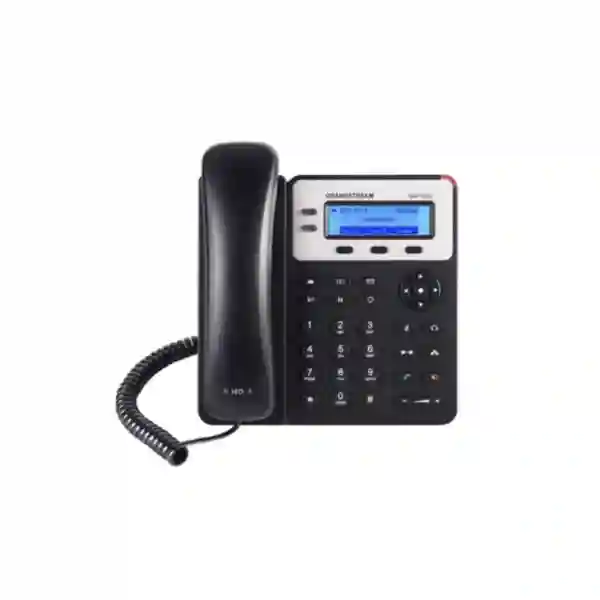
Grandstream GXP1625 Dubai – PoE HD IP Phone for Small Business
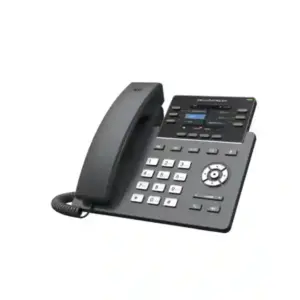
The Grandstream GXP1625 Dubai is a practical two-line SIP desk phone for businesses that need dependable calling, straightforward user controls, HD audio and Power over Ethernet without paying for features that light-to-medium call users may never use. Grandstream positions the GXP1620/1625 family as a basic IP desktop phone for keeping workers connected and productive, while the GXP1625 specifically adds integrated PoE. For offices, branches, counters, back-office teams, schools, clinics, hospitality administration, warehouses and professional services, that combination can be attractive because it keeps the endpoint simple while still supporting core VoIP functions, secure provisioning and common business call handling.
Fourteck approaches the GXP1625 as part of a complete communication requirement rather than as a handset-only purchase. Before proposing a deployment, the practical questions are how many users need phones, how many calls each role handles, whether PoE switching is already available, which PBX or SIP platform is in use, how VLAN and QoS are designed, what headset requirements exist, and whether remote or multi-site provisioning is needed. These factors determine whether the GXP1625 is the right fit or whether a higher model with more line keys, BLF capacity, Gigabit networking, colour display or wireless features would be better.
For buyers searching for a GXP1625 price in UAE, current pricing should be confirmed against quantity, project scope, accessories, service requirements and supply availability rather than assumed from an old online listing. Fourteck can help customers compare the GXP1625 with nearby Grandstream options and plan a practical IP telephony deployment for Dubai, Sharjah, Abu Dhabi, Ajman and other UAE locations.
Direct answer: who is the GXP1625 best for?
The GXP1625 is best suited to users with a light or moderate daily call load who need a conventional wired desk phone with two SIP accounts, two line keys, a backlit display, HD handset and speakerphone audio, 3-way conferencing and integrated PoE. It works well where businesses value simplicity, repeatable deployment and central provisioning more than a large colour screen or many programmable line appearances. Typical examples include general office staff, accounts teams, school administration, retail counters, branch users, service desks with modest call volumes, hotel back-office extensions, small reception points and warehouse supervisors.
It is usually a stronger choice than the GXP1620 when the network already provides Power over Ethernet because PoE can reduce desk cabling and simplify power management. It may not be the best choice for an operator who needs many visible BLF keys, a user who needs Gigabit pass-through for a high-performance workstation, a contact-centre agent who needs more advanced endpoint controls, or an executive who expects a larger colour interface and integrated wireless connectivity. In those cases, it is worth comparing other Grandstream models before standardizing the rollout.
Two SIP accounts with two line keys support straightforward extension and call handling requirements.
Dual switched 10/100 Mbps Ethernet ports with integrated PoE on the GXP1625.
Backlit graphical LCD for essential call information and menu navigation.
HD handset and speakerphone audio with full-duplex hands-free operation.
Verified GXP1625 specifications that matter in real deployments
The following points are based on Grandstream’s current GXP16xx documentation and GXP1620/1625 product information. They are presented in practical terms so an IT manager, purchaser or business owner can understand not only what the phone supports but why the feature matters when planning a deployment.
| Capability | GXP1625 | Why it matters |
|---|---|---|
| SIP accounts / line keys | 2 SIP accounts, 2 line keys | Suitable for standard user extensions and simple multi-account calling. |
| Display | 132 × 48 backlit graphical LCD | Keeps caller information and menus readable without adding the cost of a large colour interface. |
| Ethernet | Dual switched 10/100 Mbps ports | Supports a phone-and-PC desk topology where 100 Mbps pass-through is acceptable. |
| PoE | Integrated IEEE 802.3af Class 2 PoE | Allows power and network connectivity through the Ethernet infrastructure when a compatible PoE switch is used. |
| Audio | HD handset and speakerphone, full duplex | Helps improve clarity for everyday business calls and hands-free conversations. |
| Conference | 3-way audio conferencing | Useful for quick internal or customer discussions without requiring a separate meeting platform. |
| Directory | Up to 1000 contacts | Provides useful local or centrally provisioned contact capacity for small and mid-sized deployments. |
| Call history | Up to 200 records | Gives users a practical recent-call reference on the phone. |
| Headset | RJ9 with EHS support for supported Plantronics headsets | Supports desk users who prefer headset operation, subject to headset/EHS compatibility. |
| Provisioning | TR-069 and encrypted XML configuration options | Helps IT teams standardize configuration across multiple endpoints. |
| Security | TLS, SRTP, HTTPS, 802.1X and encrypted configuration support | Provides mechanisms for protecting signalling, media, management and network access when correctly configured. |
Why integrated PoE is the practical reason many buyers choose the GXP1625
The most important functional difference between the GXP1625 and the closely related GXP1620 is integrated Power over Ethernet on the GXP1625. In an office with PoE switches, this can simplify desk installation because one Ethernet cable can carry both data and power. That may reduce the number of power adapters under desks, make workstations tidier and let the phone participate in a more centrally managed power design. When the PoE switching layer is backed by a UPS, organizations can also design for continued endpoint power during short utility interruptions, provided the rest of the voice infrastructure is equally protected.
PoE does not automatically make a deployment resilient. The switch must support the relevant PoE standard and have enough available power budget for the number of endpoints connected. The voice VLAN, uplinks, router/firewall, PBX or SIP gateway, Internet connection and any SBC also need to remain available if business continuity is the objective. For a new Dubai office, it is therefore better to calculate the complete switching and power requirement than to treat PoE as a handset-only feature.
The GXP1625 supports IEEE 802.3af Class 2 PoE. That makes it straightforward to pair with many business access switches, but compatibility and available switch budget should still be checked. Where PoE is not available, Grandstream documentation lists a universal power supply for this model. Fourteck can help assess which approach is more practical based on the existing cabling, number of extensions, switch capacity and expansion plan.
Call handling and audio experience for everyday office users
A business desk phone succeeds when routine actions are predictable. The GXP1625 provides dedicated function keys for common tasks including mute, headset, transfer, conference, send/redial, speakerphone, phonebook, message, hold, page/intercom, record and home, together with navigation keys and three XML programmable context-sensitive soft keys. This physical-key approach can be easier for users who spend their day answering and transferring calls but do not need the more complex interface of an executive-grade device.
Grandstream specifies HD audio on the handset and speakerphone, and the full-duplex speakerphone includes acoustic echo cancellation. In practical terms, voice quality still depends on the codec negotiated by the PBX or SIP provider, LAN quality, WAN conditions, packet loss, jitter, QoS design, headset quality and the acoustic environment around the user. The endpoint supports a range of common voice codecs including G.711, G.722, G.723, G.726, G.729 and iLBC according to the product documentation, which gives integrators flexibility when balancing quality and bandwidth.
The phone also supports hold, transfer, forwarding, call waiting, call park/pickup, shared call appearance and bridged line appearance functions where the connected platform supports and provisions them. Three-way conferencing is useful for quickly bringing a colleague or customer into a discussion. These features are especially relevant for small offices where users need business call control without a complicated contact-centre interface.
For headset users, the RJ9 headset connection and EHS support can be useful, but a buyer should confirm the exact headset and EHS combination before ordering. Headset ecosystems have changed over time, and not every accessory that fits physically will provide the same remote-answer functionality. Compatibility checks are particularly important when standardizing a large number of desks.
Network planning: when dual 10/100 ports are enough and when they are not
The GXP1625 has dual switched 10/100 Mbps Ethernet ports. A common desk layout is network switch to phone, then phone to the user’s computer. This can reduce the number of wall outlets required at a desk, but the 100 Mbps pass-through must be considered. For users doing ordinary office work, cloud applications, email, web browsing and modest file access, this may be acceptable. For users transferring large engineering files, video production assets, backups, high-resolution media or other bandwidth-heavy workloads, a Gigabit-capable phone or a separate network connection may be more appropriate.
Voice traffic itself consumes far less bandwidth than 100 Mbps, so the key decision is usually the attached computer’s requirements rather than the phone’s voice stream. A good design separates voice logically using VLANs where appropriate, applies QoS consistently, and avoids assuming that plugging a phone into a network automatically gives voice packets priority. Grandstream lists support for Layer 2 QoS mechanisms such as 802.1Q and 802.1p and Layer 3 QoS mechanisms including ToS and DiffServ. These functions need matching switch, router and WAN policies to produce an end-to-end result.
For new branch deployments, Fourteck can review user counts, switch port requirements, PoE budget, uplink speed, VLAN design, DHCP options, IP addressing, firewall/NAT behaviour and SIP path before phones are staged. This is especially useful where the PBX is hosted outside the branch or where multiple sites share one central communication platform.
Provisioning and security: important for more than a few handsets
Manual configuration can be acceptable for one or two phones, but it becomes inefficient and inconsistent as the number of endpoints grows. The GXP1625 supports automated provisioning methods including TR-069 and XML configuration files, with encrypted configuration options documented by Grandstream. In a controlled deployment, this allows administrators or service providers to standardize SIP accounts, dial plans, time settings, firmware policies, network parameters, codecs, soft-key behaviour and other endpoint settings.
Grandstream also documents compatibility with its UCM series IP PBXs and zero-config provisioning features. The benefit is operational: phones can be staged faster, configuration becomes more repeatable and replacements can be easier to standardize. However, zero-config or centralized provisioning should not be treated as a substitute for governance. Administrators still need to control credentials, firmware versions, provisioning access, device inventory and change management.
For signalling and media protection, the GXP1625 supports TLS and SRTP when the connected platform and deployment design use them. HTTPS is available for secure management access, and 802.1X can be used for network access control in environments that implement it. Grandstream documentation also references AES-encrypted configuration files. These capabilities help an organization build a more secure phone environment, but security depends on the complete configuration: strong admin credentials, trusted certificates where applicable, restricted management exposure, secure provisioning URLs, appropriate firewall rules and a disciplined firmware process.
An IT team should also decide whether phones are allowed to reach the Internet directly, whether provisioning is internal or cloud-hosted, how remote offices connect to the voice platform, and whether SIP ALG should be disabled or tuned on the edge firewall based on the actual platform design. There is no one setting that is correct for every PBX or carrier. A controlled pilot with a few endpoints is usually more reliable than mass deployment before call flows, codecs, NAT, failover and emergency-calling requirements are validated.
PBX and SIP compatibility: what should be checked before ordering?
The GXP1625 is a standards-based SIP phone, but “SIP compatible” does not mean every platform exposes every feature in the same way. Basic registration and calling are only the starting point. A proper compatibility review considers extension authentication, outbound proxy or SBC requirements, transport selection, TLS certificate handling, voicemail indication, transfer behaviour, attended versus blind transfer, BLF or presence requirements, shared lines, call pickup, directory integration, provisioning methods and codec policy.
Grandstream highlights use with its UCM series as a natural pairing, but the phone can be used with other SIP systems when those systems support the required standards and provisioning approach. Businesses using 3CX, Asterisk-based systems, hosted SIP services or another IP PBX should verify the vendor’s current interoperability guidance and feature support. Firmware level can also matter, particularly when a deployment uses security features, remote provisioning or platform-specific templates.
For multi-site companies in Dubai, Abu Dhabi, Sharjah or other regions, branch connectivity is equally important. A centrally hosted PBX may depend on site-to-site VPN, SD-WAN, MPLS, dedicated connectivity or direct Internet access with an SBC. The phone should be treated as one component in that architecture. Voice quality and reliability can be affected by upstream congestion, packet loss, poor Wi-Fi backhaul elsewhere in the path, overloaded firewalls, asymmetric routing and improperly configured QoS.
Fourteck can help translate the business requirement into a practical endpoint and PBX design: how many extensions, which users need only basic calling, which users need more keys or advanced displays, whether reception needs a different model, whether PoE switches are sized correctly, and how phones will be provisioned and supported after installation.
Role-based use cases for the Grandstream GXP1625
General office employee
A staff member who needs one or two extensions, voicemail, transfer, hold, speakerphone and occasional conference calling can use the GXP1625 without the distraction of a feature-heavy interface. The phone is especially practical where desks already connect through managed PoE switches.
Small reception or front desk
For a low-volume reception point, the phone can handle basic transfers and call control. A busy receptionist who monitors many extensions may be better served by a model with more visible BLF keys or expansion options, so call volume and transfer patterns should be assessed first.
Retail or service counter
A fixed wired endpoint at a counter can provide reliable calling without depending on a user’s mobile device. PoE is useful when the counter already has structured cabling and a PoE access switch serving CCTV, access points or other IP endpoints.
School or training centre
Administrative desks, coordinators and staff rooms often need straightforward internal and external calling. Central provisioning can help keep extension settings consistent across multiple rooms or buildings.
Clinic or professional practice
For appointments, internal coordination and routine business calls, a basic SIP phone can be sufficient. Organizations should still design privacy, call recording and data-handling policies according to their own regulatory and operational requirements.
Warehouse or operations desk
Supervisors who need a stable fixed extension can use the GXP1625 where wired connectivity is available. The physical environment, noise level, cable protection and need for mobility should be considered before choosing a desk phone instead of cordless or mobile alternatives.
GXP1620 vs GXP1625 vs GXP1628 vs GXP1630: choosing the right step in the GXP16xx family
Businesses often compare models within the same family because the visible differences can look small while the deployment impact is meaningful. The GXP1620 and GXP1625 share the same basic two-line, two-SIP-account positioning and HD audio experience, but the GXP1625 adds integrated PoE. If the network is already PoE-enabled, that difference alone can make the GXP1625 easier to standardize.
The GXP1628 moves toward users who benefit from Gigabit Ethernet and additional programmable keys. Grandstream documentation identifies Gigabit network ports and eight BLF keys on the GXP1628, making it more suitable where the attached workstation needs higher LAN throughput or where users monitor more extensions. The GXP1630 increases the supported line/SIP-account count compared with the GXP1625 and targets users needing more call appearances. The correct choice therefore depends less on model hierarchy and more on the role sitting at the desk.
| Model | Best-fit reason | Key buying question |
|---|---|---|
| GXP1620 | Basic two-account desk use without integrated PoE requirement. | Will the phone use a local power adapter rather than PoE? |
| GXP1625 | Basic two-account desk use with integrated PoE. | Are two SIP accounts and 100 Mbps PC pass-through sufficient? |
| GXP1628 | Users needing Gigabit networking and more BLF keys. | Does the user monitor multiple extensions or require faster wired pass-through? |
| GXP1630 | Users who need more lines/accounts than the GXP1625 provides. | Will the user regularly handle more simultaneous call appearances? |
A mixed-model deployment is often better than giving every employee the same handset. Standard users can receive the GXP1625, while reception, supervisors, managers or heavy callers can receive models matched to their specific workflow. This role-based approach can improve usability and avoid paying for unnecessary capabilities across the entire organization.
A practical GXP1625 deployment checklist for IT teams
Before purchasing a batch of phones, the fastest way to avoid later changes is to validate the complete environment. The checklist below is intentionally broader than the handset because most voice problems are caused by an interaction between endpoint, network, PBX, carrier and configuration rather than by one specification.
- Confirm user roles. Identify standard users, receptionists, managers, call-heavy staff and shared desks. Decide whether two SIP accounts and two line keys are sufficient for each role.
- Check switch capacity. Count required Ethernet ports and calculate PoE budget with growth headroom. Confirm the switch supports the intended VLAN and QoS design.
- Review workstation bandwidth. If a PC will connect through the phone, decide whether 10/100 Mbps pass-through is adequate. Use a Gigabit-capable endpoint or separate data connection where required.
- Validate PBX registration. Confirm SIP server address, authentication model, transport, codecs, voicemail and required feature codes.
- Plan provisioning. Define whether phones are manually configured, provisioned from a Grandstream UCM, or managed through another supported provisioning platform.
- Set security policy. Decide on TLS/SRTP use, admin password standards, HTTPS management, 802.1X, certificate handling and access restrictions where applicable.
- Test call flows. Validate inbound/outbound calls, transfer, hold, conference, voicemail, caller ID, DTMF, hunt groups, pickup and any shared-line requirements.
- Test WAN behaviour. For hosted PBX or remote branches, measure latency, jitter and packet loss and verify firewall/NAT behaviour under load.
- Confirm headsets. Check exact headset/EHS compatibility if users need remote answer, call control or all-day headset use.
- Document and stage. Label devices, record MAC addresses where needed, standardize firmware, apply templates and stage phones before desks are migrated.
Grandstream GXP1625 Dubai deployment considerations
Dubai businesses range from small offices with a handful of extensions to multi-branch operations linking offices, shops, warehouses and customer-service teams. A GXP1625 deployment should therefore be matched to the organization rather than sold as a generic phone bundle. In a small Business Bay, Deira, Bur Dubai, JLT or Al Quoz office, the priority may be a clean PoE installation, reliable SIP registration and easy call transfer. In a warehouse or logistics operation, fixed desk phones may need to coexist with cordless, mobile or paging systems. In a retail environment, counters may require a simple extension while the manager needs more visibility of team lines.
For a new Dubai office, structured cabling and switch selection should be considered at the same time as phones. If each desk receives one cable and the computer connects through the phone, the 100 Mbps pass-through limit must be acceptable for that role. If the organization uses Gigabit desktop networking as a standard, a different Grandstream model may be a better fit even when the voice requirement itself is basic. This is a good example of why endpoint selection should be coordinated with the network rather than left until the final stage of an office fit-out.
For businesses moving from analog telephony to SIP, the migration plan should address number porting or carrier services, PBX configuration, extension mapping, auto-attendant and hunt-group design, voicemail, emergency-calling procedures, receptionist workflow, after-hours routing and user training. A basic endpoint can deliver a good user experience when the overall system is designed carefully. Conversely, even an expensive handset will not solve poor call routing or a congested network.
Fourteck can support requirement assessment, model comparison and project planning for customers evaluating the Grandstream GXP1625 in Dubai. Pricing and supply should be confirmed at quotation time because they can change by quantity, project scope and market conditions.
UAE regional fit: Sharjah, Abu Dhabi, Ajman and multi-site organizations
In Sharjah, many trading, manufacturing, education and service organizations operate a head office plus warehouses or branch sites. The GXP1625 can be useful for standard desk users in these environments when the WAN and PBX architecture provide stable connectivity between sites. Central provisioning can reduce the effort required to keep extension settings consistent, particularly where a small IT team manages several locations.
In Abu Dhabi, organizations may have stricter network, security and change-control processes. In those environments, features such as TLS, SRTP, HTTPS management, encrypted configuration and 802.1X are useful building blocks, but they need to be integrated with the organization’s identity, certificate, firewall and network-access policies. A pilot should validate the exact PBX and security design before a larger rollout.
Ajman and northern-emirate businesses often need practical, cost-conscious communication systems that are easy to support. A basic PoE phone can fit well when the organization wants standardized extensions across departments without adding features that are unlikely to be used. If the office is expanding, switch capacity, numbering plans and extension growth should be designed with headroom so the phone rollout does not need to be reworked after a short period.
For UAE companies with branches outside the country, the same endpoint standard can sometimes be extended to other offices, but local connectivity, SIP regulations, carrier availability and support arrangements differ by country. The endpoint model is only one part of a cross-border voice strategy, so each site should be validated against its local requirements.
Regional deployment beyond the UAE: Kenya, Uganda, Tanzania, Nigeria, Ghana and Kuwait
Fourteck works across multiple markets, and the customer requirement can differ significantly even when the same handset is considered. In East African deployments, for example, branch connectivity and power resilience may be higher priorities than desk aesthetics. A GXP1625 rollout can benefit from PoE switching backed by appropriate UPS capacity, but the network design should account for the quality and redundancy of the WAN connection that carries SIP traffic to the PBX or provider.
In Uganda and Kenya, organizations with a head office plus distributed branches may prefer centrally manageable endpoints so configuration changes can be applied consistently. Where Internet quality varies by site, IT teams should validate codec policy, failover connectivity and how phones behave when the primary SIP path is unavailable. In Tanzania, similar considerations apply for organizations connecting administrative offices, hospitality operations, education sites or retail branches over mixed connectivity.
Nigeria and Ghana deployments can also benefit from role-based endpoint selection. Standard office users may be well served by the GXP1625, while high-volume customer-facing roles may need phones with additional line keys or more visible status information. Power and network resilience, centralized management and local carrier requirements should be considered before standardizing one model across all branches.
In Kuwait and other GCC environments, structured cabling and PoE switching are common in business projects, so the GXP1625’s integrated PoE can fit neatly into a managed network. The same 100 Mbps workstation pass-through consideration still applies. Organizations with Gigabit desktop standards should make that a selection criterion before deployment rather than discovering the limitation during user acceptance testing.
Buying and quotation guidance for GXP1625 projects
When a customer asks only for “GXP1625 price,” there are usually several hidden decisions behind the request. A useful quotation should clarify whether the requirement is for handset supply only or a complete deployment. Quantity affects project logistics; the existing PBX determines configuration effort; PoE availability changes switching requirements; headsets can add compatibility checks; and branch installations may require travel, remote staging or separate network work.
For a handset-only requirement, the buyer should still confirm model, quantity, delivery location and whether any accessories are required. For a full solution, the scope may include IP PBX or hosted SIP services, PoE switches, routers/firewalls, VLAN configuration, extension provisioning, dial-plan design, auto attendants, hunt groups, call recording where legally and operationally appropriate, user training, testing and handover documentation.
Avoid comparing quotations only by handset price when one supplier includes configuration or support and another does not. Instead, normalize the scope: same model, same quantity, same accessories, same configuration responsibility, same installation scope and same post-deployment support assumptions. That makes the commercial comparison more meaningful and reduces the chance of unexpected work after purchase.
Fourteck does not need to assume stock or publish a fixed price on this page. Customers can request a current quotation with their required quantity, deployment location and PBX/network context so the recommendation can be matched to the real project.
When the GXP1625 may not be the right phone
A good recommendation includes limitations. The GXP1625 is intentionally a basic business IP phone. It is not designed for users who need a large colour touch interface, integrated Wi-Fi, Bluetooth-centric workflows, extensive expansion modules or many dedicated BLF keys. Its switched Ethernet ports are 10/100 Mbps rather than Gigabit, which can be a deciding factor when a desktop PC is connected through the phone in a modern high-bandwidth office.
Two SIP accounts and two line keys are sufficient for many standard users but may be restrictive for a busy receptionist, dispatcher, sales coordinator or executive who handles several active lines and frequently monitors colleagues. In those cases, a higher model can produce a better user experience even if the basic GXP1625 appears cheaper at purchase time.
The phone is also wired, so environments where users move around frequently should consider DECT, Wi-Fi voice, mobile softphones or a mixed solution. Warehouses, hospitality operations and large retail sites often need a combination of fixed and mobile endpoints rather than one device type everywhere.
How Fourteck can structure a GXP1625 deployment
A typical engagement starts with user and site discovery rather than a model assumption. Fourteck can review the number of extensions, expected call patterns, PBX platform, SIP trunks, branch topology, switch capacity, PoE budget, cabling and support requirements. From there, standard users can be mapped to the GXP1625 where it fits, while specialist roles are matched to other models if they need additional keys, Gigabit networking, larger displays or mobility.
The technical design can then define voice VLANs, DHCP and addressing, QoS, firewall behaviour, provisioning, firmware policy, security settings and extension templates. Staging before installation reduces desk-side configuration and makes rollouts more consistent. For a multi-site project, phones can be labeled and mapped to branches, users or departments so deployment teams know where each device belongs.
Testing should cover more than making a successful call. The acceptance plan can include inbound and outbound call routing, caller ID, DTMF, transfer, hold, voicemail, hunt groups, conferencing, call pickup, after-hours rules, failover behaviour, headset operation and call quality during normal network load. User guidance should explain the small set of functions staff will use every day rather than overwhelming them with every possible menu option.
This approach turns the phone purchase into a controlled communication rollout. It is particularly useful for businesses moving offices, replacing analog extensions, opening branches or standardizing a mix of old SIP endpoints.
Frequently asked questions about the Grandstream GXP1625
Does the Grandstream GXP1625 support PoE?
Yes. Grandstream specifies integrated IEEE 802.3af Class 2 Power over Ethernet for the GXP1625. This allows a compatible PoE switch to provide network connectivity and power through Ethernet. The switch still needs sufficient available PoE budget for the number of phones being deployed.
How many SIP accounts does the GXP1625 support?
The GXP1625 supports two SIP accounts with two line keys. This is suitable for many standard business users, but staff who need more active line appearances or several monitored extensions should compare higher models before purchase.
What is the main difference between GXP1620 and GXP1625?
The most important difference is integrated PoE on the GXP1625. Both models share the same basic two-line, two-SIP-account positioning and HD audio capabilities, but PoE makes the GXP1625 easier to integrate into offices that already use PoE access switches.
Does the GXP1625 have Gigabit Ethernet?
No. The GXP1625 uses dual switched 10/100 Mbps Ethernet ports. If a desktop computer will connect through the phone and needs Gigabit throughput, consider a Grandstream model with Gigabit networking or use a separate Gigabit data connection.
Can the GXP1625 work with Grandstream UCM IP PBX systems?
Yes. Grandstream documents compatibility with its UCM features and zero-config provisioning. As with any deployment, firmware, provisioning templates and required PBX features should be validated during staging before a larger rollout.
Can the GXP1625 work with other SIP PBX platforms?
The phone is standards-based SIP and can be used with compatible SIP platforms, but specific functionality depends on the PBX, service provider and configuration. Registration, transfer, voicemail, BLF, security, provisioning and other features should be tested against the intended platform.
Does the GXP1625 support HD audio?
Yes. Grandstream specifies HD audio on the handset and speakerphone, with a full-duplex hands-free speakerphone and acoustic echo cancellation. Actual end-to-end quality still depends on the negotiated codec and network conditions.
How many contacts can the GXP1625 store?
Grandstream documentation lists support for up to 1000 contacts and call history of up to 200 records. Directory behaviour can also depend on how contacts are provisioned or integrated with the phone system.
Does the GXP1625 support headsets?
Yes. The phone has an RJ9 headset connection and Grandstream documents EHS support for supported Plantronics headsets. For new deployments, confirm the exact headset and EHS accessory combination before ordering because compatibility varies by model and accessory.
Is the GXP1625 suitable for a receptionist?
It can suit a low-volume reception point that needs basic transfer and call handling. A busy receptionist who monitors many extensions or handles several simultaneous calls may benefit from a model with more line/BLF keys or expansion support.
Can the GXP1625 be centrally provisioned?
Yes. Grandstream documents TR-069 and XML configuration options, including encrypted configuration support. Central provisioning is useful for standardizing settings across many phones, provided the organization secures the provisioning process and manages firmware consistently.
What security capabilities are available?
The GXP1625 supports technologies including TLS, SRTP, HTTPS, 802.1X and encrypted configuration files. These are building blocks rather than automatic security guarantees; they need to be configured correctly and supported by the PBX, certificates, LAN and wider security architecture.
What should I provide to get a GXP1625 quotation in Dubai?
Provide the quantity, delivery or installation location, current PBX or SIP service, whether PoE switches are already available, and whether you need configuration, installation, headsets or other accessories. This makes it easier to prepare a quotation based on the actual requirement rather than an incomplete handset-only assumption.
Is the GXP1625 still useful for a new deployment?
It can still be useful where the requirement is a simple wired SIP desk phone with PoE, HD audio and two accounts, and Grandstream continues to maintain current documentation for the GXP16xx series. Buyers should compare it with newer or higher models if they need Gigabit Ethernet, more programmable keys, larger displays or wireless features.
Request a Grandstream GXP1625 Dubai quotation or deployment review
If your requirement is for a single phone, a branch rollout or a complete office IP telephony deployment, share the number of users, location, PBX platform and network environment. Fourteck can help determine whether the GXP1625 is the right endpoint for standard users and identify where another model would be a better match.
For broader requirements, you can also explore Fourteck’s UAE technology portfolio at Fourteck UAE, regional solutions at Fourteck, and IP PBX-focused resources at Fourteck IP PBX Dubai.
Vendor references: Technical facts on this page are based on Grandstream’s GXP1620/1625 product information and current GXP16xx documentation. Deployment outcomes depend on the connected PBX, network, firmware, service provider and configuration. Confirm current commercial availability, pricing and accessory compatibility before ordering.
Reviews
There are no reviews yet.