Grandstream GHP610W Dubai – Compact Wi-Fi Hotel IP Phone for UAE Hospitality
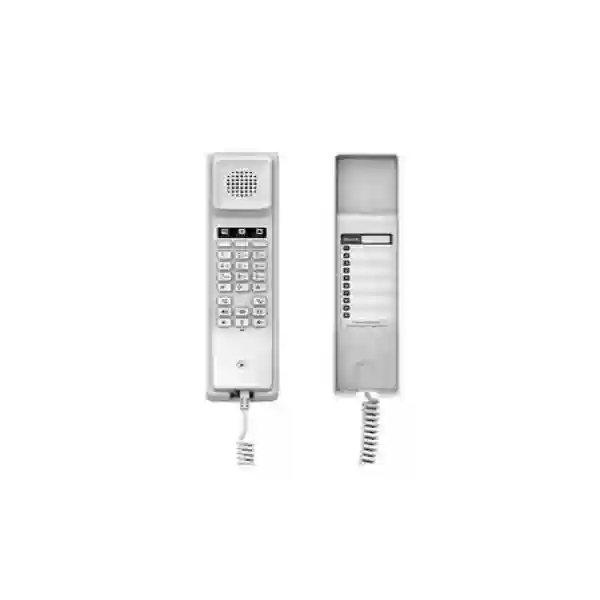
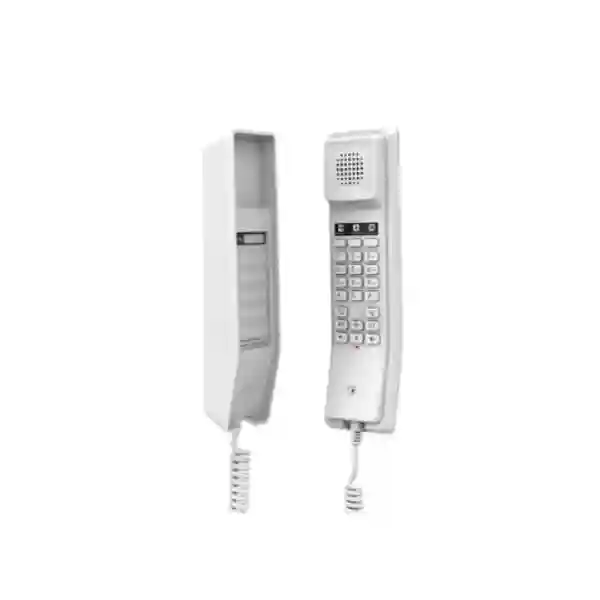
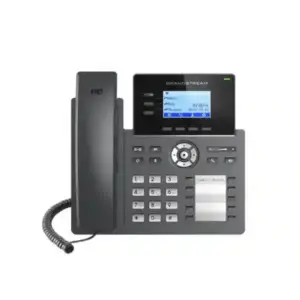
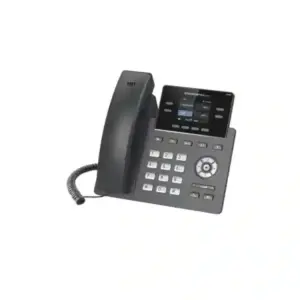
The Grandstream GHP610W is a compact SIP hotel phone designed for guest rooms, serviced apartments, hospitals, dormitories and other environments where a simple handset, programmable service access and centrally managed IP telephony are more useful than a feature-heavy office desk phone. It supports two SIP accounts and two lines, an HD speaker in the handset, ten speed-dial keys, three programmable keys, three-way audio conferencing, full-band Opus audio and Grandstream Device Management System (GDMS) provisioning. The W variant adds integrated dual-band Wi-Fi, making it especially relevant when a room telephone must join an existing wireless network or when structured cabling decisions vary across a property.
For Dubai and wider UAE hospitality projects, the practical value of the GHP610W is its focus: give guests fast access to reception, concierge, housekeeping, room service, emergency or internal extensions without introducing unnecessary complexity. Hardware revision matters when planning a deployment. Grandstream’s current documentation states that hardware version 5.0 and above supports dual-band Wi-Fi 6 (802.11 a/b/g/n/ac/ax) and PoE capabilities, while earlier GHP610W revisions differ in wireless and power behavior. Fourteck therefore recommends confirming the hardware revision and intended power/network design before a project quantity is finalized.

Suitable for a simple room extension plus an additional service or operational account where the PBX design requires it.
The W model supports wireless deployment; hardware version 5.0 and above is documented with 802.11ax support.
Useful for direct access to guest services such as reception, housekeeping, concierge, dining, spa or security.
Centralized provisioning and management can simplify repeat configuration across many rooms and multiple sites.
What customer requirement does the GHP610W solve?
A hotel guest normally does not need dozens of line keys, a large color screen or advanced desktop collaboration features. The room phone must instead be obvious, dependable and easy to operate. A guest should be able to lift the handset, dial reception, reach a labeled service key and complete a call with minimal learning. The GHP610W follows that requirement with a small physical footprint, familiar dial pad, dedicated service-oriented keys and SIP-based network integration.
The second requirement is operational consistency. Hospitality teams frequently manage tens, hundreds or even thousands of room endpoints. A phone that can be centrally provisioned and monitored through GDMS is easier to standardize than individually configured endpoints. A deployment can use a common configuration profile, then assign room-specific extension details through the chosen provisioning workflow. This can reduce repetitive configuration effort and support a more controlled change process when SIP servers, dial plans, labels, firmware or network policies change.
The third requirement is infrastructure flexibility. Some properties have structured Ethernet at every bedside or desk; others have partial cabling, renovation constraints or interior-design limitations. The GHP610W adds Wi-Fi to the product family, giving designers an alternative to a purely wired room phone. That flexibility should not be interpreted as a reason to skip network planning. Voice still depends on RF quality, VLAN design, QoS policy, roaming behavior, channel utilization, PBX reachability and stable power. Fourteck can help map those dependencies before the phone model and quantity are locked into the bill of materials.
Verified Grandstream GHP610W capabilities
| Capability | GHP610W relevance | Buying / design note |
|---|---|---|
| SIP | 2 SIP accounts, 2 lines | Confirm PBX registration, extension plan and SIP security policy. |
| Wireless | Integrated dual-band 2.4 GHz / 5 GHz Wi-Fi; hardware v5.0+ includes 802.11ax | Confirm hardware revision, WLAN coverage and voice-ready RF design. |
| Service access | 10 speed-dial keys and 3 programmable keys | Map each key to a real guest-service workflow and label it clearly. |
| Audio | HD handset speaker and full-band Opus support | End-to-end audio quality also depends on PBX, codec policy and network condition. |
| Conferencing | 3-way audio conferencing | Useful for simple coordination; not a replacement for a conference-room system. |
| Management | GDMS centralized provisioning and management | Plan templates, naming and site grouping before mass rollout. |
| Accessibility | Hearing Aid Compatibility (HAC) | Useful for inclusive guest-room planning. |
| Installation | Desktop or wall mounting | Choose mounting position around furniture, cable/power route and housekeeping workflow. |
Hardware revision planning: Wi-Fi 6 and PoE need confirmation
The GHP610W has been in the market across more than one hardware generation, so procurement teams should avoid treating every unit carrying the same model name as electrically identical. Grandstream’s current product information identifies integrated dual-band 2.4 GHz and 5 GHz 802.11 a/b/g/n/ac/ax connectivity for GHP610W and GHP611W hardware version 5.0 and above. Grandstream’s current administration and installation documentation also notes that v5.0-and-above GHP61X models can be powered through PoE, while older W revisions used an external power adapter and supported earlier Wi-Fi modes.
This matters in hotel refurbishment projects. If a designer assumes every GHP610W needs an adapter, a newer PoE-capable batch may allow a cleaner design. If the designer assumes every GHP610W supports PoE, an older batch could create an installation problem. The same applies to Wi-Fi 6 expectations. For a new deployment, ask the supplier to confirm the hardware revision offered, power method, included accessories and firmware compatibility before the purchase order is released.
Fourteck’s recommendation is to write the accepted hardware revision into the project specification for larger quantities. That turns a model-name assumption into a measurable procurement requirement. It also makes later replacements easier because facilities and IT teams know whether a spare unit must match an existing power design or WLAN capability.

Guest-service keys are more important than raw feature count
The ten speed-dial positions are central to the GHP610W value proposition. In a hotel room, those keys can become a guest-service map. Reception, operator, housekeeping, room service, restaurant reservation, concierge, transport desk, spa, engineering or emergency assistance can each be represented by a clearly labeled function. The exact mapping should reflect the property, not a generic template.
A luxury resort may prioritize concierge, spa and dining. A serviced apartment may emphasize reception, maintenance and security. A hospital room may use nursing station, reception, facilities and internal departments. A student residence may route to front desk, security and maintenance. The phone becomes easier to use when labels mirror what people actually need rather than what the PBX administrator finds convenient.
Grandstream also provides a swappable faceplate concept for customization. For hospitality deployments, this can help align the physical phone with the property’s service vocabulary and brand presentation. The design team should keep labels short, legible and multilingual where guest demographics justify it.
How the GHP610W fits a hotel IP telephony architecture
A room phone is only one endpoint in a wider communications design. The GHP610W typically registers to a SIP PBX or hosted SIP service through the hotel’s IP network. Calls to reception, operator groups, housekeeping or other services are then handled by the PBX dial plan. If the property uses a Grandstream UCM platform or another standards-based SIP system, the deployment team should validate registration, authentication, codec policy, extension numbering, emergency calling, outbound access and any hospitality integration requirements.
On the network side, Wi-Fi deployments need a stable SSID strategy, adequate coverage, controlled airtime utilization and predictable roaming behavior. Voice traffic is sensitive to latency, jitter and loss even though the GHP series includes an advanced jitter-resilience algorithm. That resilience is a protection mechanism, not a substitute for proper WLAN engineering. A site survey, channel plan and capacity review are advisable for large hotels, especially where guest Wi-Fi, staff devices, IoT and room phones share the same RF environment.
Logical separation is also useful. A hospitality network may place voice endpoints in a dedicated VLAN or SSID, then apply firewall rules that permit only the services required for SIP, RTP, DNS, NTP, provisioning and device management. The exact policy depends on the PBX, security architecture and whether GDMS is used. QoS markings should be preserved across access, switching, WLAN and uplink infrastructure where possible.
Finally, the operations team needs a lifecycle process. That includes how new room phones are enrolled, how extension credentials are assigned, who can change programmable keys, how firmware is tested before broad deployment, how failed endpoints are replaced and how configuration is backed up. Centralized management through GDMS can help organize those tasks when used with a disciplined naming and grouping standard.
Dubai and UAE deployment scenarios
Dubai hotels and resorts
The GHP610W can suit rooms where the property wants a simple guest handset with direct access to services. Wi-Fi can be helpful in refurbishments where adding a new data outlet beside every bed or desk is disruptive. The network team should nevertheless verify RF coverage inside rooms, especially in buildings with dense walls, mirrored surfaces or complex floor plans.
Serviced apartments
Long-stay accommodation often needs reception, security and maintenance access without the cost or complexity of an enterprise executive phone in every unit. A standardized GHP610W profile can keep the user experience consistent across studios, apartments and common areas.
Abu Dhabi healthcare and care facilities
Hospitals, clinics and care environments may value a compact wall- or desk-mountable SIP handset, HAC support and clearly labeled service keys. The call-flow design should reflect facility policy, emergency processes and any nurse-call or contact-center integration rather than assuming a generic hotel configuration.
Sharjah, Ajman and multi-emirate groups
A common model and centralized provisioning method can simplify support for hotel groups with properties in multiple Emirates. Standard configuration templates can be combined with site-specific dialing, VLAN, SSID and service-key profiles.
GHP610W vs GHP610: choose wireless for a reason
The most important difference is straightforward: the GHP610W is the Wi-Fi member of the GHP610 family, while the GHP610 is intended around wired Ethernet. That does not automatically make the W version the better choice. If every room already has a correctly placed Ethernet outlet and PoE switching, a wired room phone can reduce dependence on RF conditions. If cabling is incomplete, expensive to extend or visually undesirable, the GHP610W can give the project team more flexibility.
| Decision factor | GHP610W | GHP610 |
|---|---|---|
| Primary network flexibility | Integrated Wi-Fi plus version-dependent Ethernet/PoE capability | Wired Ethernet with PoE |
| Best fit | Renovations, rooms without convenient data outlets, mixed infrastructure | Properties with structured cabling and PoE already available |
| Main design dependency | RF coverage, WLAN capacity and hardware revision | Cable path, switch port and PoE availability |
| Shared room-phone functions | 2 SIP accounts/lines, speed dial, programmable keys, GDMS, HAC, 3-way conferencing | Same core GHP610-family room-phone functions |
For project procurement, decide the connectivity model before selecting the phone. A Wi-Fi endpoint should solve a real infrastructure or operational requirement, not simply be selected because wireless appears more modern.
When the GHP610W is a strong fit
The GHP610W is a strong candidate when the endpoint is primarily a room or service phone, users need an intuitive handset rather than a desktop productivity terminal, and Wi-Fi reduces cabling constraints. It also fits projects where centralized device management is important and where service labels can turn the phone into a direct gateway to hotel or facility operations.
- Hotels that want a compact IP phone for guest rooms without a large display.
- Serviced apartments and residences needing reception, security and maintenance speed dial.
- Hospitals and clinics needing compact SIP endpoints with HAC support.
- Dormitories, hostels and campus accommodation with standardized room communications.
- Retail or branch environments where a simple wall- or desk-mounted SIP phone is preferable to a full office phone.
- Multi-site operations that want GDMS-based provisioning and monitoring for Grandstream endpoints.
When to choose a different endpoint
The GHP610W is intentionally simple, so it should not be forced into roles that need a richer interface. A hotel reception desk, reservations team, contact-center agent or executive office typically benefits from a business IP phone with a display, more line appearances, BLF keys, headset integration and stronger call-control visibility. Meeting spaces may need dedicated conferencing devices. Mobility-focused staff may need cordless Wi-Fi or DECT handsets rather than a fixed room phone.
The right question is therefore not “Is the GHP610W feature-rich?” but “Does this endpoint match the job?” For a guest room, simplicity is often an advantage. For an operator position, simplicity can become a limitation. Fourteck can compare the GHP610W with suitable Grandstream GRP, GXP, WP or other device families according to the role and PBX design.
Audio behavior and network resilience
Grandstream positions the GHP610W with an HD speaker in the handset and support for the full-band Opus codec. Opus is useful because it can provide high-quality voice across a range of network conditions when supported end to end by the communication platform. The GHP series also includes an advanced jitter-resilience algorithm that Grandstream states can tolerate up to 30 percent packet loss without impacting voice quality. That figure describes the vendor’s product capability under its implementation and should not be used as a network-design target.
In a properly engineered deployment, packet loss should be kept far below that level. The WLAN should have sufficient signal, sensible cell overlap, low interference and adequate airtime. The IP network should avoid unnecessary congestion, while QoS and routing policies should preserve predictable treatment for voice. The PBX or SIP provider should support compatible codecs and a stable media path.
When diagnosing poor room-call quality, the endpoint is only one part of the chain. Check RF statistics, switch or AP utilization, WAN path, SIP server health, RTP routing, firewall/NAT behavior and codec negotiation before replacing phones. Central management and consistent configuration can make those investigations easier across a large property.
GDMS provisioning for multi-room deployments
Grandstream Device Management System is one of the more important operational features for a large GHP610W rollout. Grandstream describes GDMS as a centralized platform for provisioning, configuration, monitoring and troubleshooting of Grandstream devices. For hospitality teams, centralized control can reduce the number of room visits required for routine configuration changes.
A sensible deployment starts with naming. Device names can reflect property, building, floor and room so that support staff can find the affected phone quickly. Configuration templates can then hold shared settings such as SIP server address, codec priorities, time settings, programmable-key behavior and management parameters, while room-specific credentials are assigned separately. Changes should be tested on a small pilot group before they are pushed across an entire property.
Firmware management deserves the same discipline. Hospitality environments often prioritize stability, so a new firmware release should be validated against the PBX, WLAN, provisioning method and any property-management integrations used in the project. Do not treat “latest” as automatically “best for immediate mass rollout.” A controlled test group, change record and rollback plan can reduce service disruption.
GDMS can also support multi-property administration, but access governance matters. Use role-appropriate accounts, strong authentication and a defined change process. The endpoint management platform should be part of the hotel’s broader cybersecurity and operational policy rather than a separate unmanaged tool.
Wi-Fi design checklist for the GHP610W
Validate signal inside actual rooms, not only corridors. Doors, bathrooms, wardrobes, mirrors and building materials can change RF behavior.
Account for guest devices, TVs, IoT and staff equipment sharing the same access points and spectrum.
Use a design that keeps voice endpoints identifiable and applies appropriate firewall, QoS and access rules.
Confirm hardware revision so the project knows whether PoE is available or an adapter is required.
Coordinate WLAN authentication, SIP security, provisioning and management access with the property security policy.
Document what the IT team will check when a room reports no dial tone, failed registration or intermittent audio.
PBX and SIP compatibility questions before ordering
Because the GHP610W is a SIP endpoint, compatibility is broader than a single PBX brand, but “SIP compatible” does not mean every advanced function behaves identically with every platform. Before a large order, validate the exact PBX or hosted platform, firmware, registration method and dial-plan requirements.
- Registration: confirm account credentials, transport requirements and whether the system expects per-room extensions or another architecture.
- Media: confirm permitted codecs, RTP paths and any SBC or NAT traversal requirements.
- Service keys: map speed dials and programmable buttons to valid PBX destinations, feature codes or hunt groups.
- Emergency calling: ensure the PBX and property procedures meet applicable local requirements and that room/location information is handled correctly.
- Provisioning: determine whether GDMS, local templates, PBX auto-provisioning or another approved method will be used.
- Hospitality integration: if the project requires PMS billing, room status, wake-up call automation or other hotel-specific functions, validate those at the PBX/integration layer rather than assuming the room phone alone provides them.
Procurement checklist for Dubai and UAE buyers
A quotation for the Grandstream GHP610W should be built around the deployment requirement, not only the handset count. For a small replacement, model and hardware revision may be enough. For a hotel project, the supporting infrastructure and service scope can materially affect the result.
| Quotation input | Why it matters |
|---|---|
| Required quantity and spare ratio | Defines project scale and replacement planning. |
| Hardware revision requirement | Determines Wi-Fi generation and power behavior. |
| PBX / hosted SIP platform | Allows compatibility and provisioning checks. |
| Wi-Fi infrastructure | Indicates whether coverage/capacity review is needed. |
| Faceplate / label requirement | Supports guest-service customization and branding. |
| Installation and configuration scope | Separates hardware supply from engineering and onsite work. |
| Target locations | Helps plan Dubai, Abu Dhabi, Sharjah, Ajman or multi-site deployment logistics. |
Price, stock, delivery date and warranty terms should be confirmed on the current quotation because those are commercial variables rather than fixed technical specifications.
Installation workflow for a controlled rollout
A reliable rollout is usually phased. Start with a design review that identifies PBX, extension numbering, Wi-Fi/PoE plan, VLANs, DNS/NTP, management method and service-key mapping. Then prepare a pilot profile and deploy a small number of phones in representative rooms. The pilot should include rooms at different distances from access points and, where relevant, different building materials or floor layouts.
During pilot validation, test inbound and outbound calling, reception and service keys, audio in both directions, hold/transfer behavior required by the project, three-way conferencing if used, restart/re-provision behavior and recovery after network interruption. Confirm that the phone reconnects to the intended WLAN and re-registers to the SIP platform after planned maintenance.
After pilot acceptance, create a room-by-room deployment sheet. Record MAC address or device identifier, extension, room number, switch/AP or WLAN zone, hardware revision and status. Apply templates in controlled batches, then conduct acceptance tests before rooms are released. Keep spare devices pre-staged where operational policy permits so a failed endpoint can be swapped quickly.
For wall-mounted use, confirm the mounting location, handset reach, accessibility and housekeeping clearance. For bedside or desk placement, consider cable routing, power route and whether furniture changes could obstruct the device. Hospitality installation is partly technical and partly operational; both perspectives should be represented in the handover.
Security considerations for hotel room phones
Grandstream lists enterprise-level protection including secure boot for the GHP610/GHP611 family, and GDMS adds centralized management controls. Endpoint security still depends on deployment choices. SIP credentials should not be reused unnecessarily across rooms. Management passwords should be changed from defaults, remote administration should be restricted to the required networks or management platform, and firmware should come from an approved source.
The network should limit lateral movement. A guest should not be able to use the room phone network to discover unrelated hotel systems. Segmentation, firewall policy and management ACLs can reduce exposure. If the phone uses Wi-Fi, the SSID should be designed for managed endpoints rather than simply joining the public guest WLAN.
Security also includes change control. A bulk configuration error can affect every room at once, so privileged access to GDMS or the provisioning platform should be limited and auditable. Large updates should be staged. Decommissioned phones should have credentials and configuration handled according to the organization’s asset-disposal process.
Regional deployment beyond the UAE
Hospitality groups often standardize room technology across countries, but infrastructure maturity and support models can vary. A GHP610W profile used in Dubai should not simply be copied to another region without checking local power, WLAN design, PBX reachability, Internet dependency, support ownership and emergency-calling requirements.
Kuwait: hotel and serviced-apartment deployments may value centralized provisioning and a consistent room-phone experience across properties. Confirm local network architecture and procurement specification before standardizing hardware revisions.
Kenya, Uganda and Tanzania: multi-site hospitality and institutional projects can benefit from simple SIP endpoints, but WAN quality and local support processes deserve specific attention. Where the PBX is centralized or cloud-hosted, test voice paths and failover behavior under the available connectivity conditions.
Nigeria and Ghana: power continuity, network segmentation and site-level troubleshooting procedures may be as important as handset features. Document how room phones recover after power or Internet interruptions and whether local PBX services remain available during WAN outages.
Fourteck maintains regional technology sites for customers who need broader project context, including Kuwait, Kenya, Uganda, Tanzania, Ghana and Nigeria. Regional links are provided for project navigation; model availability and commercial terms should be confirmed per location.
Why work with Fourteck on a GHP610W project?
A hospitality phone rollout is not only a hardware purchase. The handset must fit the PBX, network, room design, service workflow and long-term support model. Fourteck approaches the GHP610W as part of that system. The first step is to understand the property: number of rooms, current PBX, extension plan, cabling, Wi-Fi coverage, guest-service numbers, deployment locations and whether the project is new-build, renovation or replacement.
From there, the design can determine whether the Wi-Fi GHP610W is preferable to the wired GHP610 or whether another phone family is more appropriate for some roles. Reception and back-office staff, for example, may need richer Grandstream business phones while guest rooms use the GHP610W. That mixed-endpoint design often makes more sense than forcing one phone model across every department.
For related UAE Grandstream requirements, visit Fourteck’s Grandstream UAE resource. For wider IT and network project requirements, see Fourteck UAE. Product supply, current pricing, hardware revision, lead time, warranty and installation scope should always be confirmed in the project quotation.
Frequently asked questions about Grandstream GHP610W
Does the Grandstream GHP610W support Wi-Fi 6?
Grandstream’s current documentation states that GHP610W hardware version 5.0 and above supports integrated dual-band 2.4 GHz and 5 GHz Wi-Fi with 802.11 a/b/g/n/ac/ax. Older hardware revisions use earlier Wi-Fi capabilities, so confirm the offered revision before ordering.
Can the GHP610W use PoE?
Current Grandstream documentation indicates PoE support on hardware version 5.0 and above, while older W-model hardware used a power adapter. Project buyers should therefore verify hardware revision and power method rather than assuming every GHP610W batch is identical.
How many SIP accounts does it support?
The GHP610W supports two SIP accounts and two lines. That is generally sufficient for a room-phone role, but the exact extension and account design depends on the PBX and property call flow.
How many speed-dial keys are available?
The phone provides ten speed-dial keys plus three programmable keys. Hotels can use these for reception, housekeeping, concierge, dining, security or other service destinations according to the property workflow.
Can the GHP610W be wall mounted?
Yes. Grandstream positions the GHP610/GHP611 series for desktop or wall-mounted installation. The final location should consider guest accessibility, furniture, power/network route and maintenance access.
Is the GHP610W only for hotels?
No. Grandstream also identifies hospitals, apartments, dormitories, retail and similar environments as suitable use cases. The phone is best where a compact, simple SIP endpoint with clearly programmed service access is preferred.
Does it support central management?
Yes. The GHP610W is supported by Grandstream Device Management System (GDMS) for centralized provisioning, management and monitoring. This can be especially useful for multi-room and multi-site deployments.
What is the difference between GHP610 and GHP610W?
The GHP610W adds integrated Wi-Fi, while the GHP610 is the wired member of the same compact hotel-phone family. Which is better depends on the room cabling, WLAN design and power architecture.
Does the phone include hearing-aid compatibility?
Yes. Grandstream lists Hearing Aid Compatibility (HAC) for the GHP610/GHP611 family, which can support more inclusive guest and patient-room deployments.
Can Fourteck quote the GHP610W for a hotel project in Dubai?
Fourteck can prepare a project quotation based on quantity, hardware revision, PBX platform, network design, customization needs and installation or configuration scope. Current price, availability, warranty and delivery terms should be confirmed at quotation stage.
Plan the GHP610W around the room, network and PBX
For a new hotel, refurbishment or replacement project, the best GHP610W result comes from confirming three things before purchase: the endpoint role, the network/power design and the PBX call flow. If the room needs a simple Wi-Fi SIP handset with programmable guest-service access, centralized management and compact installation, the GHP610W can be a strong fit. If the site already has reliable PoE cabling, compare it with the wired GHP610. If reception or operations staff need richer call control, evaluate a business phone for those roles instead.
Reviews
There are no reviews yet.