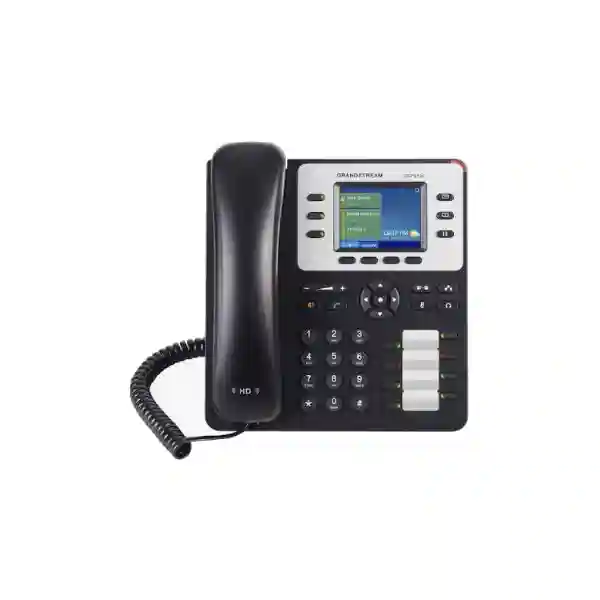
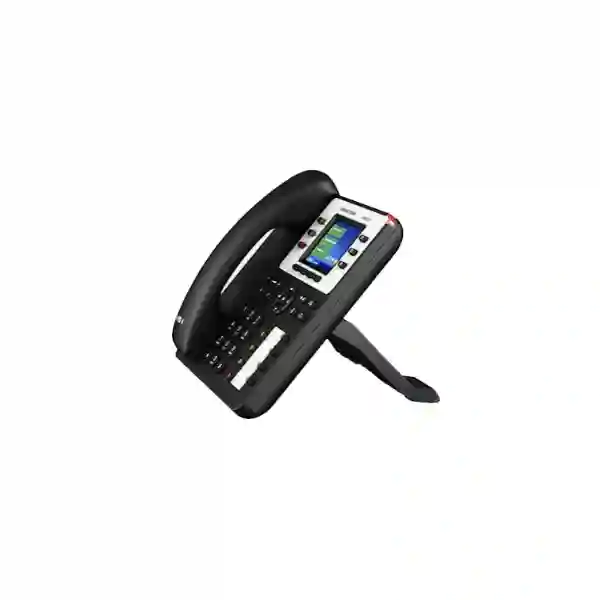

Is the GXP2130 v2 the right phone for your desk?
A buyer should choose an IP phone by workflow rather than by a long feature list. The GXP2130 v2 is strongest when the user needs more call-control visibility than an entry-level phone provides, but does not require the much larger key capacity, screen size or expansion options of a higher-tier attendant console. Its eight BLF/speed-dial keys are useful when a receptionist, team coordinator, sales administrator or supervisor regularly watches a small group of extensions, transfers calls, calls the same contacts repeatedly, or needs a clear visual indication of selected line states.
The three SIP-account design also suits users who need more than one identity or service context. For example, a manager might have a normal extension, a departmental identity and another SIP registration used for a secondary business function. Whether that architecture is appropriate depends on the PBX design, numbering plan and how the organization wants inbound and outbound calls to be presented. The phone should therefore be treated as an endpoint in a communications system, not as an isolated appliance.
For offices in Dubai and across the UAE, the practical buying question is usually not simply “Does it support SIP?” but “Will this device fit our PBX, PoE switching, voice VLAN, QoS, headset and provisioning standards?” Fourteck can help map those requirements before a quotation is finalized.
Quick decision guide for UAE buyers
Verified GXP2130 v2 specifications
The following summary is based on Grandstream’s product information and current datasheet. Specifications should still be checked against the exact unit, firmware and deployment requirement when compatibility is critical.
| Lines / SIP accounts | 3 line keys with up to 3 SIP accounts |
|---|---|
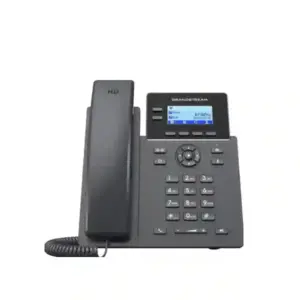
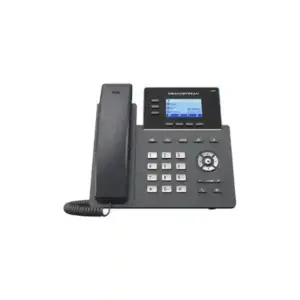
| Display | 2.8-inch 320 × 240 TFT colour LCD |
| BLF / speed dial | 8 dual-colour LED speed-dial / BLF extension keys |
| Soft keys | 4 programmable context-sensitive soft keys |
| Network | Dual switched auto-sensing 10/100/1000 Mbps Gigabit Ethernet |
| PoE | Integrated IEEE 802.3af, Class 2 PoE |
| Bluetooth | Bluetooth 2.1 |
| Audio | HD audio on handset and speakerphone; full-duplex speakerphone |
| Conferencing | 4-way audio conference |
| Headset interface | RJ9 headset jack; EHS support documented for Plantronics headsets |
| Provisioning | TFTP, HTTP/HTTPS, TR-069, encrypted XML configuration and FTP/FTPS options documented |
| Security | TLS, SRTP, HTTPS-related management options, 802.1X and AES-based secure configuration support |
| Dimensions | 193 mm (W) × 211 mm (L) × 85 mm (H) |
| Unit weight | 0.81 kg |
What the three SIP accounts mean in day-to-day use
Three SIP accounts do not automatically mean that every user should configure three independent providers. In a well-planned business deployment, the accounts may represent internal PBX identities, departmental registrations or separate services. The correct design depends on the PBX, security policy and call-routing model. A single employee may need only one account, while a team leader may use additional identities to handle departmental calls or a separate business unit.
The advantage is flexibility. The GXP2130 v2 can present multiple registrations while retaining dedicated line keys, so a user can see and control call activity without relying only on menus. This matters in environments where the person is answering, placing, transferring and conferencing calls throughout the day. In practical terms, the phone is better suited to active business communication than a basic one-line endpoint designed mainly for occasional calling.
When Fourteck sizes a phone deployment, the number of SIP accounts is considered together with extension count, concurrent calling, hunt groups, queues, SIP trunks, DID allocation, call recording requirements, failover and remote-user needs. The endpoint specification is one part of that wider design.
Eight BLF keys: where the GXP2130 v2 becomes more useful than a basic phone
BLF, or Busy Lamp Field, can let a user monitor the state of configured extensions on a compatible SIP/PBX platform. The GXP2130 v2 includes eight dual-colour BLF/speed-dial keys. For a small team, this can dramatically simplify repetitive tasks: the receptionist can watch selected extensions, a supervisor can reach key staff with one press, and an administrator can place frequently used numbers on dedicated keys rather than navigating a phonebook for every call.
The value depends on correct configuration. The PBX must support the required presence or BLF behaviour, extension permissions must be appropriate, and the keys must be mapped consistently. A good deployment uses meaningful labels and avoids assigning every possible extension simply because keys are available. The goal is to give the user faster control over the people or functions that matter most.
For Dubai offices with reception, finance, HR, operations and sales teams, eight keys can be a sensible middle ground. If an operator must monitor dozens of extensions, however, a higher-capacity endpoint or software attendant view may be more efficient. Fourteck can assess that requirement before committing to a large quantity of one model.

Gigabit Ethernet and PoE for cleaner business deployments
Grandstream specifies two switched auto-sensing 10/100/1000 Mbps Ethernet interfaces on the GXP2130 v2, with integrated IEEE 802.3af Class 2 PoE. A typical desk deployment can place the phone between the network outlet and a computer, allowing the voice endpoint and workstation to share the cabling path while still using Gigabit connectivity. Whether that topology is suitable depends on the corporate network policy, VLAN design and endpoint security rules.
PoE is especially useful when many phones are deployed because power can be delivered from a compatible network switch rather than relying on a separate wall adapter at every desk. This can reduce cable clutter and makes the voice estate easier to manage from the network layer. It also gives IT teams more options for centralized power resilience when PoE switches are protected by an appropriate UPS. The phone datasheet also lists a universal power adapter, so the exact power approach can be chosen based on the deployment.
Before rollout, the switch PoE budget should be checked for the total number of endpoints, not just one phone. Voice VLANs, DHCP options, LLDP, QoS and uplink capacity should also be considered. The GXP2130 v2 supports relevant standards including 802.1Q/802.1p and Layer 3 QoS mechanisms, but they still need to be configured consistently across the network.
HD audio, speakerphone and practical call quality
The GXP2130 v2 supports HD audio on both the handset and speakerphone. It also supports a broad range of voice codecs, including G.722 wideband audio and Opus, alongside common narrowband codecs documented by Grandstream. Codec availability alone does not guarantee a particular end-to-end sound quality. The PBX, SIP trunk, network path, other endpoint and transcoding policy all affect what the caller ultimately hears.
For an internal office call where both endpoints and the PBX negotiate a wideband codec, the user can benefit from clearer speech than a legacy narrowband call. For external calls, the carrier or destination network may negotiate a different codec. This is why Fourteck treats voice quality as a system design topic that includes LAN health, WAN stability, QoS, jitter, packet loss, codec policy and headset selection rather than simply marking “HD audio” on a product checklist.
The full-duplex speakerphone is useful for short desk-side discussions and hands-free calls. For employees who spend much of the day on calls, a suitable headset may provide better ergonomics and reduce environmental noise; compatibility should be confirmed for the intended headset model and connection method.
Bluetooth and headset planning
Grandstream lists Bluetooth 2.1 on the GXP2130 v2 and describes support for syncing compatible headsets and mobile devices for functions such as contact-book/calendar synchronization and call transferring. In a procurement context, the important word is compatibility. Bluetooth is a family of profiles and implementations, and a particular headset feature set should be checked before buying hundreds of devices based only on the presence of the Bluetooth logo.
The phone also provides an RJ9 headset port and documents Electronic Hook Switch support for Plantronics headsets. EHS can help users answer or end calls from a compatible wireless headset without physically pressing the desk-phone hook button. Exact compatibility can vary by headset model, cable, adapter and firmware, so Fourteck recommends validating the specific headset combination intended for the project.
This is especially relevant for contact-intensive roles in customer service, inside sales, appointment booking, dispatch and administration. A phone can have excellent call-control features, but if the user’s headset workflow is awkward, productivity still suffers. Endpoint and headset should therefore be selected as one user-experience package.
Provisioning for multi-phone rollouts
A business rarely wants to configure a large batch of IP phones manually one by one. The GXP2130 v2 supports automated provisioning methods including TR-069 and XML configuration files, while the datasheet also lists TFTP, HTTP/HTTPS and FTP/FTPS options for firmware and provisioning workflows. Grandstream also states that the device can be zero-configured with its UCM series IP PBXs, subject to the relevant system design and supported configuration.
For an IT team, centralized provisioning can standardize SIP server details, time settings, dial plans, feature keys, security parameters and user preferences. It also makes replacement and expansion easier because the configuration process is repeatable. The organization should protect provisioning credentials and configuration files, use secure transport where practical, control access to management interfaces and keep firmware governance aligned with its change-management policy.
Fourteck can incorporate provisioning into a wider deployment plan that covers network readiness, endpoint staging, labeling, extension mapping, testing and user handover. That is more reliable than treating device installation as simply plugging the phone into an Ethernet port.
Security capabilities and what IT teams still need to do
Grandstream documents TLS and SRTP support on the GXP2130 v2, together with administrator/user passwords, AES-based secure configuration files and 802.1X media-access control. These are valuable building blocks, but a secure voice environment depends on how the complete system is configured. Encryption needs compatible settings on the PBX or service platform, certificates must be managed properly, passwords must be unique and strong, and unnecessary management exposure should be avoided.
Organizations should also consider network segmentation, firewall policy, remote-access design, SIP trunk protection, firmware update procedures, logging and physical access to shared desks. A phone on a public or poorly controlled network is not made secure simply because SRTP appears in a datasheet. The endpoint has to be deployed within a coherent security architecture.
For regulated or security-conscious customers in the UAE, Fourteck can discuss the endpoint in the context of VLAN separation, access control and PBX hardening. Any specific compliance requirement should be assessed against the customer’s own policy and regulatory obligations rather than assumed from generic product features.
SIP and PBX interoperability: what to verify before purchase
The GXP2130 v2 is a standards-based SIP phone and Grandstream describes broad interoperability with third-party SIP devices and major SIP/NGN/IMS platforms. In real deployments, “supports SIP” is only the starting point. Businesses may rely on BLF subscriptions, shared line appearance, voicemail indicators, transfer methods, directory integration, hot desking, call park, provisioning templates, EHS behavior and specific security settings. These functions can depend on the PBX and firmware combination.
For a new project, a small pilot is often the most efficient validation method. Register the phone to the target PBX, test inbound and outbound calling, transfer, hold, conference, voicemail, BLF, caller ID, directory behavior, time synchronization, emergency dialing policy, failover and headset use. If the deployment uses a hosted PBX, confirm that the provider supports or permits the endpoint and whether it supplies a provisioning profile.
For customers planning a broader telephony refresh, Fourteck can also help relate endpoint choice to the IP PBX and business phone system design rather than selecting handsets separately from the communications platform.
Role-by-role fit: who benefits most from the GXP2130 v2?
| User role | Why it can fit | What to confirm |
|---|---|---|
| Reception support | Eight BLF keys can cover a small set of frequently monitored extensions and speed common transfers. | Whether eight monitored keys are enough for the total organization. |
| Sales executive | HD audio, Bluetooth, multiple accounts and fast access to key contacts can support a busy calling routine. | Headset compatibility and CRM/click-to-dial workflow. |
| Team supervisor | BLF visibility helps track a small team while three SIP accounts allow flexible identity design. | PBX presence support and queue/supervisor functions. |
| Administrator | Colour screen, programmable keys, phonebook and speed dial can reduce repetitive navigation. | Directory source, provisioning template and user training. |
| Manager | Balanced desk footprint with business-grade network and call-control features. | Whether a larger display or more programmable keys would be more appropriate. |
Call-handling features beyond the headline specifications
Grandstream’s datasheet lists hold, transfer, forward, call park, call pickup, shared-call-appearance/bridged-line-appearance, call waiting, call logs, auto answer, click-to-dial, flexible dial plans, hot desking, server redundancy and failover among the GXP2130 v2 telephony features. These capabilities can matter more to a business user than cosmetic differences between phone models because they shape how quickly calls can be handled during a busy day.
For example, call park can be useful in an office where an incoming caller may need to be picked up from another desk. Hot desking can be relevant where users share workstations. A downloadable XML or LDAP phonebook can simplify company-directory access. Server redundancy can support a resilient design when the PBX or service architecture is configured accordingly. However, the endpoint and PBX have to be designed together; not every platform exposes each feature in the same way.
Fourteck therefore recommends writing a short call-flow requirement before procurement: who answers incoming calls, which groups ring, how calls transfer, who monitors which extensions, how voicemail works, what happens outside business hours and how failure conditions should behave. The phone model can then be matched to that workflow.
Deployment checklist for Grandstream GXP2130 v2 in Dubai
Dubai office scenarios
Dubai businesses often operate with compact teams that still handle significant customer traffic. A trading company in Deira may have reception, sales, purchasing and accounts staff who need to transfer calls quickly among a known group of extensions. In that type of environment, eight BLF keys can be more useful than an entry-level phone with few programmable buttons. The Gigabit pass-through also helps where a desk has a single network outlet and both the PC and phone need wired connectivity.
A professional-services office in Business Bay, JLT or another commercial district may place more emphasis on headset use, clear audio and a tidy desk. Bluetooth and EHS options can therefore become important buying criteria, while PoE keeps local cabling simpler. The IT team may also require voice VLAN separation and centralized provisioning because the phones are part of a managed corporate environment.
For a multi-branch company, the GXP2130 v2 can be considered as one standardized endpoint tier: managers and active call handlers receive this model, while lighter users receive a simpler endpoint and attendants receive a higher-capacity console. That role-based approach can be more economical and easier to support than deploying the same phone to every employee regardless of actual use.
Abu Dhabi, Sharjah and Ajman deployment considerations
In Abu Dhabi, larger offices and project-based organizations may prioritize structured deployment, centralized provisioning, consistent security policy and a documented handover process. The GXP2130 v2 can fit as a standard professional desk phone where three SIP accounts and eight BLF keys match the role. The project team should still validate how the chosen PBX handles presence, failover and firmware management.
Sharjah businesses frequently combine administration, warehousing, retail or light industrial operations. Here, phone selection may need to account for noisy environments, desk location and whether a fixed wired endpoint is more appropriate than a cordless device. For office users attached to warehouses or service teams, the GXP2130 v2 can provide predictable wired connectivity and quick access to the small set of colleagues they call most often.
Ajman customers may focus on value and simplicity during an IP telephony upgrade. The right approach is to compare the total solution rather than a handset price in isolation: PoE switching, PBX licenses or subscriptions where applicable, SIP trunking, configuration, headsets, installation, support and future expansion can all affect the project cost. Fourteck can prepare a requirement-based quotation instead of relying on an unsupported fixed online price.
GCC and Africa procurement context
Organizations with offices across the GCC or Africa often benefit from standardizing endpoint profiles: executive, professional, standard user, reception and common-area phones. The GXP2130 v2 can be assessed for the professional tier where users need three SIP accounts, Gigabit Ethernet, PoE, Bluetooth and physical BLF keys. Standardization can simplify training and configuration, but the exact availability of a model, accessories and support can vary by country and time.
For cross-border projects, procurement teams should document the required quantity, destination, power/network environment, PBX platform, desired firmware policy and accessories. They should also confirm whether the same phone revision can be supplied across all locations or whether an alternative model is needed in some markets. Fourteck’s wider network includes resources for Uganda, Kenya, Tanzania, Ghana and Nigeria where broader regional IT requirements may be planned.
This regional approach is particularly useful for organizations that want consistent dialing, extension numbering, security and user experience across multiple sites while still adapting network and carrier details locally.
How to compare GXP2130 v2 with other Grandstream business phones
Grandstream lists the GXP2140, GXP2160, GXP2170 and GXP2135 as related products to the GXP2130 v2. A useful comparison should not begin with “Which model is better?” because the answer depends on the job. Start with the number of SIP identities, lines and monitored extensions each user actually needs. Then assess screen size, programmable-key capacity, headset requirements, network interfaces, provisioning method and whether the organization wants to standardize on a newer platform or a specific phone family.
The GXP2130 v2’s strongest position is as a balanced professional desk phone: it offers more call-control capability than a basic endpoint but remains compact. If the user needs only occasional calls and one extension, the device may be more than necessary. If the user is an attendant who monitors a much larger team, it may not provide enough direct key capacity. Matching the phone to the role avoids both under-specification and unnecessary cost.
For broader Grandstream planning, customers can also review Fourteck’s Grandstream UAE solutions presence and request a model comparison based on current requirements rather than relying on a generic “best phone” ranking.
Network design matters as much as the phone model
A premium endpoint cannot compensate for an unstable LAN or WAN. Before deploying the GXP2130 v2, businesses should review switch port configuration, PoE capacity, VLAN tagging, DHCP, DNS, NTP and QoS. The phone supports 802.1Q/802.1p and Layer 3 QoS mechanisms documented by Grandstream, but those capabilities only deliver value when the surrounding network is configured correctly.
Voice is sensitive to latency, jitter and packet loss. A congested uplink, poorly configured VPN or unstable internet circuit can create audio issues even when the handset itself is operating normally. For hosted PBX deployments, internet resilience may therefore be as important as the device. For on-premise PBX systems, internal switching and routing still need careful design, particularly across branches.
Fourteck can align the phone project with IT infrastructure and network services, helping customers treat voice as a managed application on the corporate network rather than a separate collection of desk devices.
Directories, call logs and user productivity
The GXP2130 v2 supports downloadable XML and LDAP phonebooks, with Grandstream documenting up to 2,000 phonebook items and call logs up to 500 records. Directory integration can be valuable when employees need to find internal contacts without memorizing extension numbers. It can also reduce the tendency for each user to maintain a separate, inconsistent local contact list.
A company directory is most useful when naming conventions, department labels and numbers are maintained centrally. IT teams should decide whether the authoritative source will be LDAP, an XML directory generated by the PBX, a provisioning platform or another supported method. Access controls should be considered if the directory contains information that should not be exposed to every endpoint.
Call logs can help users return missed calls and review recent activity, but organizations with formal reporting, compliance or contact-centre requirements should rely on PBX/server-side records rather than treating local handset history as an authoritative audit trail.
Four-way audio conferencing: useful for quick team calls
The GXP2130 v2 supports four-way audio conferencing. This can be convenient when a user needs to bring a few parties together quickly without scheduling a formal online meeting. For internal discussions, supplier coordination or a customer call that needs another colleague, ad hoc conferencing can save time.
However, a desk-phone conference is not a replacement for a dedicated conferencing or collaboration platform when a meeting needs many participants, screen sharing, recording, participant controls or scheduled invitations. The right solution depends on the size and purpose of the meeting.
For businesses building a complete communications environment, Fourteck can help determine which interactions belong on the desk phone, which should use the PBX conference features, and which should move to a video or unified-collaboration platform.
What comes in the package?
Grandstream’s datasheet lists the GXP2130 phone, handset with cord, base stand, universal power supply, network cable and Quick Start Guide as package contents. Procurement teams should still verify the current package for the exact supplied unit and region, especially when accessories or project-specific cables are important.
The presence of a power adapter does not mean every enterprise rollout should use local adapters. Where compatible PoE switching is available, PoE can simplify deployment and centralize power. Conversely, a small office without PoE may use the supplied power method. The network design should decide the power model, not habit.
Buying the Grandstream GXP2130 v2 in Dubai: what to include in your RFQ
A useful request for quotation should include more than a model number. State the required quantity, delivery location, PBX or hosted SIP platform, whether PoE is available, headset requirements, expected BLF use, desired provisioning method and whether installation or configuration is required. If the phones are part of a new system, also include total extension count, branch locations, SIP trunk requirements, internet/WAN details and any need for failover.
This information helps avoid common procurement mistakes such as buying a phone that technically registers to SIP but does not match the user’s call-control needs, purchasing incompatible headsets, overlooking PoE switch capacity or assuming provisioning will be automatic without a prepared server or PBX profile.
Fourteck can provide a requirement-led quotation for the Grandstream GXP2130 v2 Dubai and related business communication components. We do not state live stock, fixed delivery time or price on this page because those details can change and should be confirmed for the actual enquiry.
Common deployment mistakes to avoid
Buying only by price: a low handset price can be offset by incompatible accessories, manual configuration time or the need to replace phones that do not fit the user role. Compare total deployment cost and operational fit.
Ignoring PoE budget: a switch may support PoE but still lack sufficient aggregate power for all connected devices. Calculate the whole access-layer load and retain sensible headroom.
Assuming every SIP feature is universal: registration may work while BLF, shared line appearance, hot desking or provisioning behaves differently. Test the exact PBX and firmware combination.
Skipping headset validation: Bluetooth or EHS support does not guarantee that every headset and control function will behave as expected. Test the intended model.
Deploying without a configuration standard: inconsistent time settings, codecs, key maps, passwords and firmware make support difficult. Create a documented baseline first.
Forgetting user workflow: an executive, receptionist and warehouse administrator may all need different endpoint types. Standardize sensibly, but not blindly.
Why work with Fourteck for an IP phone project?
The useful part of an IP phone purchase is the fit between the handset and the business system behind it. Fourteck approaches the endpoint as part of the customer’s communication environment: SIP accounts, PBX, trunks, network switching, PoE, VLANs, QoS, security, headset usage, provisioning, user roles and branch connectivity. This makes it easier to choose the right endpoint tier and avoid overbuying or under-specifying.
For a single replacement phone, the process can be simple: confirm the PBX, registration method, power and required features. For a larger rollout, the project may include design, staging, extension mapping, network validation, pilot testing and handover. The level of service should match the scale and risk of the deployment.
Customers can also visit Fourteck UAE for broader IT and communications requirements. Specific product availability, commercial terms and project scope should be confirmed directly for each enquiry.
Grandstream GXP2130 v2 FAQ
How many SIP accounts does the GXP2130 v2 support?
It supports up to three SIP accounts with three line keys, making it suitable for users who need more than one registration or identity within a supported PBX design.
Does the GXP2130 v2 have PoE?
Yes. Grandstream specifies integrated IEEE 802.3af Class 2 Power over Ethernet. The PoE switch and total power budget should be checked for the full deployment.
Does the GXP2130 v2 have Gigabit Ethernet?
Yes. It has dual switched auto-sensing 10/100/1000 Mbps Ethernet ports, which can be useful when a PC shares the wired desk connection through the phone.
Does it support Bluetooth?
Yes. The GXP2130 v2 includes Bluetooth 2.1. Compatibility and feature behavior should be confirmed for the exact headset or mobile-device workflow.
How many BLF keys are available?
The phone includes eight dual-colour BLF/speed-dial keys. They can be useful for monitoring a small set of extensions on a compatible PBX.
What size is the display?
The GXP2130 v2 has a 2.8-inch 320 × 240 TFT colour LCD.
Can the GXP2130 v2 be centrally provisioned?
Yes. Grandstream documents automated provisioning using methods such as TR-069 and encrypted XML configuration files, with several firmware/configuration transport options also listed in the datasheet.
Does it support secure voice?
The phone supports TLS and SRTP among its security capabilities. End-to-end secure deployment still depends on compatible PBX settings, certificates, network policy and correct configuration.
Is the GXP2130 v2 suitable for reception?
It can suit a reception or administrative desk that needs to monitor a relatively small group of extensions. If the user must monitor many more extensions, a higher-capacity endpoint or attendant solution may be more appropriate.
Can it be used with a hosted PBX?
Potentially, yes, because it is a standards-based SIP phone. The hosted provider should confirm that the phone is supported and provide the required registration or provisioning details.
Does it support four-way conferencing?
Yes. Grandstream specifies four-way audio conferencing for the GXP2130 v2.
How can I request a GXP2130 v2 quote in Dubai?
Send Fourteck the required quantity, location, PBX platform, PoE status, headset needs and whether configuration or installation is required. Current commercial availability and pricing can then be confirmed for the enquiry.
Request a Grandstream GXP2130 v2 Dubai quotation
Tell Fourteck how many phones you need, which PBX or SIP service you use, whether your switches provide PoE, and which users need BLF keys or headsets. We can help confirm whether the GXP2130 v2 is the right fit, compare suitable alternatives where required, and plan the deployment around your actual network and call-flow requirements.
Reviews
There are no reviews yet.