Grandstream GXP1782 Dubai – Gigabit HD IP Phone for Busy Business Desks
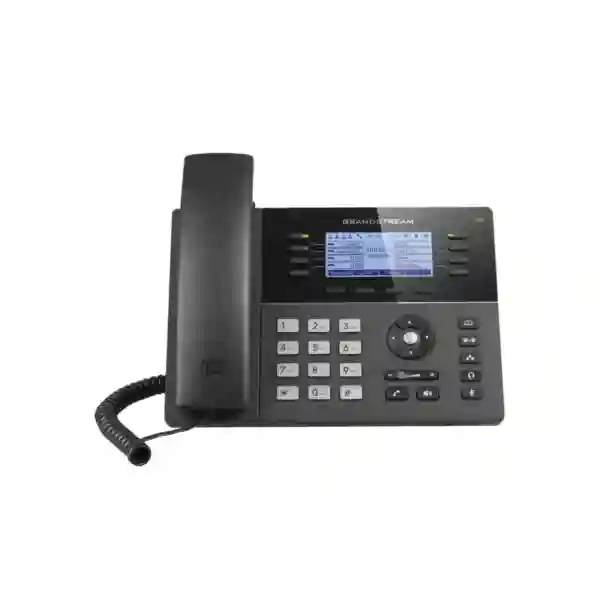
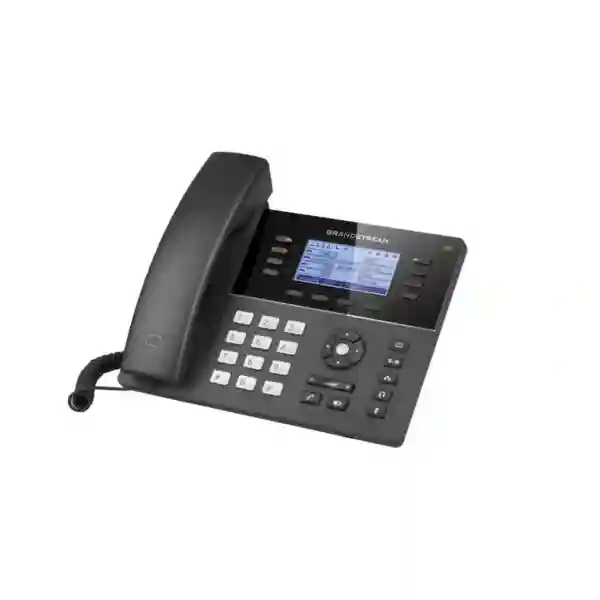
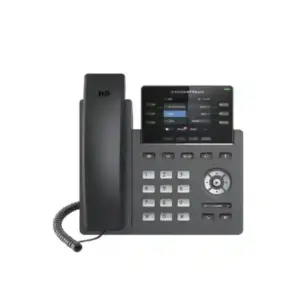
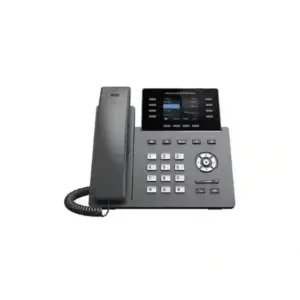
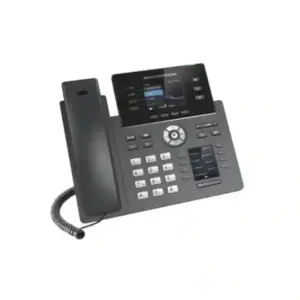
The Grandstream GXP1782 Dubai requirement usually comes from businesses that have outgrown basic desk phones and now need faster call handling, more visible line appearances, programmable keys and Gigabit network connectivity without moving to a large executive-class touchscreen device. The GXP1782 provides eight lines, four SIP accounts, eight dual-color line keys, 32 digitally programmable BLF/fast-dial positions, HD wideband audio, five-way audio conferencing, integrated Power over Ethernet and dual auto-sensing 10/100/1000 Mbps Ethernet ports. That combination makes it practical for reception desks, sales coordinators, customer-service staff, supervisors, office administrators and managers who frequently transfer calls or monitor several extensions.
Fourteck approaches this model as a deployment decision rather than only a hardware purchase. Before recommending it for an office in Dubai, Abu Dhabi, Sharjah or elsewhere in the UAE, the important questions are the PBX platform, SIP account requirement, number of monitored extensions, PoE availability, headset usage, desktop network design and expected call volume. Availability, pricing and deployment scope should be confirmed for each project rather than assumed.
Why the GXP1782 is more useful than a basic office IP phone
A basic SIP phone may be enough for a user who answers one extension, makes occasional internal calls and rarely transfers callers. A busier user has a different problem. Receptionists may need to monitor several departments, sales coordinators may switch between direct lines and shared call appearances, customer-service teams may transfer callers frequently, and office managers may need fast access to colleagues without manually dialing extensions throughout the day.
The GXP1782 gives these users more physical and programmable control. Grandstream specifies eight line keys, support for up to four SIP accounts, four XML programmable context-sensitive soft keys and 32 digitally programmable BLF/fast-dial positions. Those capabilities can shorten routine call-handling steps when the PBX is configured correctly. A receptionist can use BLF keys to monitor important extensions, a manager can assign common contacts or branch numbers, and a sales desk can keep separate SIP identities organized without relying on a minimal two-key interface.
Its other important distinction is networking. The GXP1782 uses dual switched auto-sensing Gigabit Ethernet ports, while the related GXP1780 uses 10/100 Mbps ports. In a desk arrangement where the employee computer connects through the phone, Gigabit pass-through can prevent the phone from becoming a 100 Mbps bottleneck for the workstation. This does not improve voice quality simply because the port is faster; voice traffic uses far less bandwidth. The benefit is maintaining a modern wired desktop path while allowing phone and PC to share one network drop.
Quick fit check for Dubai and UAE buyers
Choose it when
Users need multiple line appearances, four SIP accounts, visible BLF keys, frequent transfers, Gigabit desktop connectivity and PoE-powered deployment.
Check first
Confirm PBX compatibility, provisioning method, PoE switch capacity, headset requirements, firmware policy and how many extensions the user actually needs to monitor.
Consider another model when
The user needs built-in Wi-Fi, Bluetooth, a color display, large expansion-module capacity or a simpler low-cost endpoint for light calling.
Best buying approach
Share the PBX type, quantity, desk roles, switch model, headset requirement and installation expectation before requesting a quotation.
Verified GXP1782 technical profile
Grandstream positions the GXP1780 and GXP1782 as mid-range IP phones. The two models share many call-control characteristics, but the GXP1782 is the Gigabit-network version. The table below focuses on verified decision-making facts rather than unsupported market claims. Features can also depend on PBX configuration, firmware and services enabled by the SIP platform.
| Area | GXP1782 details | Business relevance |
|---|---|---|
| Lines / accounts | 8 lines, up to 4 SIP accounts, 8 dual-color line keys | Useful for several identities, line appearances or shared-call workflows. |
| Programmable keys | 4 XML context-sensitive soft keys and 32 programmable BLF/fast-dial positions | Helps with extension monitoring, speed dial and repeatable desk actions. |
| Display | 200 × 80 pixel, 3.3-inch backlit LCD | Practical information display for calls, labels and menus. |
| Network | Dual switched auto-sensing 10/100/1000 Mbps Ethernet | Preserves Gigabit desktop connectivity when a PC connects through the phone. |
| Power | Integrated IEEE 802.3af PoE; universal power adapter specified in package content | Supports centralized power and cleaner desk cabling. |
| Audio | HD handset and speakerphone, wideband audio, full-duplex hands-free, acoustic echo cancellation | Supports clearer desk conversations when the call path is also compatible. |
| Conference | 5-way audio conferencing | Suitable for routine small multi-party voice calls. |
| Headset | RJ9 headset jack with EHS support for compatible Plantronics headsets | Relevant for reception, sales and support staff with long call times. |
| Provisioning | TR-069, AES-encrypted XML configuration; firmware via TFTP/HTTP/HTTPS | Supports repeatable rollout and administrative control. |
| Security | TLS, SRTP, 802.1x, AES-encrypted configuration, user/admin passwords and Kensington Security Slot support | Provides useful signaling, media, configuration and physical-security controls. |
| Directory / history | Phonebook up to 2,000 items; call log up to 500 records | Supports active office users who repeatedly contact customers and internal teams. |
Customer requirement → capability → practical result
Reception staff need faster transfers
A receptionist may answer calls for several departments and spend much of the day checking whether colleagues are available. The GXP1782’s line keys and programmable BLF positions can reduce repetitive dialing when the PBX exposes compatible BLF status. The practical benefit is faster transfer handling and better visibility of important extensions. The limitation is that BLF behavior is not created by the phone alone; it must be supported and correctly configured on the PBX or hosted SIP platform.
Sales staff use a phone and PC on one network point
Many desks have one structured-cabling outlet. In this arrangement, the network cable runs to the phone and the PC connects through the phone’s second Ethernet port. Because the GXP1782 provides Gigabit ports, the workstation can retain Gigabit link capability where the switch, cabling and PC also support it. The buyer should still check VLAN design, switch-port settings and voice/data QoS rather than assuming the phone will automatically resolve network-performance issues.
Managers need several SIP identities
Some managers have a main office extension, direct line, branch identity or second service account. Support for up to four SIP accounts can accommodate these scenarios without requiring a separate device for each identity. Whether all identities are appropriate on one phone depends on call routing, privacy, line labeling, voicemail and caller-ID policy.
Centralized powering and cleaner desks
Integrated 802.3af PoE lets a compatible switch provide network connectivity and power over Ethernet. This can simplify desk cabling and can be useful in offices that protect PoE switching and PBX infrastructure with UPS backup. The deployment team must check total PoE budget, not only whether individual ports are PoE capable.
GXP1782 vs GXP1780: the buying difference that matters most
The GXP1780 and GXP1782 share the same core mid-range concept, including eight lines, four SIP accounts, a 200 × 80 backlit display, programmable keys, HD audio and five-way conferencing. The most important network difference is Ethernet speed: the GXP1780 is specified with 10/100 Mbps Ethernet ports, while the GXP1782 provides 10/100/1000 Mbps Gigabit ports.
If the phone is connected to its own network point and no PC is daisy-chained through it, the speed difference may have limited practical effect on voice because SIP traffic requires modest bandwidth. If a desktop computer passes through the phone, Gigabit capability can be valuable because it avoids reducing that wired desktop link to Fast Ethernet. The complete path still matters: switch port, cabling, VLAN configuration, QoS policy and endpoint NIC.
Choose based on the environment rather than the model number alone. A low-traffic desk with independent PC cabling may not need Gigabit pass-through. A user with one network outlet, large file transfers, shared storage or cloud-heavy workflows may benefit more from the GXP1782.
Call handling for reception, sales, support and administration
The GXP1782 is best understood as a work phone for people who interact with many callers or colleagues. Hold, transfer, forward, five-way conference, call park, call pickup, shared call appearance, bridged line appearance, call waiting, auto answer, click-to-dial, hot desking and flexible dialing are among the functions documented for the GXP1780/GXP1782 series. The actual behavior of several functions depends on the PBX.
For a hotel back office, programmable keys might represent reception, reservations, housekeeping, security and management. For a clinic, they could represent appointments, billing, nurses’ desks and administration. A logistics company might map dispatch, warehouse, accounts, sales and management. In each case, the phone becomes more useful when the key layout reflects the user’s real workflow instead of a generic configuration copied to every desk.
This is why configuration planning should happen before a large rollout. If dozens of phones are deployed, the business should decide which keys are standardized, which are user-specific, how account labels are named, whether directories come from XML or LDAP, and which settings are locked centrally. This reduces support tickets and makes training simpler.
HD voice, codecs and what clear audio really depends on
Grandstream specifies HD handset and speakerphone support with wideband audio for the GXP1782. The documented codec list includes G.729A/B, G.711 µ-law/a-law, G.726, G.722 wideband, G.723, iLBC and OPUS. The phone also supports a full-duplex hands-free speakerphone and acoustic echo cancellation. These are strong endpoint capabilities, but audio quality in a real deployment is a system-level result.
Clear voice depends on codec negotiation, packet loss, jitter, latency, SIP trunk quality, PBX configuration, headset quality, background noise and the far-end endpoint. Wideband audio requires compatible support across the call path. If a provider negotiates a narrowband codec, the call will not remain wideband merely because the GXP1782 is HD capable.
Fourteck therefore recommends checking voice VLAN design, QoS and WAN conditions when users report call-quality problems. The phone supports Layer 2 QoS through 802.1Q and 802.1P and Layer 3 mechanisms including ToS and DiffServ. Those features are most effective when surrounding switching and routing infrastructure honors them.
Network planning checklist before buying multiple GXP1782 phones
- Confirm Ethernet design. Decide whether each PC connects through the phone or has its own switch port.
- Check PoE capacity. Grandstream specifies 802.3af PoE and maximum power consumption of 5 W. Review total switch budget and leave sensible headroom.
- Define VLAN policy. Determine how phones receive the voice VLAN and whether LLDP, DHCP options or manual settings are used.
- Review QoS. Align switch and router treatment with the PBX and WAN design rather than assuming default markings are automatically prioritized.
- Plan provisioning. Decide whether phones are configured manually, through Grandstream UCM Zero-Config, TR-069 or XML files.
- Set security policy. Use strong administrator credentials, secure provisioning, TLS/SRTP where compatible and 802.1x where required.
- Validate a pilot. Test calling, transfer, voicemail, BLF, directory, headset, VLAN and reboot behavior before mass deployment.
SIP PBX compatibility: what to confirm before deployment
The GXP1782 is a standards-based SIP endpoint. Grandstream documents SIP RFC3261 plus a broad set of IP, provisioning and security protocols. That gives the phone a strong basis for use with many SIP-based IP PBX systems and hosted voice platforms. However, “SIP compatible” should not be treated as a guarantee that every advanced function works identically on every platform.
Basic registration and calling may work while BLF, shared line appearance, remote phonebook, EHS, secure signaling, hot desking or call recording behave differently. Businesses should verify feature-level requirements, not only registration. If a reception team depends on BLF and directed call pickup, those functions should be tested on the actual PBX.
Grandstream also states that the GXP1780/GXP1782 can be used with its UCM series IP PBX appliances for Zero-Config provisioning and related integrated functions. This can simplify endpoint administration for organizations already standardized on Grandstream UCM, while still requiring firmware and template validation before a major rollout.
Provisioning and fleet management for multi-phone rollouts
Manual configuration is workable for one or two phones, but it becomes inefficient when an organization needs dozens of endpoints across multiple departments or branches. Grandstream documents TR-069 and AES-encrypted XML configuration as mass-provisioning options, with firmware upgrade paths over TFTP, HTTP and HTTPS. The best method depends on the PBX, security policy and operating model.
A managed rollout normally starts with a standard profile covering time zone, language, NTP, SIP server, codecs, VLAN, QoS, directory source, button behavior and firmware policy. User-specific settings such as extension credentials and selected BLF mappings can then be layered on top. Centralized templates also reduce effort when settings must change after a PBX migration or security review.
Security controls for business telephony
The GXP1782 supports TLS, SRTP, 802.1x, AES-encrypted configuration files, user/administrator passwords and a Kensington Security Slot. Grandstream also documents MD5 and MD5-sess authentication. These provide useful security building blocks, but the final result depends on configuration.
TLS can protect SIP signaling when the PBX and provider support compatible settings. SRTP can encrypt voice media where supported across the path. 802.1x can be useful in enterprise networks that require authenticated switch-port access. Encrypted provisioning reduces exposure of configuration data. Administrator passwords should be changed from defaults and managed as part of the organization’s credential policy.
A phone supporting TLS does not mean every deployed call is automatically encrypted. The PBX may use unencrypted SIP, a trunk may have a different security model, or certificates may not be validated correctly. Endpoint capability and actual deployment security should therefore be assessed separately.
Which UAE business roles are a good match?
Reception and front desk
Multiple lines, BLF positions, transfer keys and headset support suit front-desk call distribution when the PBX is designed around the receptionist workflow.
Sales and account teams
HD voice, programmable speed dial, several SIP accounts and Gigabit PC pass-through suit users who combine frequent calls with CRM and cloud applications.
Support coordinators
Users who transfer calls across technical teams or branches can use BLF and call-control functions to reduce manual extension lookup.
Office administrators
A balanced feature set fits administrators who need directories, multiple contacts and line visibility without requiring a large touchscreen device.
Branch managers
Several SIP identities and quick access to branch extensions can support managers who coordinate teams across locations.
Hospitality and clinic back offices
Fixed desk operation, programmable extension access and centralized provisioning fit administrative environments with predictable call-control needs.
Dubai deployment scenarios
SME headquarters in Business Bay or Deira: A growing trading, services or professional office may have 20–80 extensions, one receptionist and several team leaders. The GXP1782 can be assigned to reception, managers and heavy-call users while simpler phones are used for light-call desks. This role-based approach avoids paying for unused programmable capacity everywhere while preserving richer call control where it matters.
Logistics or warehouse administration: Supervisors often coordinate drivers, warehouse staff, sales, procurement and accounts. A wired phone with visible extension status can be useful at a fixed desk, especially when one network drop serves both phone and PC.
Clinic administration: Appointment and billing teams may need to transfer callers across departments. Programmable keys can help staff reach recurring destinations quickly. A deployment should also consider privacy policy, call recording, headset selection and hot-desking requirements.
Hotel back office: Reservations, purchasing, management and engineering desks may benefit from standardized fixed phones. The suitability of the GXP1782 depends on the PBX and any hospitality-specific applications and should not be assumed to replace specialized guest-room endpoints or hotel middleware without validation.
Abu Dhabi, Sharjah and Northern Emirates considerations
In Abu Dhabi, buyers may be planning corporate, institutional, engineering or multi-site environments where centralized configuration and endpoint policy matter as much as individual phone features. The GXP1782 can be evaluated as part of a broader SIP architecture including branch connectivity, voice VLANs, secure provisioning and UPS-backed PoE switching.
Sharjah and Ajman businesses often need practical cost control across offices, showrooms, warehouses and light-industrial sites. A mixed-device strategy can work well: richer phones for reception, managers and coordinators, and simpler endpoints for users who only need one or two lines. The GXP1782 is most valuable where users actively use its line keys, BLF positions and Gigabit pass-through.
For Ras Al Khaimah, Fujairah and Umm Al Quwain branches, standardization can reduce support complexity. The main questions remain centralized provisioning, WAN reliability, SIP trunk design, local PoE capacity and remote support processes.
When the GXP1782 may not be the right choice
Grandstream’s datasheet lists Bluetooth as “No,” and the GXP1782 is not documented as a built-in Wi-Fi model. If users require wireless LAN, Bluetooth headset pairing, a color interface or a touch display, another phone family may be more suitable. The GXP1760W is the Wi-Fi-equipped variant documented in the same GXP17xx family, though its line and network capabilities differ.
The GXP1782 may also be more than a light user needs. A back-office employee who makes occasional internal calls may not benefit from eight line keys or 32 BLF/fast-dial positions. Conversely, a very high-volume attendant who needs large expansion modules may need a higher-capacity endpoint. Matching the phone to the role creates a cleaner and more cost-effective fleet.
Buyers should also confirm product lifecycle, firmware support and current channel availability before standardizing a long-term deployment. Stock, lead time, price and warranty handling should be confirmed at quotation time rather than assumed.
Headset planning for high-call users
Grandstream documents an RJ9 headset jack and EHS support for compatible Plantronics headsets. For reception, sales and support roles, headset compatibility can be decisive because users may spend several hours per day on calls. EHS functionality can allow call-control interaction between phone and supported wireless headset systems, depending on headset, adapter requirements and firmware.
Do not buy a headset solely because it uses an RJ9 connector. Connector compatibility does not always guarantee complete electronic compatibility, and EHS can depend on cabling or adapters. Confirm the exact headset model, wired or wireless preference, range, desk environment and expected answer/end-call behavior before procurement.
A closer look at the 32 BLF and fast-dial positions
Thirty-two programmable positions are useful only when the layout is designed around the user. BLF is commonly used to show the state of another extension and provide fast access to it. In a well-planned reception environment, the receptionist can see whether key extensions are available or busy and can reach them without repeatedly typing numbers. Speed dial can be assigned to external contacts, branches or frequently used services where BLF status is unnecessary.
A small office may assign the first group of keys to management and departments, the second to frequently called colleagues and the remaining positions to call functions. A larger organization may use department-level groups and standardized naming. Too many assignments can also create clutter. The goal is to reduce steps, not to fill every key because it exists.
USB port, wall mounting and physical desk planning
The GXP1782 includes a built-in USB port, but Grandstream describes it for importing and exporting data only. Buyers should not assume it is a general-purpose USB host for arbitrary accessories. If a project depends on a specific USB device, validate that requirement separately.
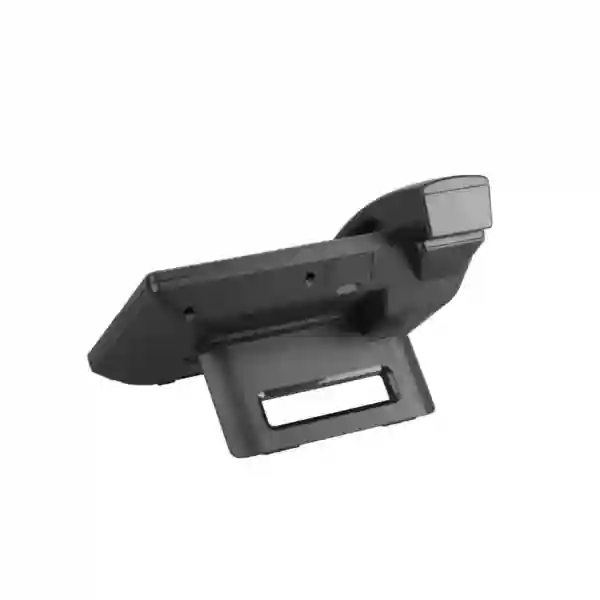
Grandstream specifies a two-angle base stand and notes that a wall-mount stand is sold separately. This can matter for warehouses, corridors, service counters or shared spaces. The phone also supports a Kensington Security Slot, which can help in public or semi-public areas where physical security is relevant.
The documented dimensions are about 231 mm wide, 167 mm long and 86 mm high, with a unit weight of about 0.925 kg. Larger deployments should also account for headset bases, monitor stands, laptop docks and cable management so the phone remains comfortable to use.
Power, environment and resilience
Grandstream specifies a universal power adapter with 100–240 V input and +5 V, 1 A output in package content, plus integrated 802.3af PoE. Maximum power consumption is documented as 5 W. In a large PoE deployment, review aggregate switch load because phones may share PoE capacity with cameras and wireless access points.
The documented operating temperature is 0°C to 40°C, storage temperature is -10°C to 60°C and non-condensing humidity is 10% to 90%. The GXP1782 is an indoor office phone and should not be treated as an outdoor or high-temperature industrial endpoint simply because it is used by a warehouse business.
If phones are powered from a PoE switch protected by a UPS, voice service can remain available during short power interruptions only if the PBX, router, firewall and upstream connectivity are also protected. Resilience should cover the whole communication path.
QoS, voice VLANs and the meaning of Gigabit phone
The GXP1782 supports Layer 2 QoS mechanisms including 802.1Q and 802.1P and Layer 3 mechanisms including ToS and DiffServ. In practical office networks, VLAN tagging and DiffServ are especially relevant because they help separate voice traffic and indicate priority to network devices. The phone can participate in that design, but policy needs to be consistent throughout the network.
A switch port can be designed so the phone uses a voice VLAN while the connected PC uses a data VLAN. That design must be tested with the actual switching platform and LLDP or provisioning method. Incorrect VLAN settings can leave a phone unable to register even when the physical link is up.
Gigabit Ethernet should also be interpreted correctly. The phone’s two Gigabit ports allow a Gigabit link where the rest of the path supports it; the phone itself does not need Gigabit bandwidth for voice. The main advantage is preserving high-speed data connectivity for a daisy-chained computer.
Common buying and deployment mistakes
- Buying only by line count: eight lines are useful only when the user’s PBX and daily role need them.
- Ignoring PoE budget: a switch may have enough PoE ports but insufficient total power for phones plus other powered devices.
- Assuming every SIP feature is universal: registration does not guarantee identical BLF, shared-line, directory or hot-desking behavior on every PBX.
- Skipping a pilot: one pilot phone can reveal VLAN, firmware, provisioning, headset and PBX issues before they affect dozens of desks.
- Choosing a wired phone for a wireless requirement: the GXP1782 is not a built-in Wi-Fi model.
- Treating price as the only decision: configuration time, headset compatibility, switch capacity, support effort and user productivity also affect project value.
Recommended rollout sequence for offices with many extensions
Discovery: document the current PBX, SIP trunks, extension plan, switch infrastructure, WAN topology and existing endpoints. Define what problem the new phone should solve—more line keys, Gigabit pass-through, easier provisioning, better user consistency or a combination.
User segmentation: divide staff into light, standard, heavy-call, receptionist and executive roles. Determine which roles genuinely benefit from the GXP1782.
Pilot: configure one or a few devices using the planned firmware and provisioning method. Test incoming and outgoing calls, caller ID, transfer, hold, conference, voicemail, directory, BLF, headset, VLAN, QoS and reboot behavior.
Template design: finalize common settings, account labels, key behavior, time zone, language, directory and security policy. Decide which settings users may change locally.
Network readiness: confirm PoE capacity, switch configuration, DHCP/DNS/NTP, voice VLAN and firewall rules. Ensure attached PCs negotiate the expected Ethernet speed.
Staged deployment and handover: roll out by department or site, then show users how to transfer, hold, conference, use BLF and operate the headset. Document firmware, provisioning source, PBX template, VLAN policy and support ownership.
Troubleshooting before replacing the phone
If a GXP1782 does not register, check whether it received an IP address, whether DNS and time are correct, whether the SIP server is reachable, whether credentials are valid and whether a VLAN or firewall policy is blocking traffic. If registration works but calls have one-way audio, investigate NAT, firewall and RTP handling before assuming a hardware fault.
If voice sounds choppy, test packet loss and jitter, inspect WAN utilization and confirm QoS behavior. If a PC connected through the phone is slow, verify link speed on both phone ports, cable quality and switch capability. A Gigabit phone cannot make a Fast Ethernet switch or damaged cable negotiate at 1 Gbps.
If BLF keys do not show expected status, confirm PBX support and subscription configuration. If an EHS headset cannot answer calls remotely, verify the exact headset, cable or adapter, EHS settings and firmware support. Troubleshooting by symptom helps separate phone hardware from PBX, network, provisioning and accessory issues.
Procurement checklist for a GXP1782 Dubai quotation
- Required quantity and delivery location.
- Existing or planned IP PBX / hosted SIP platform.
- Whether phones are new extensions, replacements or part of a migration.
- Number of SIP accounts or line appearances required per role.
- BLF monitoring, receptionist workflow and headset requirements.
- PoE switch model, available PoE budget and VLAN design.
- Whether PCs connect through the phone’s Gigabit Ethernet.
- Provisioning method and configuration expectations.
- Installation, testing, user handover and support scope.
Fourteck can then separate hardware supply from optional configuration or deployment work and help confirm whether the GXP1782 is appropriate for each user group.
How Fourteck can support the GXP1782 requirement
Fourteck can help UAE organizations evaluate the GXP1782 as part of a complete voice endpoint requirement. The discussion can cover product selection, quantity planning, PBX compatibility, PoE readiness, network layout, SIP extension requirements, headset compatibility, provisioning approach and rollout scope. Where configuration services are included, the exact work should be agreed before deployment so responsibilities are clear.
UAE buyers can explore Fourteck UAE, regional communication requirements through IP Phone Fourteck, and the verified existing UAE product reference at Grandstream GXP1782 Dubai. Regional projects can also be planned through Fourteck Africa, Fourteck Kuwait, Fourteck Kenya, Fourteck Uganda, Fourteck Tanzania and Fourteck Nigeria. Availability and service coverage should be confirmed for the relevant country.
Frequently asked questions about Grandstream GXP1782 Dubai
How many SIP accounts does the GXP1782 support?
The GXP1782 supports up to four SIP accounts and provides eight line keys. The exact way those accounts and line appearances are used depends on the PBX configuration.
Does the GXP1782 have Gigabit Ethernet?
Yes. Grandstream specifies dual switched auto-sensing 10/100/1000 Mbps Ethernet ports for the GXP1782. This is a key difference from the GXP1780, which uses 10/100 Mbps ports.
Does it support Power over Ethernet?
Yes. The GXP1782 supports integrated IEEE 802.3af PoE. The deployment team should confirm that the network switch has sufficient PoE capacity for the required number of phones.
Can the GXP1782 work with a Grandstream UCM PBX?
Grandstream documents use with UCM series IP PBX appliances, including Zero-Config provisioning scenarios. Firmware and template compatibility should still be confirmed for the actual UCM deployment.
Can it be used with other SIP PBX systems?
The phone is standards-based and supports SIP RFC3261. Basic interoperability is possible with many SIP platforms, but advanced functions such as BLF, shared lines, directories and secure provisioning should be tested with the specific PBX or hosted provider.
How many programmable BLF or speed-dial positions are available?
Grandstream specifies 32 digitally programmable and customizable BLF/fast-dial keys. Their behavior depends on the assigned feature and PBX support.
Does the GXP1782 have Wi-Fi?
The GXP1782 is not documented as a Wi-Fi model. In the same family, the GXP1760W is the variant Grandstream identifies with integrated dual-band Wi-Fi.
Does it have Bluetooth?
No. Grandstream’s GXP1780/GXP1782 datasheet lists Bluetooth as “No.” Buyers who require Bluetooth headset pairing should consider another model.
What display does the GXP1782 use?
It uses a 200 × 80 pixel, 3.3-inch backlit LCD designed for practical call and menu information rather than a large color or touchscreen experience.
Can Fourteck provide price and availability in Dubai?
Fourteck can prepare a quotation and confirm current availability for the required quantity and delivery location. Price and stock should be checked at the time of inquiry because they can change.
Is the GXP1782 a good reception phone?
It can be a strong fit for a reception or coordination desk that needs multiple line appearances, programmable BLF keys, transfers and headset use. A very high-volume attendant may still need a model with larger expansion-key capacity.
What should I provide before ordering?
Share the quantity, PBX or hosted SIP platform, delivery location, user roles, PoE switch details, headset needs, number of SIP accounts, BLF requirement and whether configuration or installation support is needed.
Specification and verification note
The technical facts on this page are based primarily on Grandstream’s official GXP1780/GXP1782 product information, current GXP17xx administration documentation and the manufacturer datasheet. Those sources document the shared feature set and identify the GXP1782 as the Gigabit Ethernet variant. They also provide the protocol, codec, provisioning, QoS, security, power, physical and environmental information used here.
Firmware and PBX behavior can change how individual functions appear or interoperate with a specific SIP platform. Features such as BLF, shared lines, hot desking, recording integration, secure signaling and directories should be validated on the intended PBX. Commercial information such as UAE stock, lead time, price, warranty handling and service scope should be confirmed when requesting a quotation.
Plan the GXP1782 deployment before you buy
The Grandstream GXP1782 is most valuable when its eight lines, four SIP accounts, programmable BLF positions, Gigabit pass-through and PoE capability match a real user requirement. Share your PBX type, quantity, office location, desk roles and network setup with Fourteck. The team can help compare suitable models, confirm compatibility considerations and prepare the next step for a UAE quotation.
Reviews
There are no reviews yet.