Grandstream WP825 Dubai Rugged Cordless Wi-Fi IP Phone
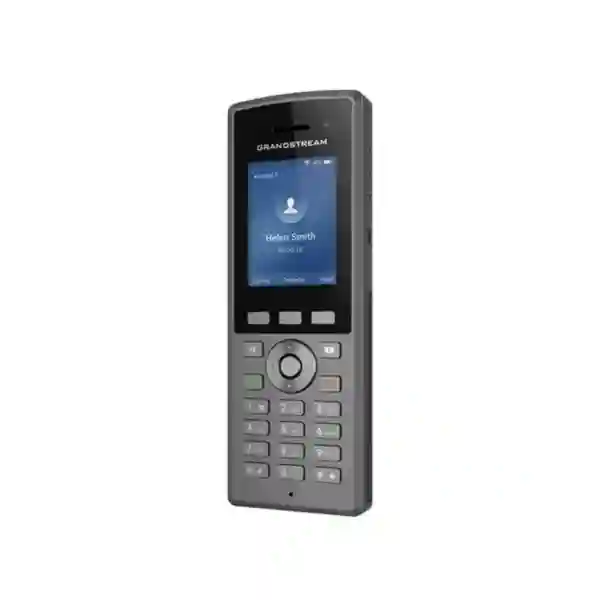
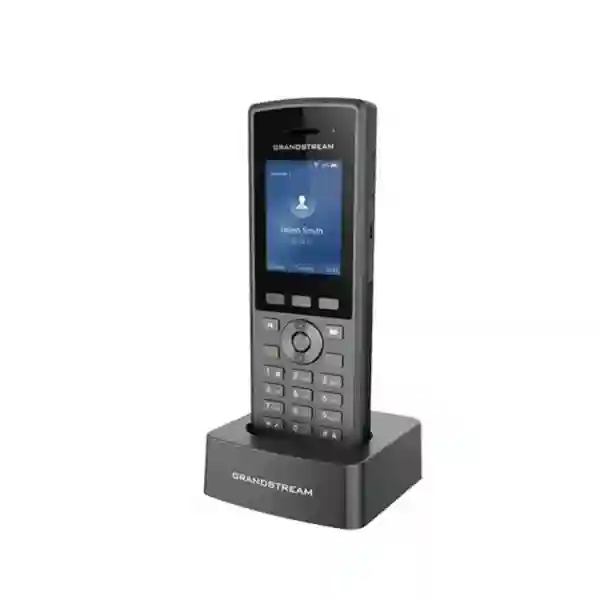
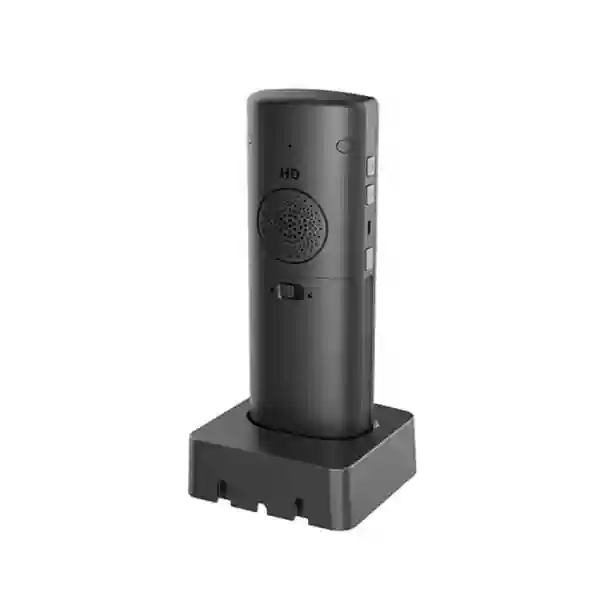
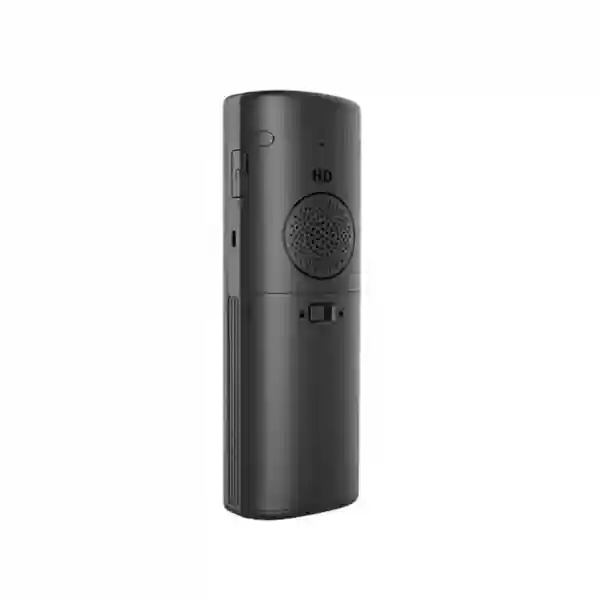
The Grandstream WP825 is a ruggedized portable Wi-Fi IP phone for teams that need business voice while moving through demanding workplaces. It combines standards-based SIP calling, dual-band 802.11a/b/g/n/ac Wi-Fi, roaming support, integrated Bluetooth, HD voice, dual microphones, a configurable push-to-talk button, a 2000mAh rechargeable battery and an IP67-rated enclosure. Grandstream states that the handset is waterproof, dustproof, resistant to cleaning chemicals, uses an anti-microbial casing and is drop-safe from 2.5 metres. For Dubai and UAE organisations operating warehouses, hospitals, retail floors, security teams, logistics facilities, workshops, service operations and mobile facilities teams, that combination makes the WP825 primarily a durability-and-mobility decision rather than simply another cordless phone choice.
2 SIP accounts / 2 lines
8-hour talk time
Bluetooth + push-to-talk
Fast buyer answer: who should choose the WP825?
Choose the WP825 when employees must carry a SIP phone across a Wi-Fi-covered site and the handset is likely to face drops, dust, splashes, frequent cleaning or rough handling. Its core advantage is not a large touchscreen or many line keys. The value is keeping familiar business telephony in a mobile role while adding protection that standard office-oriented Wi-Fi handsets may not provide. Warehouse supervisors, hospital support staff, security patrols, retail floor managers, logistics coordinators, workshop leads, maintenance engineers and facilities technicians can remain reachable on a company extension without being tied to a desk.
The WP825 is less suitable when the main requirement is executive touchscreen collaboration, video, heavy app use, many visible line appearances or a new Wi-Fi 6 endpoint standard. In those cases another endpoint family may be a better fit. Fourteck can help match the handset to the existing PBX, wireless design, user count, roaming requirement, headset preference and environmental conditions before a quotation is prepared.
Why the WP825 exists: rugged mobility without abandoning SIP
Many organisations already have an IP PBX or hosted SIP service but still struggle with roles that are permanently mobile. Giving those users a fixed desk phone creates missed calls. Giving every employee a separate mobile number can fragment company communications, weaken extension-based workflows and complicate call routing. The WP825 addresses a middle ground: it is a portable SIP endpoint that runs over the organisation’s Wi-Fi network. Staff can use business extensions, internal dialling, transfer, hold, call waiting, three-way audio conferencing, call logs and downloadable phonebooks while moving within wireless coverage.
The rugged enclosure changes the economics for harsh environments. A handset can be technically capable yet become expensive if replacements, cracked housings, liquid exposure, damaged ports or accidental drops are common. Grandstream positions the WP825 for retail, logistics, medical and security applications. The same design logic can be relevant in UAE warehouses, manufacturing floors, service centres, large compounds, workshops, hospitality back-of-house teams, facilities operations and construction-support areas where users need mobility but a consumer handset is not appropriate.
Rugged does not automatically mean suitable for every hazardous environment. An IP67 rating and drop protection do not equal intrinsic-safety or explosive-atmosphere certification. Oil and gas, petrochemical and regulated industrial sites should confirm their exact device certification requirements before selection. Fourteck can help with network and telephony planning, while the customer’s authorised safety team should approve device use in controlled areas.
Verified WP825 technical facts
| Area | Verified capability | Buyer meaning |
|---|---|---|
| Wi-Fi | Dual-band 802.11a/b/g/n/ac, 2.4GHz and 5GHz, with roaming support | Portable voice over a properly designed enterprise WLAN. |
| SIP | 2 SIP accounts and 2 lines | Fits normal mobile extension and role-based calling needs. |
| Display | 2.4-inch 240 × 320 TFT colour LCD | Compact interface for calls, contacts and status. |
| Audio | HD voice, dual microphones, AEC and Noise Shield | Designed for clearer speech in active work areas. |
| Bluetooth | Integrated | Supports compatible wireless headsets. |
| Battery | 2000mAh Li-ion; up to 8 hours talk and 200 hours standby stated by Grandstream | Suitable for many shifts, subject to real usage. |
| Durability | IP67; waterproof, dustproof, cleaning-chemical resistant, anti-microbial casing, 2.5m drop-safe | Built for demanding operating conditions. |
| Ports | Micro USB charging and 3.5mm headset jack | Supports conventional charging and wired audio. |
| Management | Grandstream Device Management System support plus standard provisioning methods | Useful for consistent fleet deployment. |
Best fit
Warehouses, logistics, healthcare support, security, retail, workshops, manufacturing and facilities teams working inside managed Wi-Fi coverage.
Primary advantage
Ruggedness combined with SIP calling. The WP825 is intended to survive conditions that can quickly damage ordinary office handsets.
Main dependency
Wi-Fi voice quality. Coverage, roaming, channel planning, QoS and network design have a direct effect on calls.
IP67 and 2.5-metre drop protection: what it changes in daily use
Grandstream differentiates the WP825 in the WP8xx family through rugged construction. For procurement teams, these specifications should be translated into operating risk rather than read as labels. A warehouse or workshop handset may be dropped from a belt clip, placed on dusty surfaces, exposed to accidental splashes or cleaned far more often than an office desk phone. A handset designed for those conditions can reduce disruption from damage and replacement.
Healthcare and hospitality support environments may value the cleaning-resistant and anti-microbial casing, while security and logistics teams may care more about drop tolerance. In retail and facilities operations, the combination can support one managed communications endpoint for mobile staff rather than a mixture of desk extensions and personal phones.
IP ratings still have limits. They describe defined ingress-protection tests; they do not mean the phone is indestructible or suitable for every chemical, temperature, pressure, hazardous location or misuse scenario. Charging equipment, accessories and batteries remain normal maintenance items. For larger projects, Fourteck recommends documenting the expected environment, cleaning process, shift pattern, charger placement and spares policy before the final quantity is approved.
Wi-Fi voice is a network project, not only a phone purchase
The WP825 uses the customer’s wireless network for voice, so the WLAN becomes part of the phone system. Grandstream lists integrated dual-band 802.11a/b/g/n/ac support and advanced roaming capability. The handset can operate across 2.4GHz and 5GHz networks, with 5GHz often preferred in well-designed enterprise environments because it can provide more channel capacity and lower interference than congested 2.4GHz deployments.
A good Wi-Fi voice design begins with coverage where users actually walk, not merely where laptops show a connection. Corridors, lifts, stair approaches, warehouse aisles, loading areas, back rooms, patient-support zones, security checkpoints, workshops and entrances can expose coverage gaps. Voice is sensitive to latency, jitter, packet loss and roaming interruptions, so an access-point layout designed only for web browsing may not provide a stable voice experience.
Grandstream’s current WP8xx roaming guidance identifies WP810, WP822 and WP825 as Wi-Fi 5-class models. Administrators should plan SSIDs, authentication, RF power, channel reuse, minimum data rates, band policy, QoS and roaming behaviour as part of the solution. Dense AP placement without proper RF planning can be as problematic as weak coverage because co-channel interference can affect calls.
For Dubai offices, warehouses and multi-floor facilities, Fourteck can review the intended user movement before recommending handset quantities. The objective is not simply to make the WP825 connect. It is to make extension calls remain intelligible as the user moves through the normal operational path.
Roaming design for warehouses, hospitals and multi-floor sites
Roaming is often the difference between a successful Wi-Fi phone project and a frustrating one. A user on an active call may move from one AP coverage cell to another. If the handset remains connected to a weak AP for too long, or if handoff and authentication take too much time, the user can hear clipping, silence or a dropped call. The WP825 supports roaming, but the infrastructure must also be configured appropriately.
Warehouses introduce metal racking, high ceilings, moving inventory, forklifts, loading doors and changing stock density. Hospitals have reinforced walls, lifts, medical equipment, restricted areas and dense client populations. Offices bring meeting rooms, glass partitions and neighbouring WLANs. Hotels often have strong guest coverage but weaker service corridors even though back-of-house teams need mobile voice. Each environment therefore requires a different RF view.
WP825 procurement should be considered with AP placement, controller settings, VLAN design, DHCP capacity, DNS, SIP reachability, firewall policy and QoS. Fourteck can help separate endpoint problems from network problems during planning and troubleshooting. Replacing a handset cannot fix a coverage hole, while adding access points without RF planning can create new interference.
HD voice, dual microphones and Noise Shield
The WP825 supports HD audio on the handset and speakerphone, and Grandstream lists dual microphones, acoustic echo cancellation and Noise Shield technology. The supported codec set includes common SIP voice options such as G.711, G.729, G.722, iLBC and Opus. In practical terms, the device is designed to deliver business-grade speech rather than basic connectivity, which is useful in warehouses, retail floors, support areas, workshops and security environments where background activity can make calls harder to understand.
Audio quality remains an end-to-end result. The handset, codec, PBX, SIP trunk, WAN path, WLAN, headset, speakerphone environment and remote party all influence what users hear. A wideband codec cannot compensate for packet loss, and noise processing cannot remove every industrial sound. A compatible Bluetooth or wired headset may provide a better experience for noisy roles.
Before a large rollout, Fourteck recommends piloting the WP825 with the real PBX, SSID, AP environment and expected headset. Users should walk representative routes, place internal and external calls, test transfer and DTMF, receive inbound calls and evaluate speech quality during busy operating periods.
Battery planning for shifts and shared handsets
Grandstream specifies a rechargeable 2000mAh Li-ion battery with up to 8 hours of talk time and 200 hours of standby. Those figures help comparison, but actual runtime depends on call volume, display use, Wi-Fi signal conditions, roaming, Bluetooth, speakerphone, battery age, temperature and settings. A user who makes intermittent calls has a very different battery profile from a dispatcher or supervisor spending hours on calls.
Operational planning should answer four questions: how long is the shift, how much active talk time is expected, where will chargers be located, and what happens if a battery becomes weak mid-shift? In a 24/7 operation, a handset handed directly from one shift to another may require a different charging and spares strategy from an office device used during business hours.
Charging points should be placed where staff naturally return devices and where power is dependable. A rugged phone loses practical value if users routinely leave it uncharged because the cradle is inconvenient. Fourteck can help estimate handset quantities, charging workflow and spares for shared-device environments.
Push-to-talk and headset flexibility
The WP825 includes a configurable button that can be used for push-to-talk. Security, logistics, maintenance, retail and facilities teams may find a dedicated physical control faster for short operational exchanges than navigating menus. The feature is most useful when the organisation has a defined communication workflow, such as supervisor groups, dispatch coordination or rapid task updates.
Push-to-talk should not automatically be treated as a replacement for every two-way radio system. Radio deployments may serve different coverage, resilience, broadcast, emergency, licensing or hazardous-environment requirements. The WP825 is strongest where a business already has enterprise Wi-Fi and SIP telephony and wants mobile users to remain part of that environment.
Integrated Bluetooth and a 3.5mm headset jack give users hands-free options. A technician carrying tools or a supervisor walking a warehouse may prefer a headset. Accessory compatibility should still be confirmed before bulk purchase because fit, microphone performance, button control and noise isolation vary. A headset suitable for a quiet office may perform poorly on a workshop floor.
Shared headsets also introduce charging and hygiene considerations. Organisations should document accessory ownership and cleaning procedures, particularly in healthcare, hospitality and multi-shift environments.
SIP, security and network integration
Grandstream documentation lists SIP RFC3261, TCP/IP, UDP, RTP/RTCP, HTTP/HTTPS, DHCP, DNS, SSH, TFTP, NTP, STUN, SIMPLE, 802.1X, TLS, SRTP and IPv6 among supported protocols. Wi-Fi security support includes WPA/WPA2 and enterprise modes, with WPA3 options in current documentation. The phone also supports encrypted configuration files and separate user and administrator access.
This allows the WP825 to participate in structured enterprise policies rather than operate as an unmanaged consumer endpoint. A typical design can place voice devices on a dedicated VLAN, apply QoS, restrict management access, use secure provisioning and allow only required traffic to the PBX, DNS, NTP and management services. The exact design depends on the customer’s security policy.
Security is not achieved by enabling every protocol. Legacy services should be disabled if unnecessary, administrator credentials should be unique, firmware should be managed, and certificate/TLS settings should be configured correctly where used. If the handset registers to a hosted PBX or remote branch, NAT, SBC or VPN design may also matter.
For UAE organisations with compliance requirements, Fourteck can work with the customer’s IT team to document endpoint and network prerequisites, while the final security approval remains with the customer’s authorised network or security team.
GDMS and provisioning for larger fleets
One handset can be configured manually; dozens or hundreds should be managed systematically. Grandstream identifies WP825 support for its Device Management System, and the device also supports standard firmware and configuration provisioning methods. This matters because consistency becomes an operational requirement as the fleet grows. Templates can help align SIP account settings, codecs, dial plans, Wi-Fi configuration and firmware policy.
Centralised management can reduce the need to touch every handset individually, particularly for organisations with multiple branches. It can also simplify replacement because a prepared configuration can be assigned to a replacement unit rather than recreated manually. Device inventory and firmware tracking can become part of a managed support workflow.
Mass management still needs change control. A wrong template applied at scale can create an outage. Fourteck recommends validating firmware and configuration on a test group before wider rollout, reviewing release notes and maintaining a documented rollback process appropriate to the customer’s environment.
PBX compatibility: Grandstream UCM and other SIP platforms
The WP825 is a standards-based SIP endpoint and is a natural fit for Grandstream UCM deployments. It can also be evaluated with other SIP PBX and hosted VoIP platforms where registration and required features are supported. Compatibility should be verified at the level of the actual workflow. Basic registration may work while specialised directory, paging, encryption, provisioning or failover functions require platform-specific configuration.
For an existing PBX, Fourteck typically needs to understand the platform, firmware, extension count, authentication method, SIP transport, codec policy, dial plan, inbound/outbound routing, VLAN, DHCP and firewall environment. Hosted services may also impose their own device policy and provisioning method.
A practical proof-of-concept is to register one handset, place internal and external calls, test inbound ringing, hold, transfer, conference, DTMF, voicemail access, caller ID, directory behaviour, headset operation and roaming. Once those functions are validated against the customer’s PBX and WLAN, scaling becomes more predictable.
WP825 deployment blueprint
- Define mobile roles. Identify users who genuinely need a rugged portable handset, their shift pattern, call volume, headset needs and whether devices are personal or shared.
- Map movement. Document aisles, loading bays, corridors, stair landings, workshops, service rooms and checkpoints where users will take calls.
- Assess Wi-Fi. Confirm coverage, capacity, SSID design, authentication, roaming, VLANs, DHCP, DNS and QoS.
- Confirm PBX interoperability. Test SIP registration, calling, transfer, voicemail, DTMF and required directory or paging features.
- Plan charging. Put cradles near shift handover points and decide whether spares are required.
- Pilot before scale. Test with real users during normal operations and collect feedback on roaming, audio, ergonomics and battery.
- Standardise configuration. Build validated templates and firmware standards before mass provisioning.
- Document support. Define ownership for Wi-Fi, PBX, handset replacement, firmware and user onboarding.
Industry use cases
Warehousing and logistics
Warehouse staff move between aisles, docks, offices and storage zones. The WP825 keeps supervisors and coordinators on the SIP system while they remain mobile. The rugged enclosure is relevant because drops and dust are part of daily operation. Push-to-talk can support quick coordination, and Bluetooth can free both hands. For large facilities, wireless design is critical because metal structures and changing stock can alter RF coverage.
Healthcare support
Healthcare support teams can benefit from mobility, internal calling and a handset designed for frequent cleaning. The WP825’s anti-microbial casing and cleaning-chemical resistance are useful characteristics where approved by facility policy. Hospitals should validate roaming carefully because buildings are complex and wireless client density can be high. Any clinical or emergency workflow must still follow the organisation’s healthcare standards.
Retail
Retail supervisors can answer customer, supplier and internal calls while moving between counters, stock rooms, receiving areas and shop floors. A portable company extension reduces dependence on fixed phones. Coverage should be tested behind shelving, in storage areas and near entrances where radio conditions can change.
Security and facilities
Security officers and facilities technicians often patrol large buildings or compounds. WP825 can provide a controlled business extension, headset support and push-to-talk capability. Basement levels, parking, plant rooms and service corridors deserve special Wi-Fi attention because they are frequently outside the focus of normal office WLAN planning.
Manufacturing and workshops
Dust, handling stress and noise make rugged endpoints useful. Bluetooth or wired headsets may improve usability in noisy roles. Customers should also check operating environment limits and any specialised safety certification required by the production area.
WP825 vs WP822, WP820 and WP810
The useful comparison is based on environment and user need, not model number. WP822 shares several core capabilities with WP825, including dual-band Wi-Fi, two SIP accounts, Bluetooth, push-to-talk and an 8-hour talk / 200-hour standby battery class. WP825 adds the rugged IP67 enclosure, chemical resistance, anti-microbial casing and 2.5m drop protection. Ruggedness is therefore the primary decision boundary.
| Model | Positioning | Battery class | Bluetooth | Rugged IP67 | Best fit |
|---|---|---|---|---|---|
| WP825 | Rugged Wi-Fi SIP handset | 2000mAh; 8h / 200h stated | Yes | Yes | Harsh mobile environments |
| WP822 | Business-grade Wi-Fi phone | 2000mAh; 8h / 200h stated | Yes | No comparable rugged claim | Indoor mobility |
| WP820 | Portable Wi-Fi phone with Android-based capabilities | 1500mAh; 7.5h / 150h stated | Yes | No | When supported app capability matters |
| WP810 | Entry portable Wi-Fi SIP phone | 1500mAh; 6h / 120h stated | No integrated Bluetooth in vendor family positioning | No | Basic mobile SIP requirement |
Customers should compare the latest manufacturer documentation and confirm firmware-dependent details before procurement. Fourteck can shortlist models by environment, battery expectation, Bluetooth, Wi-Fi generation, PBX integration and lifecycle planning.
When the WP825 is not the right choice
The WP825 uses Wi-Fi 5-class 802.11ac connectivity, so customers standardising new deployments around Wi-Fi 6 endpoints may want to compare newer WP8xx options. Users needing a large touchscreen, video calling, application workflows or many programmable line keys should consider a different endpoint category. A desk-based receptionist handling many simultaneous calls may be better served by an executive IP phone rather than a rugged portable handset.
If the site has poor wireless coverage, buying more handsets will not solve the network problem. If communication must continue outside enterprise Wi-Fi, a cellular or hybrid strategy may be required. If the environment has explosive-atmosphere certification requirements, the WP825 should not be assumed compliant without confirmation. If the organisation primarily needs a radio broadcast system, dedicated radio may be a better fit.
The WP825 is strongest when four conditions align: the workforce is mobile, calls should stay on SIP extensions, reliable Wi-Fi is available or can be designed, and the work environment benefits from a rugged handset.
Grandstream WP825 Dubai procurement
A useful quotation starts with more than model and quantity. For Grandstream WP825 Dubai projects, Fourteck can prepare a better-fit recommendation when the customer provides user count, PBX platform, site type, number of floors or zones, Wi-Fi environment, expected shift length, headset requirement, charging arrangement and whether devices are assigned or shared. If the project includes new Wi-Fi, approximate floor plans and movement areas are useful.
For replacement projects, provide the current handset model and the reason for replacement. Frequent drops, poor roaming, limited battery runtime, missing Bluetooth, damaged ports or provisioning issues each point to different requirements. For new sites, confirm whether SIP trunks and an IP PBX already exist or whether a complete telephony solution is required.
Fourteck does not state fixed stock, delivery, warranty or price claims here because those values change by quantity, source, project and region. Request a current quotation to confirm commercial details. For broader UAE requirements, visit Fourteck UAE, while product-focused IP telephony information is available at IP Phone Fourteck.
When comparing quotations, check what is included: handset, battery, charging cradle, power adapter, accessories, provisioning, PBX configuration, Wi-Fi work, testing and support. A low handset-only figure may not represent the full deployment cost.
UAE deployment scenarios
Dubai: Distribution centres, hospitality operations, clinics, retail groups, workshops, schools and facilities management providers can use the WP825 where staff need portable extensions. Dubai sites often mix public areas with service corridors, storage, parking and back-of-house zones, so wireless coverage should be checked beyond office areas. In logistics locations, racking, loading doors and large floor plates can create roaming challenges.
Abu Dhabi: Large campuses, healthcare environments, government facilities and industrial support operations may value the rugged design and centralised management. Projects in regulated industries should confirm site safety requirements separately. Basements, plant rooms and service corridors should be surveyed independently from office WLAN coverage.
Sharjah and Ajman: Manufacturing, warehousing, education, retail and SME operations can benefit from a rugged Wi-Fi extension where teams move between offices, workshops and storage spaces. Smaller businesses can begin with a pilot group and expand after validating coverage and user acceptance.
Across the other emirates, the same principle applies: define the environment, WLAN, PBX, user routes and support model before finalising the bill of materials.
Regional project context beyond the UAE
Fourteck supports technology discussions across multiple markets, and WP825 use cases vary by region. In Kuwait, facilities, retail, logistics and service organisations may prioritise durable indoor mobility. In Kenya and Tanzania, multi-site organisations may place extra emphasis on standard provisioning, manageable spares and stable local Wi-Fi. In Uganda, hospitals, schools, logistics facilities and commercial sites can benefit from rugged SIP mobility where reliable WLAN coverage exists.
Nigeria and Ghana projects can involve larger multi-site rollouts where configuration consistency, remote management and staged deployment are important. Rather than using one regional template, Fourteck recommends defining the local PBX architecture, connectivity dependency, support resources, replacement plan and procurement logistics for each country.
Country-specific Fourteck resources include Uganda, Kenya, Kuwait, Tanzania, Ghana and Nigeria. Regional commercial and regulatory details should be confirmed before ordering.
Frequently asked questions
Is the Grandstream WP825 waterproof?
Grandstream specifies the WP825 as IP67-rated and describes it as waterproof and dustproof. It also states that the casing is cleaning-chemical resistant and anti-microbial.
How many SIP accounts does it support?
The WP825 supports two SIP accounts and two lines.
Does WP825 support Bluetooth headsets?
Yes. Grandstream lists integrated Bluetooth for headset connectivity. Exact accessory compatibility should be confirmed before bulk deployment.
What Wi-Fi standard does WP825 use?
It supports dual-band 802.11a/b/g/n/ac Wi-Fi on 2.4GHz and 5GHz.
Can it roam between access points?
Yes, the WP825 includes roaming support. Real call quality depends on AP placement, RF design, authentication, QoS and network configuration.
How long does the battery last?
Grandstream specifies up to 8 hours of talk time and 200 hours of standby from the 2000mAh battery. Actual runtime varies with use and conditions.
Can it work with Grandstream UCM?
Yes. It is a standards-based SIP endpoint and a natural fit for Grandstream UCM environments. Other SIP platforms can also be evaluated subject to feature and provisioning support.
Is WP825 suitable for warehouses in Dubai?
Yes, where the warehouse has properly designed Wi-Fi voice coverage. Its rugged design, roaming, push-to-talk, Bluetooth and SIP calling make it well aligned to mobile warehouse roles.
Is it intrinsically safe for hazardous zones?
Do not assume that from the IP67 rating. Customers must verify the exact hazardous-area certification required for their site.
Can Fourteck help with WP825 deployment planning?
Yes. Fourteck can help review SIP/PBX compatibility, Wi-Fi coverage, roaming, headset needs, charging, provisioning, pilot testing and rollout scope before quotation.
Request a Grandstream WP825 quotation from Fourteck
For a Grandstream WP825 Dubai or UAE project, send Fourteck the required quantity, PBX platform, site type, Wi-Fi environment and main user role. We can help determine whether WP825 is the right rugged handset, whether the WLAN is ready for voice, which accessories should be included and whether another Grandstream WP model better matches the requirement.
For larger deployments, request a requirement-based discussion covering pilot testing, roaming, provisioning, charging, spares and support. Current price, availability, warranty and delivery should be confirmed in the quotation because they can change by project and region.
Reviews
There are no reviews yet.