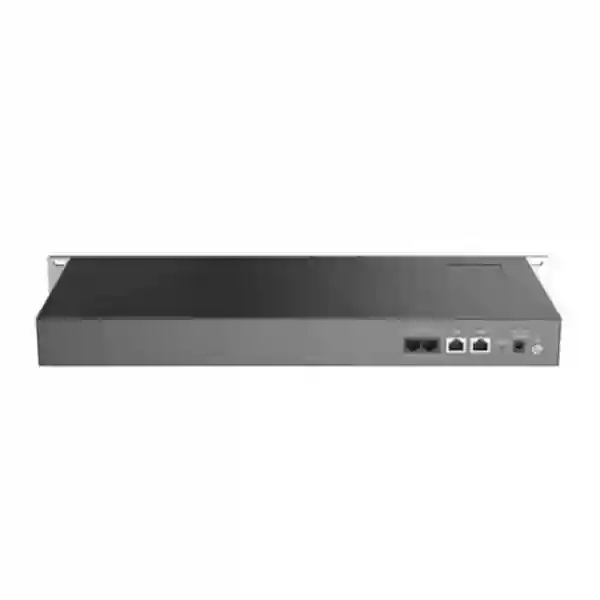
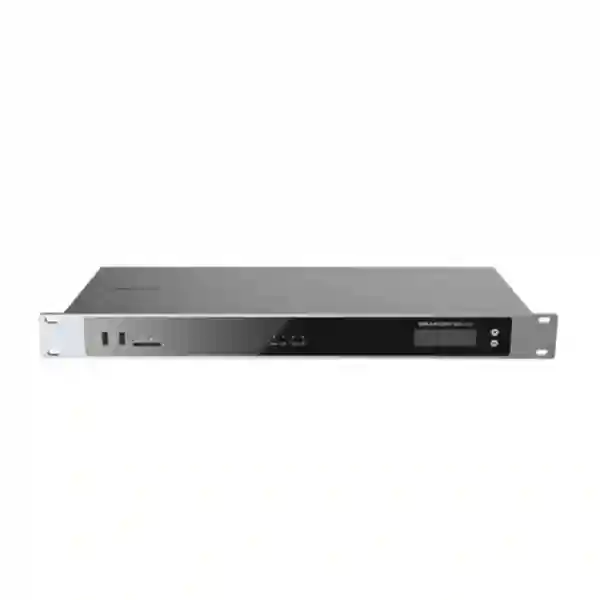
Grandstream GXW4501 Dubai – E1/T1/J1 Digital VoIP Gateway for PRI-to-SIP Migration
The Grandstream GXW4501 is a one-span digital VoIP gateway designed to connect traditional E1, T1 or J1 digital trunks with SIP-based voice networks. For organizations in Dubai and the UAE that still operate a PRI, legacy PBX, carrier-delivered digital circuit or staged telephony migration, the GXW4501 can bridge older digital signaling and an IP communications platform. Grandstream specifies one E1/T1/J1 RJ45 interface for the GXW4501 with support for up to 30 simultaneous VoIP calls, dual Gigabit network interfaces, T.38 fax, multiple digital signaling options and security mechanisms such as TLS and SRTP. Grandstream currently lists the GXW4500 family in its Product Archive, so Fourteck recommends treating the GXW4501 as a project-specific legacy or migration product and confirming current sourcing, signaling compatibility, firmware requirements and replacement strategy before ordering.
Up to 30 simultaneous calls
PRI / SS7 / MFC R2
TLS / SRTP / HTTPS / SSH
What problem does the GXW4501 solve?
Many organizations do not replace their whole voice environment in one step. A company may have a new SIP-capable PBX but still receive a carrier handoff over E1 PRI. Another site may keep a dependable legacy PBX while adding SIP trunks, centralized call routing or unified communications. A hotel, hospital, warehouse, school, government office or multi-site enterprise may need to keep existing numbering plans and digital circuits operational during a phased transition. The GXW4501 sits between these worlds. On one side it terminates a digital E1/T1/J1 span; on the other side it communicates through SIP over an IP network.
That role makes the GXW4501 different from an analog FXS gateway, FXO gateway or IP PBX. It is aimed at digital trunk environments where signaling, framing, clock source, channel mapping and carrier/PBX settings must be matched correctly. For a Dubai business moving from PRI to SIP, the gateway can be useful when the objective is to preserve an existing digital trunk temporarily, connect a legacy PBX to a SIP core, or create a controlled migration path while minimizing disruption to active voice services.
Best fit
Sites with one E1/T1/J1 digital trunk that must connect a traditional PSTN/ISDN environment with a SIP-based network and need up to 30 concurrent calls.
Migration value
Suitable for staged PRI-to-SIP migration, legacy PBX integration, carrier transition and projects where a digital trunk cannot be removed immediately.
Lifecycle caution
The GXW4500 family appears in Grandstream’s Product Archive. Confirm supply, firmware, long-term suitability and replacement options before a new deployment.
Verified GXW4501 technical profile
| Product type | E1/T1/J1 digital VoIP gateway |
|---|---|
| Digital interface | 1 × RJ45 E1/T1/J1 interface on GXW4501 |
| Call capacity | Up to 30 simultaneous VoIP calls |
| Ethernet | Dual self-adaptive Gigabit ports; switched or routed operation is documented |
| Peripheral interfaces | 2 × USB 3.0 and 1 × SD card interface |
| Digital signaling | SIP over UDP/TCP/TLS, PRI, SS7 and MFC R2; deployment depends on the carrier/PBX design |
| PRI switch types | Euro ISDN, National and Q.SIG are listed in Grandstream documentation |
| Voice codecs | G.711 A-law/U-law, G.722, G.723.1, G.726, G.729A/B, iLBC and AAL2-G.726-32 |
| Fax | T.38 Group 3 fax relay up to 14.4 kbps plus G.711 fax pass-through support |
| QoS | Layer 2 802.1Q/802.1p and Layer 3 ToS/DiffServ/MPLS QoS |
| Security | SRTP, TLS, HTTPS, SSH, 802.1X, Fail2ban, whitelist/blacklist and password-based access controls |
| Management | Web browser, HTTPS, Syslog, backup/restore, port capture, packet capture and firmware upgrade tools |
| LCD | 128 × 32 dot-matrix graphic LCD |
| Dimensions | 485 × 191 × 46.2 mm |
| Weight | Approximately 2.35 kg |
| Mounting | Rack mount or desktop |
Technical implementation is carrier, PBX and firmware dependent. Confirm the actual live circuit and required call flow before configuration or purchase.
One span and 30 calls: is GXW4501 the right size?
The key sizing distinction in the GXW4500 family is the number of digital spans and associated simultaneous call capacity. GXW4501 provides one E1/T1/J1 interface and supports up to 30 simultaneous VoIP calls. A buyer should start with the live trunk inventory rather than the gateway model name. Count active digital circuits, determine whether all circuits must remain connected simultaneously, measure peak concurrent call usage, and review growth or redundancy requirements.
A single E1-based deployment may make GXW4501 a natural fit when up to 30 active channels are sufficient. A project with two active PRIs, physical trunk redundancy or multiple carrier handoffs may need a multi-span gateway or another architecture. “30 simultaneous calls” is not the same as total extension count. Hundreds of extensions may share far fewer external calls, so gateway sizing should follow trunk concurrency and span requirements.
Customer requirement → capability → practical outcome
Keep one PRI while moving to SIP: the GXW4501 combines one software-configurable digital span with SIP connectivity. This can let the digital carrier side remain in service while the IP side is modernized. The PRI switch type, framing, clocking, numbering plan and carrier signaling still need verification.
Preserve fax: T.38 fax relay and G.711 fax pass-through can support legacy fax workflows across an IP migration. Reliability depends on end-to-end interoperability and packet quality.
Secure SIP traffic: TLS, SRTP, HTTPS, SSH and 802.1X can contribute to a better-managed voice network when the communicating systems support and correctly configure the same mechanisms.
Troubleshoot migration issues: call status/history, ISDN monitoring, Syslog, port capture and packet capture provide useful evidence when engineers need to isolate signaling, routing or audio problems.
PRI, SS7 and MFC R2: signaling matters more than the connector
Two digital circuits can use a similar physical interface and still need different configuration. The correct signaling method, switch type, channel plan and timing must match the carrier or connected PBX. Grandstream documents PRI, SS7 and MFC R2 support in the GXW4500 series, with PRI switch types including Euro ISDN, National and Q.SIG. This flexibility is useful, but deployment should begin with a technical survey rather than an assumption that any E1 cable will work with any configuration.
Useful pre-sales information includes the carrier handoff type, existing PBX make/model, signaling profile, incoming DID range, outbound CLI rules, channel allocation, clock source and routing requirements. A mismatch can produce trunk-down alarms, failed dialing, incorrect caller ID, intermittent channel behavior or calls that connect but do not carry audio correctly.
Voice quality controls
Grandstream documentation includes carrier-grade line echo cancellation, dynamic jitter buffering, packet-loss concealment, silence suppression and QoS features. A well-designed deployment should place voice in the intended VLAN where appropriate, preserve QoS across the LAN/WAN path and validate latency, jitter and loss before blaming the gateway for voice-quality symptoms.
DTMF and routing
Grandstream documents in-band audio, RFC2833 and SIP INFO DTMF methods. Dial plans, DID mapping, outbound number normalization and DTMF behavior should be tested before handover, especially for IVRs, service hotlines, hospitality applications and contact-center workflows.
Security and firmware considerations
A digital VoIP gateway touches both traditional voice infrastructure and the IP network, so it should be managed as infrastructure rather than as an unmanaged adapter. The GXW4500 series supports SRTP, TLS, HTTPS, SSH, 802.1X, configurable service ports and defenses including Fail2ban, whitelisting and blacklisting. Administrators should change credentials, restrict management access, use secure protocols where supported, keep firmware aligned with vendor guidance and avoid unnecessarily exposing SIP or management interfaces to the public Internet.
Grandstream’s current firmware page still lists GXW4501/GXW4502/GXW4504 and carries a security notice advising users of older releases to upgrade past a specified security-fix release and to change web-access passwords for all users. This reinforces an important point for archived hardware: the physical device is only one part of the project. Firmware state, credential hygiene, configuration history and the organization’s current security policy must also be reviewed.
Pre-deployment checklist
Typical deployment scenarios in Dubai and the UAE
Existing PRI to a new SIP PBX
A company wants to replace an older phone system but its carrier PRI remains active. The GXW4501 can terminate the digital trunk and present calls toward a SIP-based PBX, allowing the organization to modernize endpoints and call control without forcing the carrier migration to happen on the same day. Inbound DIDs, outbound CLI, emergency/service dialing and codec policy should be tested during a controlled change window.
Legacy PBX connected to a SIP core
A hotel, office, campus or industrial site may retain a legacy PBX for a period while external calling moves to a SIP platform. Depending on the topology and signaling requirements, GXW4501 can serve as the digital-to-SIP translation point. Clocking, numbering and PBX trunk-card behavior should be confirmed in advance.
Controlled branch migration
A multi-site enterprise may modernize headquarters first while a branch still relies on an E1 circuit. A gateway can preserve the local trunk during transition to centralized call control. WAN resilience, local emergency-calling requirements and rollback procedures become important because the branch may depend more heavily on IP connectivity.
Temporary coexistence during carrier transition
During number porting or carrier replacement, the old digital service and new SIP environment may need to coexist. GXW4501 can provide an interim interconnection point, but the migration plan should define the intended final architecture rather than allowing temporary infrastructure to become permanent by accident.
GXW4501 vs GXW4502 vs GXW4504
| Model | Digital spans | Maximum simultaneous VoIP calls | Typical fit |
|---|---|---|---|
| GXW4501 | 1 | 30 | Single-span migration and PRI integration |
| GXW4502 | 2 | 60 | Two-span or higher-capacity digital trunk environments |
| GXW4504 | 4 | 120 | Larger multi-span deployments |
When should you avoid using GXW4501?
A digital gateway is valuable when there is a real requirement to preserve or translate a digital trunk. It is unnecessary when both the carrier and PBX already support a clean SIP-to-SIP design and no legacy digital interface must remain. In that situation, another gateway adds a power supply, firmware lifecycle, configuration layer and troubleshooting point.
GXW4501 may also be the wrong choice for a greenfield project with no E1/T1/J1 dependency, a site that needs more than one active span, or an organization whose lifecycle policy does not permit archived products. If the requirement is analog extension connectivity, evaluate an FXS gateway instead. If the requirement is analog PSTN line integration, an FXO-capable gateway may be more suitable.
Regional procurement for GCC and Africa
Digital trunk migration requirements also appear in Kuwait, Oman, Uganda, Kenya, Ghana, Nigeria and Tanzania, where businesses and integrators may still operate older PBX platforms or E1 circuits. The decision process should remain technical: confirm whether the live interface is E1/T1/J1, identify signaling, count channels, document the PBX or carrier side and define the intended SIP destination. Procurement should follow the verified requirement rather than an old bill of materials.
For cross-border projects, current stock, export lead time, local approvals, warranty route and replacement options should be confirmed before a purchase order is issued. Regional resources include Fourteck UAE, Fourteck Kuwait, Fourteck Uganda, Fourteck Kenya, Fourteck Ghana, Fourteck Nigeria and Fourteck Tanzania.
Lifecycle note: Product Archive status matters
Grandstream currently places the GXW4500 family in its Product Archive. Existing installations may still need support, replacement analysis or migration assistance, but a new project should consider lifecycle as part of the architecture. The right question is not only whether a GXW4501 can be sourced. It is whether the device remains appropriate for the expected service life, security policy and support model.
For installed units, verify firmware, credentials, configuration backups and the migration path. For new projects, compare the operational value of preserving the digital trunk against moving directly to a supported SIP architecture where feasible.
Installation and migration workflow
Frequently asked questions about Grandstream GXW4501
What is the Grandstream GXW4501?
The GXW4501 is a one-span E1/T1/J1 digital VoIP gateway in Grandstream’s GXW4500 family. It connects traditional digital PSTN/ISDN trunks with SIP-based VoIP networks and supports up to 30 simultaneous VoIP calls.
Does GXW4501 support PRI?
Yes. Grandstream documents PRI support along with SS7 and MFC R2. PRI switch types listed in the vendor documentation include Euro ISDN, National and Q.SIG. Exact interoperability should be checked with the carrier or PBX.
How many concurrent calls does GXW4501 support?
GXW4501 supports up to 30 simultaneous VoIP calls through its single E1/T1/J1 span.
Can GXW4501 connect a legacy PBX to SIP?
It can be suitable when the existing PBX or carrier side presents a compatible E1/T1/J1 digital interface and the SIP side meets the required interoperability conditions. The topology and signaling should be confirmed before deployment.
Does GXW4501 support T.38 fax?
Yes. Grandstream documents T.38 Group 3 fax relay and G.711 fax pass-through. Real-world results depend on the SIP platform, network and remote endpoint or carrier.
Is GXW4501 still a current product?
Grandstream currently lists the GXW4500 family in its Product Archive. Buyers should confirm supply, firmware, support expectations and alternatives before choosing it for a new long-term project.
Can GXW4501 be used in Dubai and the UAE?
It can be considered where the site’s digital-trunk requirements match its supported interfaces and signaling. Carrier configuration, lifecycle, supply status and project-specific requirements should be confirmed before purchase.
What should I check before buying GXW4501?
Confirm E1/T1/J1 type, span count, signaling, PBX/carrier details, peak calls, SIP platform, firmware/security expectations, fax or DTMF needs, quantity and whether an archived product is acceptable for the intended lifecycle.
Need a GXW4501 compatibility check or migration plan?
Share your carrier/PBX interface, digital span count, signaling type, call capacity and destination country. Fourteck can help determine whether Grandstream GXW4501 is appropriate, whether a larger gateway is needed, or whether a different current architecture offers a better long-term result.

Reviews
There are no reviews yet.