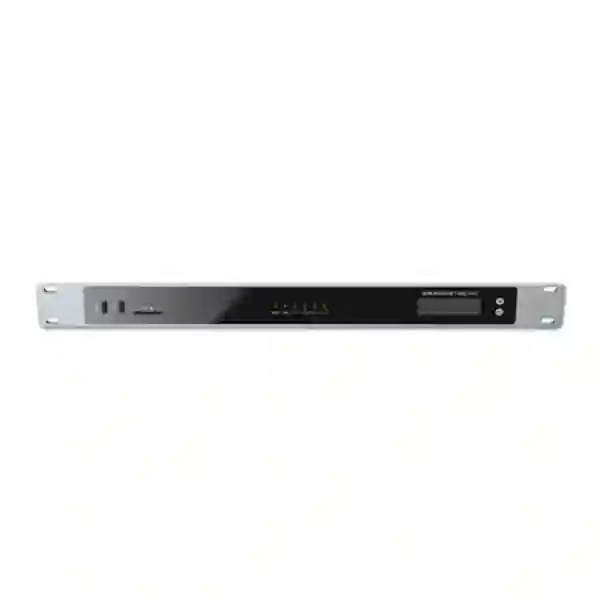
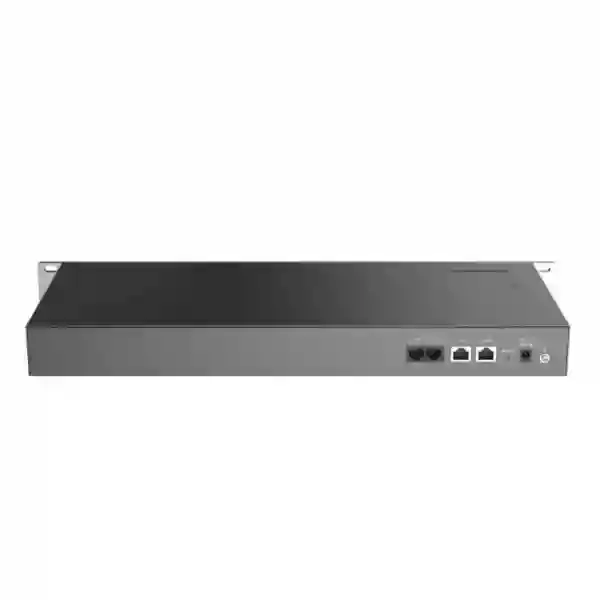
Grandstream GXW4504 Digital VoIP Gateway
The Grandstream GXW4504 is a four-span E1/T1/J1 digital VoIP gateway built to bridge traditional digital PSTN or ISDN trunking with SIP-based communications. Grandstream specifies four software-configurable digital interfaces and support for up to 120 simultaneous VoIP calls, making the platform relevant to larger legacy PBX interconnects, PRI-to-SIP migrations, multi-trunk consolidation and installed enterprise telephony environments. The important buying context in 2026 is lifecycle: Grandstream’s current firmware page lists the GXW4504 in its End-of-Life section. That changes the decision from a simple feature comparison into a broader question about compatibility, support, security, firmware, replacement timing and migration risk.
Up to 120 calls
PRI / SS7 / MFC R2
T.38 Fax
End-of-Life model: verify before ordering
The buying question is no longer only “Does GXW4504 support four PRI spans?”
For an older digital gateway, technical fit and lifecycle fit must be considered together. A customer may have a perfectly valid operational reason to keep a GXW4504 in service: an existing PBX may still depend on PRI, a carrier migration may not be complete, a branch may need a temporary bridge between a SIP core and digital trunks, or a replacement project may be scheduled for a later budget cycle. In those cases, the right question is whether the existing gateway can continue operating safely and predictably while a controlled migration plan is prepared.
For a completely new deployment, the decision is different. Grandstream’s official firmware page currently classifies GXW4501, GXW4502 and GXW4504 as End-of-Life products. That means the buyer should not assume normal new-product firmware development or support. Availability can also vary by distributor, region and remaining inventory. Fourteck therefore recommends confirming the specific requirement, the carrier signaling, the PBX or SIP platform, expected concurrent calls, project horizon, security expectations and acceptable replacement strategy before treating GXW4504 as the final architecture.
This page is structured around that reality. It explains what the GXW4504 does, where its verified capabilities can still be useful, what technical checks matter, and how organizations in Dubai, the wider UAE and other Fourteck-served markets can plan support or migration without relying on unsupported assumptions about stock or lifecycle.
Quick decision guide: when GXW4504 can still make sense
| Customer situation | Why GXW4504 may be relevant | Main caution | Recommended next action |
|---|---|---|---|
| Existing installed GXW4504 | Preserves a proven digital-trunk integration already in production. | EOL status, firmware and security exposure. | Audit firmware, backups, network controls and replacement timeline. |
| Legacy PBX with multiple PRI/E1 trunks | Four spans and up to 120 calls can bridge digital trunks to SIP. | Carrier signaling and PBX interoperability must be validated. | Document current spans, switch types, DIDs/DDIs and call routes. |
| Temporary migration stage | Can act as an intermediate bridge while moving toward SIP. | Avoid turning a temporary design into an indefinite dependency. | Define migration milestones and replacement criteria at the start. |
| Brand-new long-life deployment | Feature set may appear suitable on paper. | EOL classification may conflict with long-term support goals. | Compare currently supported digital/SIP gateway alternatives. |
What the GXW4504 actually does in a voice architecture
At a practical level, the GXW4504 sits between two different telephony worlds. On one side are digital carrier or PBX interfaces using E1, T1 or J1 framing and digital signaling. On the other side is an IP network that carries SIP signaling and RTP media. The gateway converts between those environments so that an organization can keep using digital trunks while introducing an IP PBX, connect a SIP platform to a legacy digital PBX, or consolidate several digital spans into a VoIP design.
Grandstream’s verified GXW4500 documentation describes one, two and four-span models. The GXW4504 is the largest member, with four E1/T1/J1 RJ45 interfaces and up to 120 simultaneous VoIP calls. That capacity is especially relevant where an enterprise has several PRI circuits or needs to preserve a large block of digital connectivity during a migration. It is not the same as an analog FXS or FXO gateway. The GXW4504 is for digital trunk interfaces, not for directly wiring large quantities of individual analog phones or PSTN lines.
This distinction matters in procurement. A request such as “we need a Grandstream gateway” is incomplete until the customer identifies whether the existing side is analog FXS/FXO, digital E1/T1/J1, SIP, or a mixture. Fourteck uses that interface requirement as the first filter before model selection.
Verified GXW4504 technical profile
The following specification summary is based on Grandstream’s GXW4500 series datasheet and official documentation. Where a value can depend on network, firmware, carrier, switch type or configuration, the project should be validated against the live environment rather than relying on a brochure alone.
| Digital interfaces | 4 × RJ45 E1/T1/J1 ports, software configurable |
|---|---|
| Concurrent calls | Up to 120 simultaneous VoIP calls |
| Network interfaces | Dual self-adaptive Gigabit Ethernet ports, switched or routed |
| Peripheral interfaces | 2 × USB 3.0 and 1 × SD card interface |
| Display | 128 × 32 dot-matrix graphic LCD with DOWN and OK buttons |
| Digital signaling | SIP, PRI, SS7, MFC R2; additional behavior depends on configured environment and firmware |
| DTMF | In-band audio, RFC2833 and SIP INFO |
| Voice/fax codecs | G.711 A-law/U-law, G.722, G.723.1, G.726, G.729A/B, iLBC and AAL2-G.726-32 are listed in the datasheet |
| Fax | T.38 Group 3 fax relay and G.711 pass-through behavior |
| QoS | 802.1Q / 802.1p plus Layer 3 ToS, DiffServ and MPLS-related QoS support |
| Security | SRTP, TLS, HTTPS, SSH, 802.1X, Fail2ban, whitelist/blacklist and strong-password controls listed by Grandstream |
| Management | Web management, Syslog, backup/restore, port capture and packet capture; firmware upgrade methods include TFTP/HTTP/HTTPS or local upload |
| Power | 100–240VAC, 50/60Hz input via 12V DC, 2A power adapter |
| Dimensions | Approx. 485 × 191 × 46.2 mm |
| GXW4504 unit weight | Approx. 2380 g |
| Mounting | Rack mount or desktop |
Four digital spans: capacity planning beyond the “120 calls” headline
A maximum call figure is useful, but it should not be the only sizing metric. Four E1/T1/J1 spans can represent different channel counts depending on the interface standard and signaling arrangement. In an E1 PRI environment, channel allocation, signaling channels and carrier configuration affect usable bearer capacity. In T1 or J1 environments, the channel structure differs. For that reason, a procurement team should document the exact carrier circuit type rather than simply multiplying a marketing capacity number.
The SIP side also needs enough capacity. An IP PBX or SBC must be licensed and sized for the expected concurrent calls. The LAN and WAN design should preserve voice quality under load. QoS should be consistent from the gateway through switches, routers and WAN links. Codec choice changes bandwidth consumption. Fax and modem traffic can introduce additional sensitivity. If the gateway is being used for a migration, peak-hour traffic should be measured so the replacement SIP service is not undersized.
Fourteck recommends separating three numbers during design: total available digital channels, typical busy-hour calls and required failover capacity. A customer may own four spans but rarely exceed 35 calls, while another customer may routinely approach the full trunk capacity. Those two environments need different SIP trunk sizing, licensing, WAN resilience and replacement strategies even though the installed gateway model is identical.
PRI, SS7 and MFC R2: the signaling detail that determines interoperability
Grandstream lists PRI, SS7 and MFC R2 among the signaling options for the GXW4500 series, but “supported” does not mean every carrier profile works automatically. Digital telephony signaling can vary by country, carrier, switch type and service design. PRI installations may use specific ISDN switch profiles and numbering behavior. MFC R2 deployments often depend on regional variants and timing parameters. SS7 projects require even more deliberate engineering around signaling roles and interconnection expectations.
Before moving a GXW4504 or replacing one, collect the existing configuration rather than recreating it from memory. Record framing, coding, clock source, signaling type, switch type, inbound and outbound numbering, DOD/DID rules, caller-ID presentation, route priorities, failover behavior and any carrier-specific instructions. If the system has worked for years, those details are valuable migration evidence.
For a new compatibility assessment, Fourteck normally starts with the carrier handoff specification and the PBX/SIP platform. The digital side must match the provider, and the SIP side must match the call-control environment. The project should also test inbound calls, outbound calls, caller ID, DTMF, fax where applicable, emergency or special dialing, hunt groups, failover and call clearing behavior before production cutover.
SIP integration: treat the gateway as part of a complete call path
The GXW4504 supports SIP over IP networks and can participate in a design that includes an IP PBX, hosted call-control platform, softswitch or session border element. The gateway should not be evaluated in isolation. A stable call path depends on SIP registration or trunk settings, routing logic, NAT behavior, codec negotiation, DTMF method, RTP reachability, DNS where used, time synchronization and security policy.
In a LAN deployment, the gateway is commonly placed in a dedicated voice VLAN or controlled network segment. Administrators should avoid exposing the management plane directly to the public internet. Firewall rules should allow only required SIP, RTP, management and monitoring flows. If remote management is required, use secure administrative access through controlled infrastructure rather than broad open access. TLS and SRTP can protect signaling and media when the connected systems are configured compatibly, but encryption must be planned end to end.
For branch or multi-site designs, WAN quality becomes critical. Packet loss, latency, jitter and asymmetric routing can create voice issues that appear to be gateway problems. A migration project should therefore test both telephony configuration and network performance. Fourteck can structure troubleshooting so that digital signaling, SIP signaling, RTP media and network transport are examined as separate layers instead of changing multiple variables at once.
Voice quality controls and why they matter on digital-to-IP conversion
Grandstream documents carrier-grade line echo cancellation, dynamic jitter buffering and packet-loss-related voice-quality features for the GXW4500 series. These functions help bridge the behavior of circuit-switched voice into packet networks, but they cannot compensate for every network problem. Persistent packet loss, severe jitter, overloaded WAN links or incorrect QoS can still degrade calls.
The gateway supports several familiar voice codecs, including G.711, G.722, G.723.1, G.726, G.729A/B and iLBC in the official datasheet. Codec selection should be driven by interoperability and network design rather than by enabling every possible option. G.711 is commonly used where bandwidth is sufficient and compatibility is important. Compressed codecs can reduce bandwidth but may add licensing, transcoding or quality considerations in other parts of the call path. The remote carrier, PBX and any SBC must agree on a usable codec set.
QoS should be planned consistently. The gateway supports Layer 2 priority mechanisms and Layer 3 QoS markings, but the switches and routers must honor them. Marking voice traffic at the gateway is only useful if the rest of the network has queues, policies and bandwidth controls that preserve real-time traffic during congestion.
T.38 fax and G.711 pass-through: useful capability, not an automatic guarantee
Grandstream lists T.38 Group 3 fax relay and automatic behavior for G.711 fax pass-through on the GXW4500 series. This can be valuable in organizations that still have fax workflows connected through digital trunks. However, fax over IP is highly dependent on end-to-end compatibility. The gateway, SIP platform, carrier, remote endpoint and network all influence the outcome.
If fax is business-critical, include it in acceptance testing rather than assuming a voice-successful cutover will also be a fax-successful cutover. Test inbound and outbound documents of different lengths, error correction modes where relevant, busy conditions and any routing through hunt groups or DID mappings. When migrating away from digital trunks, the team should also decide whether existing fax devices should remain on the voice architecture or move to a dedicated cloud fax or document workflow.
For sites with only occasional fax use, a migration may be an opportunity to simplify the environment. For regulated or operationally dependent sites, however, maintaining continuity may be more important than immediate platform consolidation. Fourteck can include fax requirements in the same discovery process as voice, rather than treating fax as an afterthought after the main trunk migration.
Lifecycle alert: GXW4504 is listed by Grandstream as End-of-Life
This is the most important current-state fact for buyers. Grandstream’s firmware page lists GXW4501, GXW4502 and GXW4504 in its End-of-Life products section and states that EOL products no longer receive firmware updates or support. The same page lists legacy firmware for the series. That does not mean every installed GXW4504 stops working; many EOL telephony devices can continue operating for years. It does mean the organization carries more responsibility for risk assessment, access control, spare strategy and replacement planning.
A separate Grandstream security bulletin previously documented a vulnerability affecting older GXW450x firmware and advised upgrading beyond the affected releases and changing management credentials. For an installed EOL unit, administrators should therefore verify the actual firmware and security posture rather than assuming a historically configured gateway remains safe indefinitely. The device should be segmented appropriately, exposed management services should be minimized, strong unique credentials should be used, and unnecessary public reachability should be removed.
For procurement, EOL status also means Fourteck should confirm availability rather than promise it. If a customer wants a replacement, a currently supported gateway or a direct SIP migration may provide a cleaner long-term result. The correct choice depends on the installed PBX, carrier contract, signaling, call capacity, project budget and migration timeline.
Official lifecycle reference: Grandstream firmware and EOL page.
Security review checklist for an installed GXW4504
A legacy voice gateway should be treated as network infrastructure, not as a passive telecom appliance. The GXW4504 supports HTTPS, SSH, TLS, SRTP, 802.1X, Fail2ban, whitelisting and blacklisting features according to Grandstream documentation, but safe operation depends on how the device is actually configured and where it sits in the network. EOL status makes configuration discipline even more important because future firmware fixes should not be assumed.
Management plane
Restrict web and SSH administration to trusted management networks or controlled remote-access paths. Remove direct internet exposure where possible.
Credentials
Use unique strong passwords, review all administrative accounts and change inherited or shared credentials from older deployments.
Firmware evidence
Record the installed firmware and compare it with Grandstream’s official legacy firmware and security information before making changes.
Network policy
Allow only required SIP, RTP, signaling, DNS/NTP and management flows. Use VLANs and firewall policy to reduce unnecessary reachability.
Monitoring
Review call history, device status, logs, failed authentication and unusual route behavior. Central Syslog can improve visibility.
Replacement plan
Define a realistic replacement trigger so the gateway is not left in service solely because no migration date was assigned.
Network design around dual Gigabit interfaces
The GXW4504 provides dual self-adaptive Gigabit Ethernet ports that Grandstream describes as usable in switched or routed configurations with an integrated NAT capability. In an enterprise deployment, that flexibility should be used deliberately. A gateway should not become an accidental router between security zones simply because two ports are available. The architecture must define which interface faces the voice network, whether routing is required, and how SIP/RTP traffic will reach the PBX or service provider.
For most managed business environments, predictable addressing, VLAN segmentation and explicit firewall policy are more important than convenience. Use stable IP addressing or controlled DHCP reservations, reliable DNS if hostnames are configured, and NTP so logs and call records have accurate time. If the gateway is connected through multiple switches or WAN devices, verify MTU, duplex, spanning-tree behavior and QoS policy. Voice troubleshooting becomes much easier when the network topology is documented.
When a site is migrating from digital trunks to SIP, consider whether the gateway will remain on the production LAN after the project. Temporary migration devices should have a decommission step in the change plan. Leaving unused interfaces and open routes after cutover creates unnecessary complexity and can make future troubleshooting harder.
Installed PBX scenarios where GXW4504 commonly appears
A four-span digital gateway is usually found in environments that grew before SIP trunks became the default choice for enterprise voice. The exact PBX brand matters less than the interfaces and protocols involved. The gateway may sit between a legacy PBX and a SIP carrier, between digital carrier circuits and an IP PBX, or between two systems during a phased migration. In each case, the important task is to identify which side is authoritative for numbering, call routing, caller ID and failover.
A hospital, hotel, campus, government office or large commercial building may still have hundreds of extensions on an older PBX while external connectivity is being modernized. A contact centre may have retained PRI for resilience or contractual reasons while moving internal agents to SIP. A multi-site organization may have one branch still using digital trunks while other sites use centralized SIP. The GXW4504 can be relevant as an integration point in these hybrid states.
The risk is allowing a bridge solution to become permanent without reassessment. Once the PBX, SIP provider, SBC or network platform changes, compatibility should be reviewed again. A design that worked with one carrier or firmware combination is not automatically a validated design for a different provider or future architecture.
Migration path 1: keep the digital trunks, modernize the PBX side
Some organizations are ready to replace a legacy PBX but cannot yet remove digital carrier circuits. In this case, a digital VoIP gateway bridges the existing E1/T1/J1 trunks into the new SIP-based call-control platform. The migration can reduce dependence on legacy PBX hardware while preserving carrier service temporarily. The GXW4504’s four spans and 120-call ceiling historically fit this role for larger sites.
Planning should begin with the carrier circuits. Document DIDs/DDIs, pilot numbers, hunt groups, CLI rules, billing numbers, emergency dialing and any special services. Then map those requirements into the new SIP platform. Define inbound and outbound routes, codec policies, DTMF and fax handling. Test caller-ID presentation carefully because digital and SIP networks may represent numbering differently.
Because the GXW4504 is now EOL, a 2026 project should decide whether using it as a transition bridge is acceptable or whether a currently supported gateway is a better investment. If an existing unit is already installed and stable, it may serve as a temporary migration component with appropriate security controls. Purchasing an EOL gateway specifically for a long multi-year transition requires stronger justification and explicit support planning.
Migration path 2: keep the PBX, move the carrier side toward SIP
Another common project keeps a digital PBX in service while the telecom provider or enterprise core moves to SIP. The gateway then presents digital trunking toward the PBX and SIP toward the IP network. This can extend the useful life of a stable PBX while carrier services change. It can also reduce pressure to replace handsets and internal extensions in the same project.
The engineering challenge is that the gateway becomes responsible for translating not only media but also call-routing expectations. Number normalization, caller ID, diversion headers, trunk groups, inbound DID matching and outbound route selection may all need adjustment. Organizations should test forwarded calls, transferred calls, ring groups, hunt groups and any IVR paths that depend on specific signaling information.
A staged migration can be commercially attractive, but EOL hardware should not become the weakest link in an otherwise modernized voice design. If the PBX is expected to remain for several more years, selecting a currently supported digital gateway may reduce operational risk. If the PBX will be retired soon, an existing GXW4504 may still have a role as a short-term bridge, provided the environment is controlled and the transition has a firm end state.
GXW4501 vs GXW4502 vs GXW4504: choose by span count, not model number familiarity
| Model | E1/T1/J1 spans | Maximum concurrent VoIP calls | Typical historical fit |
|---|---|---|---|
| GXW4501 | 1 | 30 | Single digital trunk or smaller site |
| GXW4502 | 2 | 60 | Two-span branch or medium deployment |
| GXW4504 | 4 | 120 | Larger enterprise, multi-span integration or migration |
All three models are currently listed in Grandstream’s EOL section, so this comparison is most useful for understanding an existing environment or planning replacement capacity. A customer with one active E1 should not automatically replace a GXW4504 with another four-span gateway if the extra spans are no longer required. Conversely, a site using all four spans should not downsize without measuring real busy-hour traffic and resilience needs.
Rack, power and environmental planning
The GXW4504 is designed for rack or desktop use and has a width of approximately 485 mm, with a height close to one rack unit. Grandstream lists a unit weight of about 2.38 kg. That makes the gateway straightforward to place in a communications rack, but installation planning should still include cable management for four digital spans, dual Ethernet connections, power and grounding.
The official datasheet specifies 100–240VAC input through a 12V DC, 2A adapter, and Grandstream’s power-consumption bulletin describes GXW4504 consumption under idle, normal four-span calling and maximum test conditions. In practice, the more important design issue is power resilience. If the gateway carries critical inbound and outbound trunks, connect it to an appropriately sized UPS along with the PBX, core switch, router, SBC and any carrier termination equipment required for the call path.
Temperature, airflow and rack organization matter as well. Avoid placing legacy voice devices in unmanaged, dusty or overheated spaces simply because they draw less power than servers. An EOL gateway should be easy to inspect, reboot under controlled change, back up and eventually replace. Good rack documentation and labeled digital spans can significantly reduce migration risk later.
Backup, monitoring and troubleshooting before changing a working gateway
Grandstream provides backup/restore, status monitoring, call history, ISDN status monitoring, Syslog and packet-capture capabilities in the GXW4500 platform. These are especially useful during migration. Before changing signaling, routes, firmware or network addressing, create a current backup and record screenshots or exports of critical settings. A legacy configuration can contain small carrier-specific details that are difficult to reconstruct after a reset.
Troubleshooting should separate the digital side from the SIP side. If calls fail before reaching the SIP trunk, investigate span status, framing, clocking and digital signaling. If SIP messages are exchanged but there is no audio, investigate RTP paths, NAT, firewall and codec negotiation. If only DTMF fails, compare in-band, RFC2833 and SIP INFO configuration. If fax fails while voice works, test T.38 negotiation and G.711 pass-through conditions separately.
Packet captures are valuable because they provide evidence rather than guesswork. However, captures can contain telephone numbers, signaling headers and network details, so they should be handled securely. In a support workflow, Fourteck can use call examples with exact timestamps and source/destination numbers to correlate gateway logs, SIP traces and carrier information.
Dubai and UAE deployment context
Dubai businesses often operate mixed-generation communications environments: a modern IP network may coexist with an older PBX, digital trunks, analog devices, door phones, fax workflows and contact-centre platforms. A GXW4504 can appear in this type of environment as the bridge that keeps older PRI/E1 services connected while the rest of the system evolves. The technical requirement should be documented before any replacement is quoted because the gateway may be translating carrier-specific signaling, numbering and routing behavior that is not visible from the model name alone.
For UAE projects, Fourteck can structure an assessment around the current telecom provider handoff, the PBX or SIP platform, extension count, simultaneous-call demand, DID/DDI plan, fax use, call recording dependencies, redundancy and planned migration date. Where customers are refreshing broader infrastructure, voice should also be coordinated with switching, VLANs, firewall policy, WAN connectivity and UPS design. Fourteck’s UAE technology portfolio can be reviewed at Fourteck UAE, while IP PBX-focused requirements can be explored through Fourteck IP PBX Dubai.
Because GXW4504 is EOL, any Dubai or UAE request should include an explicit availability and lifecycle check. Fourteck does not assume stock, warranty or current manufacturer support without confirmation. The project can instead compare continued use, controlled migration or replacement based on the customer’s operational risk.
Regional considerations beyond the UAE
Digital trunking remains relevant in many African and GCC markets, particularly where organizations have long-lived PBXs, campus networks, hotels, government facilities or carrier services that have not fully migrated to SIP. The same GXW4504 can therefore appear in very different projects. In Uganda or Kenya, the concern may be keeping an older E1-connected PBX operational while WAN and SIP infrastructure modernize. In Kuwait, the focus may be enterprise continuity and replacement of established PRI interconnects. In Nigeria, Tanzania or Ghana, the design may need to account for multi-site connectivity, power resilience and phased migration budgets.
Regional reuse should never be treated as copy-and-paste engineering. Carrier signaling, numbering plans, local support channels, import availability and network reliability differ. A gateway that worked with one provider’s PRI profile cannot be assumed compatible with another provider without validation. Fourteck’s regional sites—including Uganda, Kenya, Kuwait, Tanzania, Ghana and Nigeria—can provide regional entry points for broader ICT discussions.
For GXW4504 specifically, the universal recommendation is the same: identify the installed use case, verify signaling and firmware, confirm lifecycle expectations, and compare replacement options before making a purchase commitment.
Procurement questions to answer before requesting a GXW4504 quote
A useful quotation request should describe the problem, not only the part number. Because GXW4504 is EOL, Fourteck may need to advise on alternatives or a migration path rather than quote the exact model without context. The following details make the discussion faster and reduce the chance of selecting a gateway that cannot match the live digital service.
- Is this a replacement for an existing GXW4504, an expansion, a spare unit, or a new architecture?
- How many E1, T1 or J1 spans are currently active, and what is the expected peak simultaneous call volume?
- Which signaling method is used: PRI, SS7, MFC R2 or another carrier-specific profile?
- What PBX, IP PBX, softswitch or SBC is connected on the SIP side?
- Which telecom provider supplies the digital service, and is there an official handoff specification?
- Are fax, modem, call recording, IVR, contact-centre or emergency-calling workflows dependent on the trunks?
- Is redundancy required, and what happens to inbound/outbound calls if the gateway fails?
- What is the target lifecycle: months as a temporary bridge, or years as production infrastructure?
- Does the organization require vendor support, current firmware development, compliance evidence or a defined warranty period?
What to compare if the GXW4504 is no longer the right fit
Replacement does not always mean finding another four-port gateway with identical labels. The first decision is architectural. If the carrier can provide SIP trunks and the PBX can support them directly—possibly through an SBC—the organization may be able to remove digital conversion entirely. That reduces hardware in the call path and can simplify future scaling. If digital trunks or a legacy PBX must remain, then a currently supported digital gateway may still be required.
Compare alternatives using criteria that affect operations: number of E1/T1/J1 spans, supported signaling variants, simultaneous-call capacity, SIP interoperability, fax support, codec options, security features, redundancy, power design, management tools, logging, provisioning, firmware lifecycle, local support and spare availability. For an enterprise, lifecycle and manageability can be more important than a small difference in purchase price.
Fourteck can evaluate the requirement without forcing a like-for-like hardware replacement. In some projects the best result is a modern digital gateway. In others it is a carrier migration, SBC deployment, IP PBX upgrade or complete retirement of legacy PRI infrastructure. The correct design is the one that meets call continuity, security, support and budget requirements with the least avoidable complexity.
Configuration handover: what should be documented
A gateway migration is much easier when the configuration is treated as documentation, not only as device state. Create a record of WAN/LAN addressing, VLANs, routes, DNS and NTP, management access, SIP trunks, authentication, codecs, DTMF, RTP range, TLS/SRTP policy, digital span settings, signaling profiles, inbound routes, outbound routes, DID/DOD mapping, caller-ID rules, failover priorities and any custom tone or numbering behavior. Keep a secure backup of the configuration and record the firmware version associated with that backup.
The handover should also include physical information. Label each E1/T1/J1 port with the circuit or PBX connection. Note cross-connect locations, patch panels, carrier equipment and cable pinouts where relevant. Record UPS connections and rack position. If the gateway is serving multiple business units, identify which trunks and number ranges belong to which departments or sites.
When this documentation exists, troubleshooting and replacement become controlled engineering tasks. Without it, teams may hesitate to replace an EOL gateway because nobody is certain which setting is essential. Good documentation turns legacy dependency into a manageable migration project.
A practical cutover test plan for digital-to-SIP migration
Whether the GXW4504 is being introduced temporarily or removed from service, a structured test plan prevents “it seems to work” from becoming the acceptance standard. Start with interface status and clocking. Confirm that all required digital spans are up without alarms. Then test basic inbound and outbound calls. After that, validate number presentation, DTMF, transfer, hold, conference, forward, hunt groups, IVR paths and any special dialing behavior that the business depends on.
Test under realistic load where possible. A single call proves basic connectivity but not peak-hour stability. Review CPU, network and call status while multiple calls are active. If there are four spans, validate how routing behaves when one trunk group is busy or unavailable. Confirm failover rules so that an alternate trunk does not accidentally create loops or unexpected caller-ID presentation.
Finally, include operational rollback. Define how the team will restore the previous configuration if a carrier, signaling or SIP issue appears after cutover. Keep backups, change records and exact test numbers ready. A well-planned rollback is particularly important when working around legacy infrastructure because replacement hardware and vendor support may not be immediately available.
Why Fourteck approaches GXW4504 as a consulting requirement, not just a SKU
The GXW4504 sits at the boundary between carrier services, legacy PBXs, IP telephony and enterprise networking. Supplying the correct hardware therefore requires more than matching a model number. A Fourteck discussion can begin with the customer’s desired outcome: keep a working PRI environment stable, replace a failed legacy gateway, migrate an old PBX to SIP, move carrier trunks to IP, consolidate multiple spans, or build a phased modernization plan.
From there, the requirement can be translated into interface count, signaling, concurrent-call capacity, PBX compatibility, SIP design, network QoS, firewall rules, fax needs, resilience, security and lifecycle. This avoids common procurement mistakes such as buying a four-span gateway when only one span is required, buying an analog gateway for a digital trunk, assuming PRI settings are universal, or selecting EOL hardware for a long-life project without an exit strategy.
For broader IP phone and communications requirements, customers can use Fourteck IP Phone as the main product and solution hub. The objective is to match the gateway decision to the complete voice environment rather than creating another isolated device to manage.
Before ordering: confirm these five points
Frequently asked questions
What is the Grandstream GXW4504?
The Grandstream GXW4504 is a four-port E1/T1/J1 digital VoIP gateway designed to connect digital PSTN or ISDN trunks with SIP-based VoIP networks. It can support up to 120 simultaneous VoIP calls across its four digital spans, subject to trunk configuration and deployment conditions.
How many E1/T1/J1 ports does the GXW4504 provide?
The GXW4504 provides four software-configurable E1/T1/J1 RJ45 interfaces. Grandstream positions the GXW4504 as the four-span model in the GXW4500 family, while the GXW4501 and GXW4502 provide one and two spans respectively.
How many simultaneous calls can the GXW4504 handle?
Grandstream specifies support for up to 120 simultaneous VoIP calls on the GXW4504. Real deployment design should still consider the carrier service, signaling method, codec choice, PBX capacity, network quality, routing rules, fax traffic, and failover requirements.
Does the GXW4504 support PRI, SS7 and MFC R2?
Yes. Grandstream documentation lists PRI, SS7 and MFC R2 among the supported digital signaling options for the GXW4500 series. Exact interoperability depends on the carrier, country profile, switch type, signaling parameters, firmware, and PBX design, so compatibility should be confirmed before deployment.
Can the GXW4504 be used for fax over IP?
Yes. The GXW4504 supports T.38 fax relay as well as G.711 fax pass-through behavior described in Grandstream documentation. Fax reliability still depends on the end-to-end SIP trunk, codec handling, network quality, PBX settings, and the remote fax environment.
Is the Grandstream GXW4504 still a current product?
Grandstream’s current firmware page lists GXW4501, GXW4502 and GXW4504 under End-of-Life products. For that reason, new projects should verify availability, support expectations, firmware status, security requirements and replacement options before selecting the GXW4504.
What should an existing GXW4504 owner check before continuing to use it?
Review the installed firmware, management exposure, administrator credentials, SIP and RTP security, VLAN and firewall policy, carrier signaling, configuration backups, failover design and replacement plan. Because the model is listed as End-of-Life by Grandstream, organizations should also decide how long the gateway can remain in service without creating avoidable operational or security risk.
Can Fourteck help with GXW4504 migration or compatibility planning?
Fourteck can help customers structure a compatibility and migration assessment around the existing PBX, SIP platform, digital trunks, signaling type, concurrent-call requirement, network design, fax needs, branch architecture and replacement objective. Product availability, final compatibility and implementation scope should be confirmed for the specific project.
Discuss your GXW4504 requirement with Fourteck
If you are replacing an existing Grandstream GXW4504, supporting a legacy PRI/E1/T1/J1 environment, or planning a SIP migration, share the current PBX, carrier handoff, signaling type, number of active spans, peak calls, fax requirement and desired project timeline. Fourteck can help structure the compatibility and migration discussion and identify whether continued use, a replacement digital gateway or a direct SIP architecture is the better path. Availability, warranty, manufacturer support and final compatibility should be confirmed for the specific project because GXW4504 is currently listed by Grandstream as an End-of-Life product.
Technical specifications and lifecycle references should be rechecked against current Grandstream documentation before procurement or configuration. Carrier signaling, SIP interoperability, firmware, feature behavior and availability can vary by deployment. This page does not claim current stock, price, warranty or manufacturer authorization.
Reviews
There are no reviews yet.