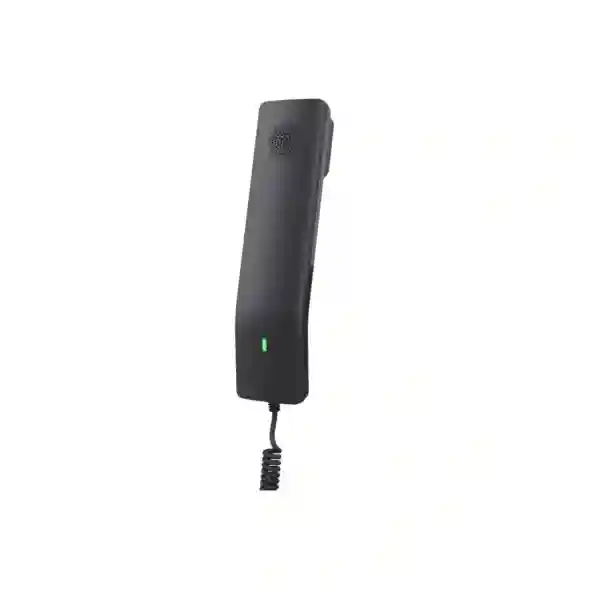
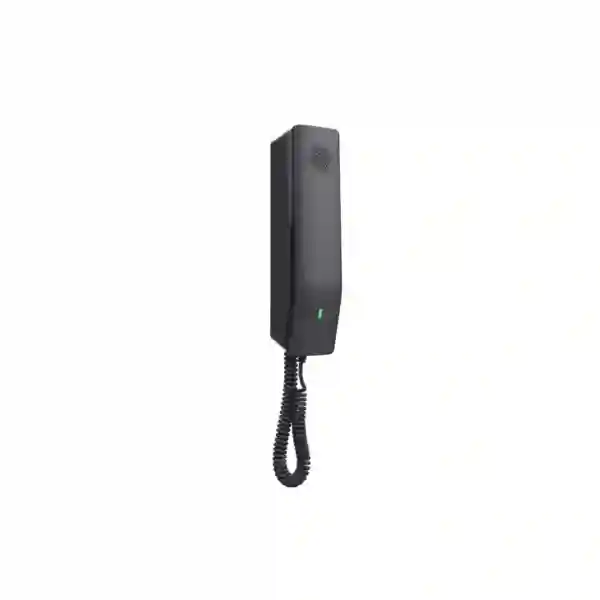
Grandstream GHP611 Dubai – Compact Black Hotel IP Phone for Managed SIP Deployments
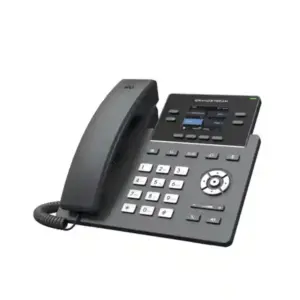
The Grandstream GHP611 is a compact black SIP hotel phone designed for rooms and shared spaces where the user experience should stay simple while the IT team still needs centralized control. It supports two SIP accounts and lines, ten speed-dial keys, three programmable keys, three-way voice conferencing, HD audio, a 10/100 Mbps Ethernet interface with Power over Ethernet, hearing-aid compatibility, enterprise security features, and Grandstream Device Management System provisioning. For Dubai and wider UAE hospitality projects, those capabilities make the GHP611 useful where guestrooms, serviced apartments, patient rooms, dormitories, staff accommodation, retail counters, or similar locations already have structured Ethernet and PoE available.
Fourteck positions the GHP611 as a practical room endpoint rather than a full-featured desktop executive phone. The main buying question is not whether it has the longest feature list; it is whether the property needs a compact wired handset that can expose a small set of important service actions, remain easy for guests or occupants to understand, and be administered consistently across many rooms. Buyers should confirm the PBX platform, SIP extension plan, VLAN and QoS design, PoE switching, room cabling, service-key mapping, required faceplate customization, quantity, and current hardware/firmware before finalizing an order.
What the GHP611 is designed to solve
Guest-room telephony has a different design objective from office telephony. A hotel guest normally does not need a large display, directory browsing, dozens of line keys, or a complex menu tree. The guest needs a phone that makes essential actions obvious: call reception, request room service, reach housekeeping, contact security, redial, place a call on hold, listen to voicemail when supported by the server, or use the hands-free function. At the same time, the hotel IT team may have hundreds of devices to provision and maintain. That creates a requirement for a simple front-end paired with a manageable back-end.
The Grandstream GHP611 addresses that requirement with a trim-style form factor and handset-focused keypad. Its three programmable keys and ten speed-dial positions can be mapped around a defined hospitality workflow. The device also supports common SIP and network standards, TLS and SRTP for protected signaling and media where supported by the deployment, Layer 2 and Layer 3 QoS mechanisms, mass provisioning, and GDMS management. The result is a phone intended to stay uncomplicated for the room occupant while still fitting into a professionally managed IP voice environment.
For procurement teams in Dubai, Abu Dhabi, Sharjah, Ajman, and other UAE locations, this matters because room endpoints are rarely purchased in isolation. A project may include the IP PBX or hosted SIP platform, PoE access switches, VLAN configuration, DHCP, firewall rules, structured cabling, room labeling, emergency dialing policy, service-number mapping, and device provisioning. The GHP611 can be the room endpoint in that architecture, but a successful rollout depends on the surrounding voice network being planned correctly.
Verified GHP611 technical profile
| Product | Grandstream GHP611 compact hotel IP phone, black |
|---|---|
| SIP accounts / lines | 2 SIP accounts, 2 lines |
| Network | One auto-negotiating 10/100 Mbps Ethernet port with PoE |
| Wi-Fi | Not the Wi-Fi model; use the GHP611W when a wireless GHP611-family variant is required |
| Keys | 23 keys total, including 3 programmable keys, standard dialing keys, function keys, and volume/mute controls; ten numeric positions can be configured for speed dialing |
| Audio | HD handset audio; supports codecs including full-band Opus and wideband G.722 together with common narrowband codecs |
| Conferencing | Up to 3-way voice conferencing |
| Management | Grandstream Device Management System (GDMS), TR-069 and encrypted XML provisioning options |
| Security | Secure boot, device certificate, administrator password controls, AES-encrypted configuration file support, TLS, SRTP and 802.1X capabilities |
| QoS | 802.1Q/802.1p Layer 2 and ToS/DiffServ/MPLS Layer 3 QoS support |
| Mounting | Desktop or wall-mounted using the supplied base |
| Accessibility | Hearing Aid Compatibility (HAC) |
| Color | Black |
| Dimensions | Approximately 211 × 53 × 44 mm with handset |
| Typical use | Hotels, serviced apartments, hospitals, dormitories, residential projects, retail and other room-based or simplified calling environments |
Specifications should be confirmed against the current Grandstream datasheet, firmware documentation, hardware revision and project requirements before ordering or deployment.
Why wired PoE can be the right choice for hotel rooms
Wi-Fi is valuable when Ethernet is unavailable, but a wired endpoint often simplifies operational planning where structured cabling already exists. The GHP611 can receive network connectivity and electrical power through its Ethernet connection when connected to a compatible PoE source. In a property with PoE access switches, this can reduce the need for a separate room-side power adapter, keep bedside or desk areas cleaner, and allow the voice endpoint to be powered from centrally protected switching infrastructure. If the switch is backed by a suitable UPS, the room phones may continue receiving power during short utility interruptions, although overall call availability still depends on the PBX, network core, SIP trunk and other infrastructure.
PoE also supports a consistent installation process. A deployment team can patch the room port to the voice VLAN, confirm PoE delivery, provision the extension, test the mapped service keys, verify outbound and emergency routing, and record the device in the management platform. That workflow is repeatable across many rooms and floors. For new Dubai hotel projects, serviced residences, student accommodation, or hospital wings, repeatability often matters more than adding consumer-style features to each handset.
The decision should still be made from the real site condition. If rooms do not have usable Ethernet points, if the cabling route is expensive to modify, or if the property specifically wants wireless endpoints, the GHP611W may be more appropriate. The W variant should not be assumed to have identical powering behavior across every hardware generation, so the current hardware revision should be confirmed before procurement. Fourteck can help the project team separate connectivity, powering, and management requirements before model selection.
Turn the keys into a guest-service workflow
A hospitality phone delivers more value when its key plan matches the way the property actually serves guests. The GHP611 offers three programmable keys and ten speed-dial positions. That creates room for a simple service layout without asking guests to remember internal numbers. A property could map frequently requested departments such as reception, housekeeping, room service, concierge, security, reservations, spa, transport desk, restaurant, or engineering. The exact mapping should come from the hotel’s operational process rather than from a generic template.
Before mass deployment, the hotel should define which services are available twenty-four hours, which numbers differ by property or building, whether a call should route to a hunt group or individual extension, what happens when a department does not answer, and whether guests can dial external numbers directly. The PBX dial plan, call permissions, class of service, and emergency policy should be tested with the same care as the physical handset configuration. A printed speed-dial label is only useful if the destination behind it is reliable.
The swappable faceplate and speed-dial label can support property branding and consistent room instructions. In multi-property groups, this can help standardize the handset experience while allowing each property to use its own service destinations. The customization should remain legible and simple. Overloading the label with marketing text or too many instructions can make the phone harder to use. A concise key plan, familiar terminology, and consistent placement across rooms usually provide a better guest experience.
Audio quality and resilience in real networks
The GHP611 supports full-band Opus along with G.722 and several common telephony codecs. Codec selection is normally negotiated with the SIP platform and may depend on the PBX, trunk, bandwidth policy, remote endpoint, and administrator settings. For internal hotel calls, using a wideband-capable codec can improve clarity when the other endpoint and system path support it. For PSTN calls, the end-to-end quality may be constrained by the external network and trunk.
Grandstream also specifies an advanced jitter-resilience algorithm intended to tolerate substantial packet loss without immediately destroying voice quality. That feature is useful, but it should not be treated as a substitute for network design. A production hotel voice network should still use suitable switching, QoS, stable uplinks, VLAN segmentation where appropriate, correct duplex and speed negotiation, monitored packet loss, and enough WAN capacity for external SIP traffic. High packet loss, unstable latency, misconfigured firewalls, or overloaded switches can still create a poor experience regardless of endpoint resilience.
For Fourteck projects, the best practice is to test the actual call path before deploying every room. This includes internal calls to reception, transfers, hold and retrieve behavior, voicemail access, three-way conferencing if required, inbound calls, outbound calls, DTMF behavior, and emergency routing. Where the hotel uses a hosted PBX or remote SIP service, the firewall and NAT environment also needs validation. A hotel phone is a small endpoint in a larger real-time communications system, so voice quality is the result of the complete path.
GDMS makes large room deployments easier to operate
Grandstream Device Management System is one of the strongest reasons to consider the GHP611 for a larger room rollout. GDMS provides a centralized platform for supported Grandstream endpoints, allowing administrators to provision devices, manage accounts and configuration, apply firmware, monitor devices, receive alarms, and organize endpoints by site, group, or model. In a hotel with dozens or hundreds of rooms, centralized control can reduce the need to visit each room for routine configuration work.
A good provisioning plan starts before installation. The IT team can define the SIP account structure, extension numbering, server addresses, time settings, codecs, VLAN parameters, programmable keys, security settings, and firmware policy. Devices should then be enrolled using a controlled method and assigned to the correct property, floor, room, or operational group. The naming convention should make it easy to identify a device when a guest reports a problem. For example, a room-based inventory convention is normally more useful than a list of MAC addresses without business context.
Central management also supports change control. If the hotel changes a service number, updates a PBX address, modifies a dial plan, or adopts a new firmware baseline, administrators can plan changes centrally rather than manually reconfiguring each room. The exact capabilities available depend on the device, firmware, GDMS service and deployment architecture, so the management design should be verified before the property relies on a specific function.
Security considerations for hospitality VoIP
Hotel room phones are endpoints on a business network, not isolated appliances. The GHP611 includes security capabilities such as secure boot, a unique device certificate, administrator-level passwords, AES-encrypted configuration file support, TLS, SRTP, and 802.1X media-access control. These features provide useful building blocks, but the level of protection achieved depends on how the system is configured.
For a managed deployment, Fourteck recommends separating voice endpoints according to the property network design, restricting management access, changing default credentials as part of provisioning, applying supported firmware, using secure provisioning methods, limiting unnecessary services, and controlling which networks can reach phone administration interfaces. SIP signaling and media protection should be enabled when the PBX, service provider, and deployment requirements support it. Firewall policies should allow only the traffic that is actually needed.
Hotels should also think about physical access. Guests can reach room phones directly, so configuration should not expose administrative functions unnecessarily. Network switch ports serving rooms should be designed with the property’s security policy in mind. Where 802.1X or other access-control mechanisms are used, compatibility must be tested. Security should be integrated with the overall hotel network standard rather than configured independently for every phone model.
GHP611 vs GHP611W vs GHP610: choose by connectivity and room design
| Requirement | GHP611 | GHP611W | GHP610 |
|---|---|---|---|
| Color | Black | Black | White |
| Primary connectivity | Wired Ethernet | Wi-Fi-enabled variant; current Wi-Fi generation depends on hardware revision | Wired Ethernet |
| PoE | Yes, through the 10/100 Mbps port | Powering behavior should be confirmed for the current hardware revision before purchase | Yes, through the 10/100 Mbps port |
| SIP accounts / lines | 2 / 2 | 2 / 2 | 2 / 2 |
| Programmable keys | 3 | 3 | 3 |
| Best fit | Black room phone where Ethernet and PoE are available | Black room phone where wireless connectivity is required | White room phone where Ethernet and PoE are available |
The GHP611 and GHP610 are closely related wired models differentiated mainly by color, while the W models provide wireless capability. If the hotel needs more programmable keys, a display, USB charging or another room-phone experience, buyers should review other models in the GHP family rather than forcing the GHP611 into a requirement it was not designed to satisfy.
Where the GHP611 fits beyond hotels
Serviced apartments and residential towers. A compact SIP phone can provide a fixed communication point for concierge, reception, facilities, security, or building services. The correct fit depends on the property’s resident-service model and whether the phone is intended for internal calling, external calling, or both.
Hospitals, clinics, and care environments. Patient or visitor rooms often benefit from straightforward calling without a complex interface. Hearing-aid compatibility and clearly mapped service keys can support usability, while centralized provisioning can help IT maintain a large endpoint population. Healthcare organizations still need to apply their own network, security, privacy, cleaning, and emergency-call policies.
Dormitories and staff accommodation. Universities, labor accommodations, training centers, and staff residences may need a simple fixed phone for reception, security, or internal extension calling. A wired PoE endpoint can be useful when rooms already have structured data cabling.
Retail and public-facing counters. The GHP611 may also suit counters where staff need a basic SIP endpoint for a small set of calls and service contacts rather than a feature-rich desk phone. The compact format can help where counter space is limited.
Back-of-house hospitality areas. Housekeeping stations, service corridors, maintenance rooms, staff lounges, or storage areas may need a reliable internal phone. The choice should consider noise level, mounting position, physical exposure, network access, and whether a handset-style endpoint is appropriate for the environment.
Dubai and UAE deployment planning
Dubai hospitality projects range from boutique properties with a limited room count to large hotels, resorts, branded residences, and serviced-apartment towers. The GHP611 can work across those scales when the network design and operational model match. A smaller property may provision endpoints directly against an on-premises or hosted PBX, while a larger property may use standardized templates, dedicated voice VLANs, central monitoring, and staged floor-by-floor commissioning. In both cases, the phone selection should follow the property’s service workflow rather than being treated as a simple item-by-item replacement for old analog phones.
In Deira and Bur Dubai, refurbishment projects may include older buildings where the existing room cabling was designed for analog telephony. Before choosing a wired IP endpoint, the project team should verify whether reusable structured cabling is present, whether new Ethernet drops are required, where access switches will be installed, and whether switch closets have sufficient power and UPS capacity. A model that is inexpensive at the handset level can still become costly if the building requires major cabling work, so infrastructure validation should happen early.
In newer areas and purpose-built developments such as JLT, Business Bay, Dubai Marina, or large mixed-use projects, structured network cabling may already be available in rooms. In that situation, the GHP611’s PoE design can simplify installation. The design team should still verify port counts, PoE budget, VLAN assignments, DHCP scope, DNS and NTP access, PBX reachability, and the management path to GDMS if it will be used.
Abu Dhabi hotels, healthcare facilities, educational campuses, and staff housing can apply the same principles, although each site may have different security and procurement standards. Sharjah and Ajman projects may similarly benefit from a compact endpoint where the requirement is straightforward room calling rather than a display-heavy office phone. Fourteck can support requirement review, model selection, quotation preparation, and coordination based on the current project scope. Product availability, delivery timing, warranty terms, and any required services should be confirmed at quotation stage.
PBX, SIP, VLAN and QoS checklist before rollout
A GHP611 order should ideally follow a short technical discovery exercise. First, identify the PBX or hosted voice platform and confirm SIP endpoint compatibility. The phone follows standard SIP, but PBX platforms can differ in provisioning, feature-code behavior, voicemail integration, transfer behavior, emergency dialing, NAT traversal, and security requirements. A pilot unit should be tested against the actual production platform whenever possible.
Second, define the extension plan and room-number strategy. Some properties align room phone extensions with room numbers, while others use internal numbering that is independent from guest-room labels. The PBX must also define whether guests can call other rooms directly, whether inter-room calling is restricted, which external destinations are permitted, and how billing or call accounting is handled if the property charges for calls.
Third, validate the network. Each wired phone requires a suitable Ethernet path. The access switch needs an available port and adequate PoE capacity. The voice VLAN, if used, must be reachable from the PBX or SIP service. DHCP, DNS, NTP, firmware/provisioning servers and GDMS reachability should be planned. QoS should preserve voice traffic during congestion. Firewalls and session-border components need rules that match the SIP architecture rather than broad, insecure access.
Fourth, test failover expectations. If the property expects room phones to remain available during power interruptions, the network core, PoE switches, PBX, SIP gateways, internet connectivity, and other dependencies need appropriate backup. PoE at the handset is only one part of resilience. If the WAN fails and the PBX is cloud-hosted, internal and external calling behavior should be understood in advance.
Finally, document acceptance criteria. A room should not be considered complete only because the phone powers on. Commissioning can include registration status, inbound and outbound calls, reception key, housekeeping key, voicemail, hold, transfer, three-way conference if required, DTMF, emergency dialing, audio quality, VLAN placement, management visibility, labeling, wall or desk placement, and a record of the assigned extension and device identifier.
Procurement guidance: what Fourteck needs for a useful quotation
For a meaningful Grandstream GHP611 Dubai quotation, buyers should share more than the model name. The room count is the starting point, but the final requirement may include spare units, PoE switches, PBX licenses or extensions, gateways, patching, installation, configuration, labeling, faceplate requirements, and project support. A property with 120 rooms may not order exactly 120 phones if it wants spare inventory or if service areas also need endpoints.
Fourteck can prepare a more accurate proposal when the customer provides the expected quantity, delivery location, target project date, existing PBX platform, whether the site has PoE Ethernet in each room, whether configuration or installation assistance is needed, and whether a specific Grandstream hardware revision or feature must be confirmed. For replacement projects, photographs or documentation of the current cabling and PBX environment can also help identify migration risks.
Pricing and availability change with quantity, supplier status, regional distribution, warranty channel, shipping, and project timing. This page therefore does not publish a fixed price or claim permanent stock. Customers can request a current quote so the commercial offer matches the actual requirement and date. The same principle applies to accessories and related infrastructure: each item should be selected from the project architecture rather than added automatically.
When the GHP611 is the right fit—and when it is not
Choose the GHP611 when: the property wants a black compact handset; Ethernet and PoE are available; two SIP accounts are sufficient; the room needs a simple user interface; three programmable keys plus ten speed-dial positions cover the service workflow; centralized Grandstream management is useful; and a display is not required.
Consider the GHP611W when: the room requires wireless network connectivity. Confirm the exact hardware revision, Wi-Fi generation, powering method, and current datasheet before purchase because Grandstream has revised the GHP family hardware over time.
Consider another GHP model when: the property needs more programmable keys, a color display, USB charging, or another room-phone layout. The GHP620/GHP621 family provides additional programmable-key capacity, while higher GHP models introduce other features. The best alternative depends on the specific room category and guest-service requirement.
Consider a business desk-phone family instead when: the user is an office employee who needs a display, directories, multiple line appearances, BLF keys, headset workflows, or frequent call handling. Hotel phones and business desk phones solve different user problems, and using the right class of endpoint usually creates a better experience.
Migration from analog hotel phones to the GHP611
Many hospitality properties still operate room phones through analog extensions, legacy PBX cards, or analog gateways. Moving to the GHP611 changes the room endpoint from an analog device to an IP endpoint, so the migration should be planned at the network and PBX levels. The first question is whether the current PBX supports SIP endpoints directly. If not, the project may involve a PBX upgrade, a new IP PBX, or another architecture approved by the property.
The second question is cabling. An analog phone commonly uses a single copper pair, while the GHP611 uses Ethernet. Existing telephone cabling cannot simply be assumed to support Ethernet. The site survey should identify whether Cat5e/Cat6 or other suitable structured cabling reaches the room, whether the outlet and patch panels are correctly terminated, and whether the cable path meets the network standard. If new data cabling is needed, that work can become a major part of the project schedule and budget.
The third question is operational continuity. Hotels cannot usually take every room phone offline at once. A staged migration may be organized by floor, wing, or room block, with a pilot area completed first. The property should define how reception handles calls during cutover and whether both legacy and new extensions need to coexist temporarily. If room numbering or call-routing rules change, front-office and engineering teams should be informed.
Finally, the migration is an opportunity to simplify the service map. Old analog phones may carry outdated labels, unused service numbers, or inconsistent room programming. Before copying the old configuration, the hotel can review which guest-service destinations are still needed, standardize the speed-dial plan, and document the new extension and management model. This turns the endpoint replacement into a controlled communications upgrade rather than a like-for-like hardware swap.
Commissioning workflow for a multi-room project
1. Confirm architecture
Validate PBX, SIP trunk, extension range, VLAN, PoE switching, internet or WAN dependency, firewall policy, provisioning method, and GDMS use.
2. Build a pilot
Configure a small number of phones using the intended production template and test the real guest-service destinations and call permissions.
3. Standardize labels
Agree on speed-dial labels, property branding, extension naming, room mapping, and documentation before mass rollout.
4. Stage deployment
Install by floor, wing, building, or operational group so issues can be isolated and corrected without disrupting the entire property.
5. Test each room
Verify registration, service keys, call paths, audio, DTMF, emergency routing, wall/desk placement, management visibility, and labeling.
6. Handover operations
Provide the IT or engineering team with inventory records, provisioning ownership, firmware policy, escalation contacts, and spare-unit process.
Regional procurement support beyond the UAE
Fourteck supports business technology inquiries across multiple regional markets. A Grandstream GHP611 requirement in Kuwait may focus on hospitality modernization or serviced accommodation; a deployment in Kenya, Uganda, Ghana, Nigeria, or Tanzania may involve hotels, hospitals, universities, staff housing, or mixed-use properties. The endpoint capabilities remain the same, but connectivity, delivery, warranty handling, PBX platforms, import conditions, and local project requirements can differ by country.
Regional buyers should therefore request a country-specific quotation rather than assuming UAE pricing, stock, warranty, or delivery conditions apply everywhere. For related regional information, customers can use the Fourteck network portals for Kuwait, Kenya, Uganda, Tanzania, Ghana, Nigeria, and the broader Fourteck Africa platform. Availability and commercial terms should always be confirmed for the destination market.
Related Fourteck resources
Buyers planning a wider hospitality communication project can review the Grandstream Hotel Phone Solutions in Dubai overview for room-phone family guidance, network planning considerations, and related project components. For IP phone requirements and product discovery, visit Fourteck IP Phone. Grandstream-focused UAE inquiries can also be routed through Fourteck Grandstream UAE. These resources help procurement teams connect the GHP611 with the broader PBX, switching, PoE, provisioning, and deployment requirement instead of treating the handset as an isolated purchase.
Frequently asked questions about Grandstream GHP611
Does the Grandstream GHP611 support Wi-Fi?
No. The GHP611 is the wired black model. If a project needs a black GHP61x phone with wireless connectivity, the GHP611W is the Wi-Fi variant. Because Grandstream has hardware revisions within the family, buyers should confirm the current revision and its exact Wi-Fi and power characteristics before ordering the W model.
Does the GHP611 support Power over Ethernet?
Yes. Grandstream specifies one auto-negotiating 10/100 Mbps Ethernet port with integrated PoE for the GHP611. The connected switch or injector must provide compatible PoE and enough power budget for the planned number of endpoints.
How many SIP accounts and lines does the GHP611 have?
The GHP611 supports two SIP accounts and two lines. That is normally enough for a guest-room or room-based endpoint, although the PBX call-routing design determines how those accounts are used.
Can the GHP611 be wall-mounted?
Yes. The GHP611 is designed for desktop or wall installation using its base. The installer should confirm the wall position, cable path, handset clearance, accessibility, and room-layout requirements before mounting.
Is the GHP611 only for hotels?
No. Grandstream positions the GHP61x family for hotels and similar environments, including hospitals, apartments, dormitories, retail and other locations that benefit from a compact, easy-to-use SIP endpoint.
Can the GHP611 be managed through GDMS?
Yes. The GHP611 is supported by Grandstream Device Management System, which can provide centralized provisioning, configuration, firmware management, monitoring, alarms and other management functions for supported deployments.
What is the main difference between GHP611 and GHP610?
The most visible difference is color: the GHP611 is black and the GHP610 is white. Both are compact wired GHP61x models with two SIP accounts, three programmable keys, ten speed-dial positions, three-way conferencing and Ethernet/PoE connectivity. The final hardware revision should still be confirmed at purchase.
What should a UAE buyer confirm before ordering GHP611 units?
Confirm the quantity, PBX or hosted SIP platform, room Ethernet availability, PoE switch capacity, VLAN and QoS design, extension plan, service-key destinations, installation style, provisioning method, hardware revision, warranty route, delivery location, and whether configuration or rollout assistance is required.
Request a Grandstream GHP611 Dubai quotation
Send Fourteck the expected number of rooms or endpoints, delivery emirate, current PBX platform, whether each location has PoE Ethernet, and the target project timeline. Fourteck can use that information to help confirm whether the wired GHP611 is the correct model, compare it with the GHP611W or other GHP options where necessary, identify related PoE or IP-PBX requirements, and prepare a quotation based on current commercial conditions.
Best next step: request a compatibility and quantity review before final purchase, especially for hotel refurbishments, analog-to-IP migrations, or multi-property rollouts.
Technical basis: Grandstream GHP610/GHP611 current product page, current datasheet, administration/user documentation, GHP series resources and firmware documentation. Features can vary by hardware revision and firmware. Pricing, stock, delivery, warranty, installation scope and regional availability are not assumed and should be confirmed with Fourteck at quotation stage.
Reviews
There are no reviews yet.