Grandstream GRP2611G Dubai – Gigabit PoE IP Phone for Managed Business Deployments
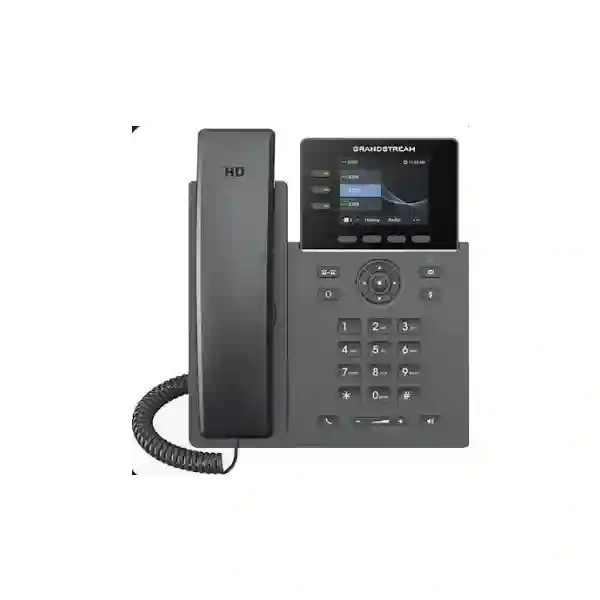
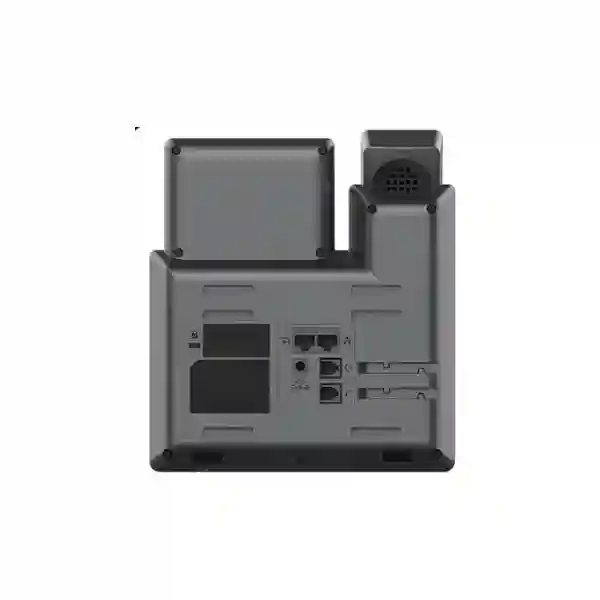
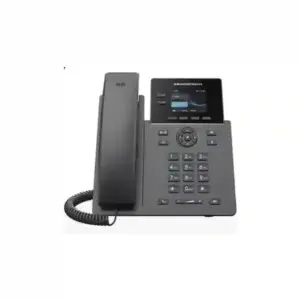
The Grandstream GRP2611G Dubai is a 3-line carrier-grade SIP desk phone for organizations that want a practical balance of call capacity, Gigabit desktop networking, Power over Ethernet, centralized device management and familiar physical controls. Grandstream specifies up to three SIP accounts, three multi-purpose line keys, up to twelve digital BLF keys, dual auto-sensing 10/100/1000 Mbps Ethernet ports with integrated IEEE 802.3af PoE, a 2.8-inch 320×240 color display, HD audio, Noise Shield technology and five-way audio conferencing. It also supports Grandstream Device Management System, or GDMS, for centralized provisioning and administration.
For Dubai and wider UAE businesses, the important buying question is whether the phone matches the user role, SIP/PBX design, desk network speed, PoE plan, headset requirement, security policy, provisioning method and future expansion. Fourteck can help review those requirements before quotation so buyers select the GRP2611G for desks where its Gigabit and management capabilities create practical value rather than choosing it only because it is a higher model number.
A useful middle ground for users who need more than a basic two-account desk phone.
Designed for desks where the phone can sit between the access switch and a connected workstation.
Programmable visibility and shortcuts without requiring a physically large key panel.
Convenient multi-party audio collaboration directly from the handset.
Who should choose the GRP2611G?
Choose the GRP2611G when a business user needs a compact professional SIP phone with three accounts, Gigabit pass-through networking, PoE, HD voice, programmable BLF capability, secure provisioning options and centralized fleet management. It is especially relevant where one structured cabling point is shared by a phone and a desktop computer, because the Gigabit interfaces avoid the 100 Mbps pass-through limitation found on some lower-tier endpoints. It also makes sense for organizations standardizing multiple handsets because GDMS and other supported provisioning options can reduce desk-by-desk configuration.
Do not choose it merely because it sits above an entry model in the range. If the user only needs one or two accounts and Fast Ethernet is acceptable, a simpler GRP variant may be sufficient. If the role needs integrated Wi-Fi, Bluetooth, substantially more keys, expansion modules or a larger executive interface, another GRP model may be a better fit. Fourteck can compare these decision points against the actual user profile before the bill of materials is finalized.
Why Gigabit Ethernet matters at the desk
A business IP phone frequently becomes part of the desktop data path. In a common office layout, the wall outlet connects to the phone’s network port and the phone’s second Ethernet port connects onward to the employee’s PC. In that arrangement, the switching capability inside the handset matters because it can influence the maximum wired link speed available to the workstation. Grandstream equips the GRP2611G with dual auto-sensing 10/100/1000 Mbps Ethernet ports. When the upstream switch, cabling, endpoint and configuration also support Gigabit Ethernet, the phone can therefore fit into a Gigabit desk architecture without imposing a 100 Mbps phone-side bottleneck.
This becomes useful in offices where staff routinely move large files, synchronize cloud data, use line-of-business systems or conduct video collaboration from the PC. The phone does not create Gigabit performance by itself; the complete path still depends on the access switch, cable category, patch leads, VLAN design, workstation interface and wider infrastructure. For a Dubai office refresh, Fourteck can review whether the handset is being purchased as part of a wider switching, structured cabling, IP PBX or endpoint project so the phone specification aligns with the rest of the design.
PoE deployment: one cable can simplify the desk
The GRP2611G includes integrated IEEE 802.3af Power over Ethernet. In a compatible network, the same Ethernet cable can carry both connectivity and electrical power from a PoE-capable switch or injector to the handset. That can reduce dependence on local adapters, simplify cable management and make centralized power planning easier for multi-desk deployments. Grandstream’s datasheet also lists a universal power adapter in the package contents, although package details and plug type should be confirmed for the supplied region.
For larger projects, PoE planning should be treated as an infrastructure calculation rather than an assumption. The access switch requires sufficient PoE capability and budget for the number of endpoints, while VLAN, QoS, LLDP and switch-port settings should align with the voice network policy. If phones must remain operational during short power interruptions, resilience also depends on whether the PoE switches, PBX, gateways and core network are backed by appropriate UPS capacity. Exact power budgeting and runtime should be calculated from the real switch models and topology.
Three SIP accounts without an oversized handset
Grandstream positions the GRP2611G as a three-line carrier-grade phone supporting up to three SIP accounts and three multi-purpose line keys. That profile can be a useful middle ground for staff who need more than a single-extension desk phone but do not need the higher account count, expanded physical controls or wireless features of larger models. A user might have a primary extension plus additional identities for a department, service number, branch or other PBX-defined workflow, depending on platform configuration.
SIP account count should not be confused with simultaneous external lines, SIP trunk channels, PBX call capacity or contact-centre licensing. Those are different layers of the solution. A handset can register multiple accounts while calling permissions and concurrency are controlled by the PBX, service provider, trunk plan and dial policy. During procurement, Fourteck can help separate endpoint requirements from PBX and trunk requirements so the phone is not expected to solve a capacity issue that belongs elsewhere.
Digital BLF keys and practical call visibility
The GRP2611G provides three dual-color line keys that can be digitally programmed as up to twelve provisionable BLF or fast-dial keys. BLF, or Busy Lamp Field, is useful when the PBX and configuration support presence monitoring for selected extensions. A user can see the state of configured destinations and use programmable keys for faster calling, pickup or transfer-oriented workflows. This can improve call handling for administrators, team coordinators, lighter reception points and managers who frequently interact with a known set of colleagues.
The benefit depends on deliberate key design. Filling every available key with arbitrary extensions can create clutter and training overhead. A better approach is to map keys to real tasks: frequently called colleagues, department destinations, shared lines, speed dials, parking locations or supported PBX functions. For a standardized rollout, the same role-based template can then be applied to groups of phones. Centralized provisioning helps make that approach repeatable when employees move desks or replacement devices are introduced.
HD audio, Opus, G.722 and Noise Shield
Grandstream specifies HD audio for the handset and speakerphone and lists wideband codec support including G.722 and Opus, along with common narrowband codecs. The GRP2611G also includes Noise Shield technology to help minimize background noise. These capabilities can improve the user experience in offices where voice clarity matters, but actual call quality is always end-to-end. Codec negotiation, WAN quality, LAN congestion, SIP provider behavior, PBX configuration, room acoustics and the remote party’s endpoint all influence the result.
For businesses comparing phones mainly on audio quality, it is therefore useful to consider the network and PBX at the same time. The GRP2611G supports Layer 2 QoS mechanisms including 802.1Q and 802.1P and Layer 3 mechanisms such as ToS and DiffServ according to Grandstream documentation. Those features provide the endpoint-side foundation for a controlled voice design, while the switches, routers and WAN policy must be configured consistently for priority markings to have practical value.
A 2.8-inch color display with familiar physical controls
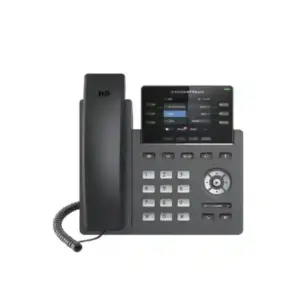
The GRP2611G uses a 2.8-inch 320×240 TFT color LCD. It is not positioned as a large touchscreen executive endpoint; instead, it provides a compact color interface paired with physical line, navigation, soft and function keys. This design can suit organizations that value familiar button-driven operation, predictable training and a smaller desktop footprint. The phone includes four programmable context-sensitive soft keys, navigation controls and dedicated keys for common actions such as message access, transfer, headset, mute, redial, speakerphone and volume.
This interface style is appropriate for users whose work depends on repeated call actions rather than touch applications. Organizations can standardize simple user guidance around answer, hold, transfer, conference, voicemail, park and pickup according to the PBX workflow. Exact labels and behavior can vary with firmware and provisioning. If a customer is replacing another phone family, Fourteck can help identify where user behavior may change so migration planning includes realistic training rather than assuming all SIP handsets operate identically.
GDMS: the phone becomes more valuable at scale
One of the strongest reasons to select a GRP-series phone is not visible on the desk. Grandstream Device Management System is designed to provide a centralized interface for configuring, provisioning, managing and monitoring supported Grandstream endpoints. For one handset, an administrator can configure settings manually. For twenty, fifty or hundreds of endpoints across departments or branches, repeatable provisioning and policy management become much more important. The operational objective is to reduce configuration drift, improve consistency and make replacement or reassignment easier.
A planned deployment usually begins with configuration standards rather than individual phone setup. The IT team can define extension assignment, SIP server parameters, time settings, firmware policy, VLAN behavior, codec priorities, button layouts, directory sources and security settings. Those choices can then be mapped into an approved provisioning process. The exact GDMS workflow and cloud policy should be reviewed against the organization’s requirements at deployment time. Fourteck can assist with endpoint planning and identify which information needs to be ready before staging begins.
Zero-touch provisioning and repeatable rollouts
Grandstream describes the GRP2611G as designed with zero-touch provisioning for mass deployment and easy management. The business value is straightforward: when a phone can receive the correct configuration through a controlled provisioning workflow, technicians can reduce manual desk-side programming for every unit. That is particularly useful for new offices, branch rollouts, user moves, replacements and managed-service environments where consistent configuration matters more than one-off customization.
Zero-touch does not mean zero planning. The deployment team still needs a reliable source of truth for extension numbers, user names, device identifiers, PBX credentials, network settings and security policy. A strong project combines automated provisioning with asset records and acceptance testing. Before a bulk rollout, a pilot group can validate registration, inbound and outbound calling, transfers, BLF subscriptions, voicemail, directory lookup, time settings, headset operation, firmware and network quality. That pilot reduces the risk of multiplying one configuration mistake across an entire fleet.
Enterprise security features within a wider voice policy
The GRP2611G includes endpoint security capabilities that Grandstream highlights for enterprise deployment, including secure boot, dual firmware images and encrypted data storage. Documentation also lists user and administrator password controls, encrypted configuration files, SRTP, TLS and 802.1x support. These functions can help build a controlled endpoint environment, but none should be treated as a complete voice-security solution in isolation.
The broader design still matters. Administrator credentials should be managed appropriately, remote management should follow policy, provisioning paths should be secured, signaling and media encryption should align with PBX and provider capabilities, firmware should be maintained and voice VLAN access should fit the segmentation model. If 802.1x is used, certificate or identity management becomes part of the rollout. For organizations with formal cybersecurity requirements, endpoint configuration should be reviewed alongside firewall, switching, PBX and identity controls rather than managed separately.
SIP/PBX compatibility: confirm the platform, not only the protocol
The GRP2611G is a SIP phone, and Grandstream states broad interoperability with third-party SIP devices and leading SIP, NGN and IMS platforms. SIP support creates a strong foundation for integration, but procurement should still verify the actual PBX or hosted voice platform. Registration, BLF, shared-line behavior, directory integration, voicemail indication, provisioning, transfer methods, codecs and advanced features can depend on server configuration and firmware.
A useful compatibility check includes the PBX vendor and version, deployment type, registrar or proxy details, extension authentication method, number of required accounts, codec policy, DTMF method, directory source, BLF expectations, headset requirements, VLAN design and remote-management method. Hosted providers may also maintain supported-device lists or their own profiles. Fourteck can help buyers collect these details before quotation so selection is based on the intended environment rather than assuming every SIP feature behaves identically across all platforms.
Headset users and Electronic Hook Switch considerations
Grandstream lists an RJ9 headset interface for the GRP2611G and specifies Electronic Hook Switch support for compatible Plantronics headsets. Headset compatibility should still be confirmed at the exact model level because connector type, EHS cable, headset base, vendor generation and firmware can affect functionality. A wired headset may only require audio connectivity, while a wireless user may expect remote answer and hang-up control, ringing indication or other functions that depend on EHS integration.
For call-intensive users, headset ergonomics can influence productivity as much as the phone itself. Sales, support and administrative teams may benefit from a headset selected for wearing style, acoustic environment and daily call volume. During procurement, provide the exact existing headset model where possible, or describe whether the user needs mono, stereo, wired or wireless operation. Fourteck can then treat the phone and headset as a compatibility pair rather than unrelated items. Where EHS is critical, confirm the combination before a bulk purchase.
Five-way audio conferencing for quick collaboration
The GRP2611G supports five-way audio conferencing. This can be useful for ad-hoc collaboration when a user wants to bring several participants together without moving the conversation to a separate conferencing service. The feature is convenient for quick internal coordination, supplier discussions, project calls or small management conversations where the desk phone is already the primary voice endpoint.
Endpoint conferencing should not be confused with a PBX conference bridge or cloud meeting platform. For larger meetings, scheduled conferences, recording, participant management or advanced collaboration, organizations may prefer a server-based or application-based service. The right approach depends on how users actually work. A desk-phone conference feature is valuable because it is immediate and familiar, but it is only one tool within the broader communications environment.
Directory, call log and hot-desking capabilities
Grandstream documentation lists XML and LDAP phonebook support with up to 1000 entries for the GRP2611G, along with a call log of up to 1000 records. It also lists hot-desking, click-to-dial, auto answer, off-hook auto dial, flexible dial-plan options, personalized ringtones, music on hold, server redundancy and failover among supported telephony capabilities. Which functions matter depends on the PBX and business workflow.
Directory integration can reduce the need for users to maintain local contacts manually, but the quality of the experience depends on the directory source, naming standards and synchronization design. Hot-desking can be useful for flexible seating or shift environments, but the login and logout process should be tested with the chosen PBX. Server redundancy can contribute to resilience where the voice architecture supports it, yet failover behavior should be validated rather than assumed.
When the GRP2611G is not the right phone
A useful product decision also explains when to choose something else. The GRP2611G does not include integrated Wi-Fi or Bluetooth according to Grandstream’s current product comparison information, and it does not support an extension module. If a desk has no practical wired Ethernet connection, users need direct Bluetooth pairing, or a receptionist needs a very large number of visible or expandable keys, another endpoint should be evaluated. An executive who expects a much larger display or richer application interface may also need a different class of phone.
At the other end of the requirement spectrum, a user who only needs basic calling, two SIP accounts and PoE may not need the third account and Gigabit capability of the GRP2611G. A business can define endpoint personas—basic user, standard professional, call-intensive user, receptionist, executive and common-area phone—and select an appropriate model for each. This can control cost while preserving a consistent management and training framework.
Dubai deployment scenarios where the GRP2611G fits well
Dubai offices often combine dense floor plans, structured cabling, PoE access switches, cloud services and mixed communications workflows. In a professional-services office in Business Bay or DIFC, the GRP2611G can suit employees who want a fixed desk extension while their PC continues to use a Gigabit wired connection through the handset. In a JLT or DMCC office with shared IT administration, GDMS can support consistent provisioning across many desks. In clinic administration, education offices, retail back offices or service companies, programmable keys and headset support can assist staff who transfer and coordinate calls throughout the day.
The same handset may not suit every role in those environments. A busy main reception can require more visible keys, while a hot-desk area may place greater emphasis on login workflow and directories. A meeting room may be better served by a purpose-built conference endpoint. Fourteck can help classify user groups first and then determine how many GRP2611G units are genuinely required. That approach is more reliable than ordering one model for an entire office and discovering later that specialized roles need different features.
Abu Dhabi, Sharjah, Ajman and wider UAE requirements
For UAE projects outside central Dubai, the technical decision remains similar but logistics and support planning can differ. An Abu Dhabi enterprise may standardize phones across headquarters and remote departments. A Sharjah industrial customer may prioritize dependable wired connectivity and central configuration for administrative offices. An Ajman SME may be replacing analogue extensions with SIP endpoints and need a staged migration that preserves existing numbers and user habits. In each case, the GRP2611G can be considered where three accounts, PoE and Gigabit desktop connectivity match the user profile.
Before quotation, Fourteck recommends documenting quantity, delivery emirate, target PBX or hosted SIP platform, existing switch model, PoE availability, VLAN plan, headset requirements, wall-mount needs, user profiles and whether preconfiguration or staging is required. Current commercial availability, lead time, warranty route and any region-specific package details should be confirmed at the time of order rather than assumed from a web listing.
GCC projects and multi-site standardization
Organizations operating across the GCC may need the same desk-phone standard in the UAE, Kuwait, Oman and other regional locations. In that scenario, the value of the GRP2611G can come from repeatability: the same hardware model, familiar controls, role-based key templates and centralized provisioning methods can reduce support variation across offices. Network and service-provider conditions may still differ by country, so SIP trunking, numbering, emergency calling, regulatory requirements and hosted-service compatibility should be handled locally rather than assumed to be identical.
For regional procurement, separate what can be standardized from what must stay site-specific. The phone model, firmware policy, security baseline, naming scheme, button template and asset process may be standardized. SIP credentials, VLAN IDs, dial plans, NTP settings, site contacts and provider-specific values may differ. A structured provisioning plan makes that split easier to manage. Commercial supply for each destination should be confirmed according to the order route and current availability.
Africa-linked branches and remote deployment planning
Businesses with operations in the UAE and African markets such as Uganda, Kenya, Ghana, Nigeria or Tanzania may also want a consistent endpoint family across branches. The GRP2611G can be considered for offices where wired Ethernet and PoE are available and where IT teams want a professional three-account phone that can be centrally provisioned. The key is to design for actual branch conditions: LAN quality, WAN stability, power resilience, local SIP service, PBX location, user skill level and remote support capability can vary considerably between sites.
A remote branch may place more value on configuration consistency and failover planning than on adding extra desk features. If the PBX is hosted centrally, WAN dependency and QoS become critical. If the PBX is local, backup and remote management may become the stronger concern. Product supply, import requirements, taxes, certification and delivery arrangements should be confirmed for each destination rather than inferred from UAE availability.
A practical network design around the GRP2611G
A well-designed IP phone project connects structured cabling, access switching, VLANs, DHCP, DNS, NTP, PBX or hosted SIP services, security controls, QoS and endpoint provisioning. The GRP2611G supports technologies that fit into this design, including Gigabit Ethernet, PoE, LLDP, 802.1Q VLAN tagging, 802.1P priority, Layer 3 QoS, 802.1x, TLS and SRTP. These capabilities allow the phone to participate in a managed enterprise architecture, but they do not configure the network automatically.
A typical design may place the phone on a voice VLAN while the connected PC uses a data VLAN. DHCP provides network settings, provisioning assigns SIP and device configuration, the switch handles traffic policy and the PBX controls calls. NTP keeps time consistent for logs and display, while firewall rules restrict unnecessary traffic between segments. Each component needs to be tested together. Fourteck can help buyers identify which product and design questions should be answered before hardware ordering begins.
Migration from older IP phones
Replacing an older SIP phone is not always a simple hardware swap. Existing users may rely on button positions, speed dials, headset adapters, directory behavior or transfer methods that have become part of daily work. The new handset may also introduce Gigabit networking or different provisioning and security capabilities. A migration plan should therefore inventory the old configuration, identify required user features, decide what should be retained or redesigned, and validate the replacement against the current PBX.
The GRP2611G can be a practical upgrade where the customer wants Gigabit pass-through, a third SIP account or the GRP management framework. Organizations should not assume every legacy feature translates one-to-one. BLF subscriptions, custom XML functions, EHS headset behavior, corporate directories and specialized dial plans may require testing. A small pilot can reveal these differences before users are moved in bulk.
Why handset price is only one part of the project
The unit price of a phone is only one part of a deployment. A business rollout may also include PoE switch capacity, patching, VLAN configuration, PBX licensing or subscriptions, SIP trunks, headsets, wall mounts, staging, asset labeling, firmware validation, user training and support. Two quotations for the same GRP2611G quantity can therefore represent very different scopes. Comparing only the handset line item can hide work that still needs to be completed before the phones are usable.
A clearer procurement method is to define the required outcome. For example: users must receive configured extensions, existing numbers must remain, PCs must retain Gigabit links, phones must use PoE, a defined BLF template must be applied, headsets must be compatible and the IT team must receive management documentation. Once the outcome is defined, the bill of materials and service scope can be compared consistently.
Energy and power considerations
Grandstream lists IEEE 802.3az Energy-Efficient Ethernet for the GRP2611G and specifies maximum power consumption figures in its datasheet. Grandstream has also published GRP Series firmware intended to reduce energy use on supported models. For one phone, consumption is small relative to larger infrastructure, but across a large fleet, energy planning and switch PoE budgeting become more meaningful.
Organizations should manage power from a system perspective. PoE switch efficiency, UPS sizing, number of active endpoints, firmware, display behavior and network design all contribute to total consumption. If sustainability reporting or branch power limits are important, manufacturer figures can be used as inputs and actual conditions validated after deployment. Firmware changes intended to improve efficiency should still follow the organization’s normal testing and change-control process.
Branding and swappable faceplates
The GRP2611G supports a swappable faceplate, which Grandstream promotes for easier logo customization. This can be relevant to service providers, hospitality operators, education environments, managed communications providers and enterprises that want consistent visual identity across deployed phones. Branding can also help distinguish managed endpoints in shared or customer-facing spaces.
Custom faceplates should be treated as a separate procurement item. Availability, minimum order quantities, artwork approval, lead time and commercial terms may differ from the phone itself. A standard unit should not be assumed to include customized branding. If branding is part of the project, provide the requirement at quotation stage so it can be confirmed before ordering.
Wall mounting and physical placement
Grandstream states that the GRP2611G supports wall mounting, with the wall mount sold separately, and includes a desk stand with two angle positions. Wall mounting can be useful in compact service areas, warehouses, security points or shared spaces where desk surface is limited. The decision should consider cable routing, handset accessibility, display visibility and the user’s ability to reach programmable keys comfortably.
For desk use, the handset should not be crowded by monitor bases, docks or other equipment, and cabling should avoid unnecessary strain on connectors. If a headset is used, the base and cables should be planned with the phone position. For larger installations, standardized desk layouts can make support easier and reduce cable clutter. Any wall-mount accessories should be included in the bill of materials instead of assumed to be part of the standard package.
Support and lifecycle planning after deployment
A successful phone project continues after installation. Organizations should decide who owns firmware management, configuration backups, user changes, replacement devices, spare stock, credential control and escalation to the PBX or SIP provider. Centralized management can simplify some of these tasks, but responsibility still needs to be clear. A configuration change affecting many phones should follow an approval and testing process, especially when it touches network, security or call behavior.
For critical roles, organizations may keep a small pool of prepared replacement units depending on fleet size and support targets. Asset records should link devices to users or locations, and replacement procedures should remove or reassign old credentials appropriately. Current firmware and lifecycle information should be checked with Grandstream documentation when planning long-term standards. Exact maintenance scope and response commitments should be agreed commercially rather than assumed from the handset purchase alone.
Grandstream GRP2611G technical specifications
| Specification | Verified detail |
|---|---|
| Product type | 3-line carrier-grade IP phone |
| SIP accounts / line keys | Up to 3 SIP accounts; 3 multi-purpose line keys |
| Display | 2.8-inch 320×240 TFT color LCD |
| Network | Dual switched auto-sensing 10/100/1000 Mbps Gigabit Ethernet ports |
| Power | Integrated IEEE 802.3af PoE; universal power adapter listed in Grandstream package contents |
| Programmable keys | Up to 12 digital BLF / fast-dial keys; 4 programmable context-sensitive soft keys |
| Audio | HD handset and speakerphone; G.722 and Opus support; Noise Shield technology |
| Conferencing | 5-way audio conference |
| Headset | RJ9 headset interface; EHS support specified for compatible Plantronics headsets |
| Management | GDMS; TR-069 and encrypted XML provisioning options listed |
| Security | Secure boot, dual firmware images, encrypted storage, SRTP, TLS, 802.1x and encrypted configuration support |
| QoS | Layer 2 802.1Q / 802.1P and Layer 3 ToS / DiffServ / MPLS QoS support |
| Phonebook / call log | XML/LDAP phonebook up to 1000 entries; call log up to 1000 records |
| Mounting | Two-position desk stand; wall mounting supported with separate wall-mount accessory |
| Wi-Fi / Bluetooth | No integrated Wi-Fi or Bluetooth listed for GRP2611G |
| Extension module | Not supported according to Grandstream product comparison information |
Specifications should be checked against current Grandstream documentation and firmware for the supplied unit. Accessories, package contents and feature behavior can vary by region, firmware and deployment configuration.
GRP2611G vs GRP2610P vs GRP2612G
| Decision point | GRP2610P | GRP2611G | GRP2612G |
|---|---|---|---|
| SIP accounts | 2 | 3 | 4 |
| Virtual / digital BLF profile | Up to 8 | Up to 12 | Up to 16 |
| Ethernet | 10/100 Mbps | 10/100/1000 Mbps | 10/100/1000 Mbps |
| PoE | Yes | Yes | Yes |
| Display | 2.4-inch color | 2.8-inch color | 2.4-inch color |
The GRP2611G occupies a useful middle position: Gigabit networking and a third SIP account without moving to a much larger handset. Buyers should compare the exact suffix and current vendor documentation because P, W and G variants within the GRP family can materially change PoE, Wi-Fi and Ethernet capabilities.
Deployment workflow: from requirement to handover
Identify basic users, professional users, reception, managers, executives and shared desks. Confirm which roles genuinely need three SIP accounts, BLF keys and Gigabit pass-through.
Document the PBX or hosted SIP platform, required features, directory source, codec and DTMF policy, and provisioning method.
Validate PoE capacity, switch ports, cabling, VLANs, QoS, DHCP, DNS, NTP and any 802.1x requirements before rollout.
Create controlled configuration profiles for extensions, buttons, firmware, security settings and site-specific values.
Test representative users for calls, transfer, BLF, voicemail, headset operation, network quality and remote management.
Stage devices, label assets, record assignments, provide user guidance and keep configuration ownership clear for future support.
Procurement checklist before requesting a quotation
- Quantity: required phones plus any planned spares.
- Delivery location: Dubai, Abu Dhabi, Sharjah, another UAE emirate, GCC destination or export requirement.
- PBX / SIP platform: vendor, version and whether it is on-premises, hosted or provider-managed.
- Network: switch model, PoE capability, VLAN plan and whether a workstation connects through the phone.
- User roles: account count, BLF requirements, transfer workflow and conferencing needs.
- Headsets: exact existing headset models or desired wired/wireless requirement.
- Provisioning: GDMS, local provisioning, TR-069 or another approved method.
- Accessories: wall mounts, headsets, patch leads or other project items.
- Services: configuration, staging, labeling, installation assistance or user handover.
- Commercial confirmation: current availability, lead time, applicable warranty route and final quotation should be confirmed before purchase.
Frequently asked questions about Grandstream GRP2611G Dubai
Is the Grandstream GRP2611G suitable for Dubai offices?
Yes. It can suit Dubai office users who need a professional SIP desk phone with three accounts, Gigabit Ethernet, PoE, HD audio, programmable BLF capability and centralized management. Suitability should still be confirmed against the PBX, user role, headset and network design.
How many SIP accounts does the GRP2611G support?
Grandstream specifies support for up to three SIP accounts and three multi-purpose line keys. The PBX or hosted service controls how those accounts are registered and what calling permissions they receive.
Does the GRP2611G have Gigabit Ethernet?
Yes. It has dual switched auto-sensing 10/100/1000 Mbps Ethernet ports. This is useful when a workstation connects through the phone and the business wants to preserve Gigabit-capable wired connectivity, assuming the rest of the network also supports it.
Does the GRP2611G support PoE?
Yes. Grandstream lists integrated IEEE 802.3af Power over Ethernet. A compatible PoE switch or injector can power the handset through Ethernet. The switch PoE budget should be checked for multi-phone deployments.
Does the GRP2611G have Wi-Fi or Bluetooth?
No integrated Wi-Fi or Bluetooth is listed for the GRP2611G in Grandstream’s current product comparison information. If either capability is required, compare another GRP model that explicitly includes it.
Can the GRP2611G be managed through GDMS?
Yes. Grandstream lists GDMS support for centralized configuration, provisioning, management and monitoring of supported endpoints, which is particularly useful for multi-phone and multi-site deployments.
How many BLF keys are available?
Grandstream specifies up to twelve digital BLF or fast-dial keys using the programmable line-key design. Exact BLF behavior depends on the PBX and provisioning configuration.
Does the GRP2611G support a headset?
Yes. The phone has an RJ9 headset interface, and Grandstream documentation lists EHS support for compatible Plantronics headsets. Confirm the exact headset and EHS cable combination before bulk purchase.
Can the GRP2611G be wall mounted?
Yes. Grandstream states that the phone is wall mountable, with the wall-mount accessory sold separately. Include this accessory in the quotation when wall installation is planned.
Is the GRP2611G a good replacement for a GRP2610P?
It can be when the user needs a third SIP account, a larger 2.8-inch display, up to twelve digital BLF keys and Gigabit Ethernet. If two accounts and 10/100 Ethernet are sufficient, the GRP2610P may remain adequate.
Can Fourteck confirm current price and availability?
Fourteck can prepare a current quotation after confirming quantity, delivery location, accessories and project scope. Price, availability, lead time and warranty route should be confirmed at the time of inquiry because they can change.
Request a GRP2611G quotation based on your actual deployment
For a useful quotation, share the number of phones, Dubai/UAE delivery location, PBX or hosted SIP platform, PoE switch availability, number of SIP accounts per user, headset requirement, BLF needs and whether configuration or staging support is required. Fourteck can then help determine whether the Grandstream GRP2611G Dubai is the correct endpoint for the target users or whether another GRP model better matches the project.
Explore broader business IP phone requirements through Fourteck IP Phones Dubai, or review the related Grandstream GRP2610P Dubai option when two SIP accounts and Fast Ethernet are sufficient.
Reviews
There are no reviews yet.