Grandstream WP856 Dubai – Wi-Fi 6 Smartphone for Voice, Scanning and Mobile Workflows
The Grandstream WP856 is designed for businesses that need more than a cordless voice handset. It combines SIP telephony, Android 13, Google Mobile Services, dual-band Wi-Fi 6, 1D/2D barcode scanning, NFC, a 13 MP camera, Bluetooth 5.2, enterprise provisioning and rugged protection in one mobile device. For organisations in Dubai and across the UAE, that combination can reduce the number of separate devices carried by warehouse teams, retail staff, healthcare personnel, security users, facilities teams and other employees who move continuously through a Wi-Fi-covered site.
Fourteck can help organisations evaluate the WP856 against the actual workflow, Wi-Fi design, SIP/PBX platform, barcode and NFC requirements, Android application needs, roaming expectations, charging strategy and device-management approach. The aim is not simply to select a phone; it is to determine whether the WP856 can become a practical mobile work terminal for communication and data capture without creating avoidable network or application complexity.
What makes the WP856 different from a conventional Wi-Fi IP phone?
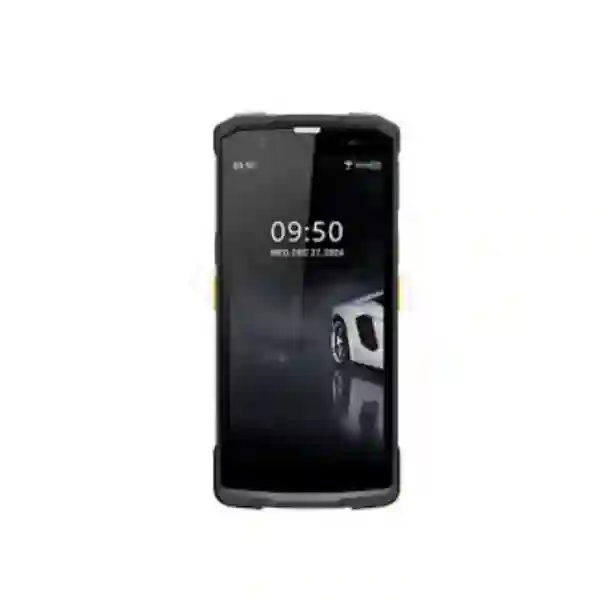
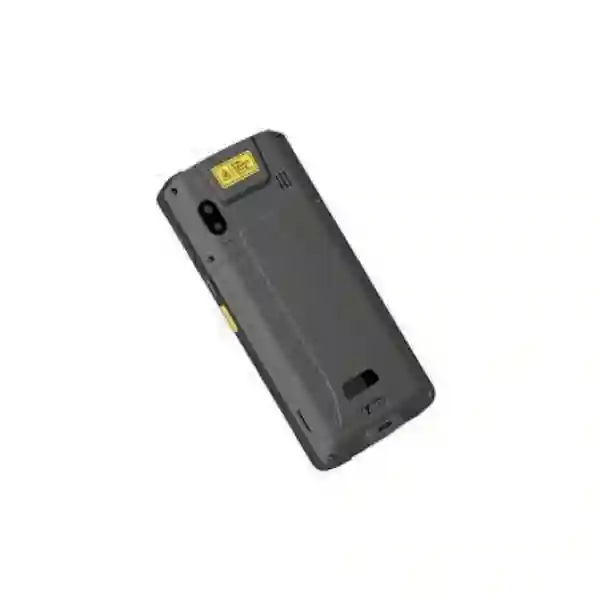
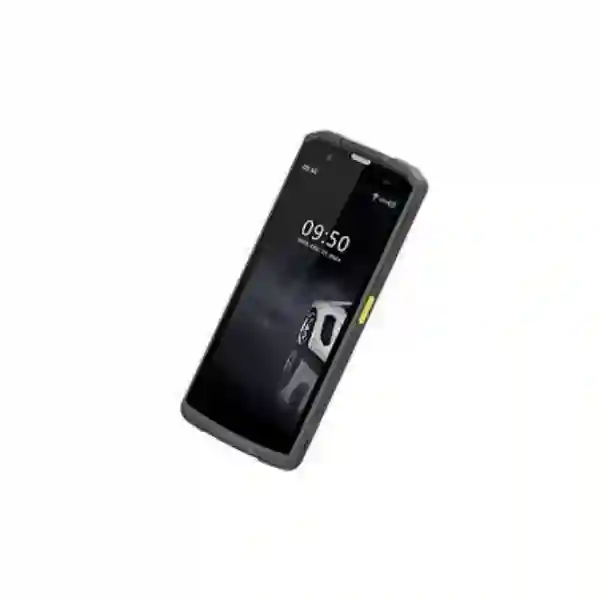
A conventional Wi-Fi IP phone is primarily a voice endpoint. The WP856 is closer to a rugged enterprise smartphone that also functions as a SIP phone. Grandstream equips it with a 5.5-inch HD multi-touch display, Android 13 with Google Mobile Services, 4 GB RAM, 64 GB storage, Wi-Fi 6, a removable 5000 mAh battery, integrated 1D and 2D barcode scanning, NFC, a 13 MP camera, sensors, Bluetooth 5.2, and support for up to six SIP accounts and six lines. That makes it relevant when communication, data capture and task applications need to happen on the same portable device.
Up to six SIP accounts and six lines, HD audio, wideband codecs, call handling and conferencing features for business communications.
Android 13 with Google Mobile Services supports Android applications and creates a familiar mobile experience for task-oriented deployments.
Integrated 1D/2D scanning, NFC and camera capabilities can support inventory, asset, retail, logistics, identification and workflow applications.
IP65 protection, drop resistance up to 1.5 m and a removable battery make it better suited to mobile operational environments than a standard consumer handset.
WP856 quick facts for technical buyers
Specifications describe the platform, but deployment quality depends on site design. Wi-Fi coverage, roaming, QoS, VLANs, SIP configuration, application compatibility, security policy and battery operations should be planned together.
Start with the customer workflow, not the specification list
The best reason to consider the Grandstream WP856 Dubai solution is not that it has many features. It is that several operational requirements can converge on one managed mobile endpoint. A warehouse picker may need to receive a SIP call, scan a barcode, check an inventory application, acknowledge a task, photograph a damaged carton and move immediately to another aisle. A retail associate may need internal calling, stock lookup, scanning, customer assistance and messaging. A facilities or security user may need push-to-talk style communication, alerts, camera functions and access to Android applications while moving between floors.
For these users, carrying a phone plus a separate scanner plus another application device can slow the workflow and complicate support. The WP856 can be evaluated as a consolidation platform. The business case is strongest when the organisation already relies on managed Wi-Fi and has a clear reason to combine SIP communication with operational applications or data capture.
| Customer requirement | WP856 capability | Practical benefit | Design consideration |
|---|---|---|---|
| Move continuously across a site | Wi-Fi 6 and roaming support | Wireless SIP and app access | Validate AP coverage, channel plan, roaming and QoS |
| Capture product or asset codes | Integrated 1D/2D scanner | Fewer separate devices | Confirm barcode types and app integration |
| Use enterprise apps | Android 13 + GMS | Familiar application ecosystem | Confirm app, identity, MDM and permissions |
| Work in demanding areas | IP65 and 1.5 m drop protection | Greater operational resilience | Rugged rating does not replace correct handling |
Wi-Fi 6 mobility: the network is part of the phone system
Because the WP856 depends on Wi-Fi rather than a wired Ethernet connection, the wireless network becomes a direct part of voice quality and application reliability. Grandstream specifies dual-band 2.4 GHz and 5 GHz Wi-Fi 6 support with roaming capabilities. That gives organisations a strong technical platform, but it does not automatically guarantee seamless roaming in every building. Access-point placement, signal overlap, interference, channel reuse, transmit power, client density and backhaul capacity still determine the real experience.
A data-only Wi-Fi survey may not be enough where users must maintain voice calls while walking between access points. Voice is sensitive to latency, jitter, packet loss and roaming interruptions. Warehouses can be difficult RF environments because racks, inventory and metal structures affect signals. Healthcare, retail and multi-floor properties can combine staff devices, guest access, payment systems, cameras and IoT endpoints on the same infrastructure.
A practical review should consider whether 5 GHz can carry most voice traffic, whether 2.4 GHz is needed for edge coverage, whether voice devices should use a dedicated SSID, how VLANs and QoS are mapped, what roaming behaviour is expected, and how SIP signalling and RTP media traverse the LAN, firewall and PBX environment.
Integrated scanner: where the WP856 can change operational work
The integrated scanner is one of the defining reasons to choose the WP856. Grandstream documents support for numerous 1D and 2D formats, including widely used formats such as Code 128, EAN, UPC, Code 39, QR Code, Data Matrix and PDF417. Instead of treating scanning as an accessory attached to a phone, the WP856 is built so that scanning is part of the mobile device and can be used alongside Android applications.
That can be useful for warehouse receiving, picking, cycle counting, goods movement, stock verification, retail lookup, healthcare identification workflows, asset tracking, service tickets and facilities tasks. The exact benefit depends on the application. A scanner is only useful when the software can accept and process the scanned value correctly. Before a larger purchase, organisations should test real labels, damaged labels, scan frequency, gloves or protective equipment, the target application, field behaviour and the complete transaction flow.
Warehouse and logistics
Scan inventory, receive calls, check task apps and coordinate movement without constantly switching between a scanner and separate phone.
Retail and stockrooms
Support product lookup, stock verification, internal communications and store applications from one Wi-Fi-connected device.
Healthcare operations
Combine mobile communications with approved identification, asset or task applications, subject to the organisation’s privacy, clinical and security requirements.
NFC, camera and sensors extend the use case beyond telephony
The WP856 includes NFC and a 13 MP camera, giving application developers and solution designers additional ways to capture or exchange information. NFC can support workflows that rely on compatible tags or nearby data exchange, while the camera can support documentation, visual verification and Android applications that use image capture. Grandstream also includes proximity, light, accelerometer and gyroscope sensors.
These capabilities are most valuable when connected to a defined business process. A facilities team might scan a code attached to equipment, open the service record, add a photograph and then call an engineer. A retail user might scan a product, view an application record and contact a supervisor. The practical question is not simply whether the phone has NFC or a camera, but what exact workflow those tools support and how the workflow will be governed.
Android 13 and Google Mobile Services: powerful, but plan application governance
Grandstream states that the WP856 runs Android 13 and is certified with Google Mobile Services. This opens the device to a broad application ecosystem and can make training easier for users familiar with Android. The hardware provides 4 GB RAM and 64 GB ROM, giving the device more application-oriented resources than a conventional cordless phone.
For business deployment, app access should be treated as an enterprise management question rather than simply a user convenience. Organisations should decide which applications are required, who can install new apps, how Google accounts are handled, whether corporate identity is used, how app updates are managed, which permissions are allowed, whether data is stored locally, and how a lost device is handled. If a mobile-device-management platform is part of policy, compatibility should be tested before procurement at scale.
Grandstream documentation also describes an SDK interface for third-party application development. That makes the WP856 relevant for businesses that want the communication device to become part of a customised workflow. Development and integration should be validated against the required firmware, APIs, scanner behaviour, background-app policies and security controls.
SIP telephony and PBX integration
The WP856 remains a business SIP endpoint even though it resembles a rugged smartphone. It supports up to six SIP accounts and six lines. Grandstream lists standard SIP and network protocols, common voice codecs including G.711, G.722, G.729, iLBC and Opus, and security technologies such as TLS, SRTP, HTTPS and 802.1X. This makes the handset suitable for standards-based VoIP environments when the PBX, network and security design are compatible.
PBX compatibility should be assessed at the required feature level rather than assumed from registration alone. Registration, inbound and outbound calling, transfer, hold, voicemail indications, directory behaviour, codec negotiation, DTMF, call recording policy, emergency calling, roaming during active calls and failover behaviour may all matter. If an organisation uses 3CX, an Asterisk-based platform, Grandstream UCM, Yeastar or another SIP system, test the actual platform and firmware in use.
For a larger fleet, define account templates, network settings, certificates, security policy, phonebook sources, firmware governance, approved apps, scanner profiles and user permissions before devices are handed to staff.
Security should cover voice, Wi-Fi, Android and captured data
A WP856 deployment crosses several domains at once. It is a SIP phone, Wi-Fi client, Android endpoint and data-capture device. Security therefore needs a broader design than the security of a normal desk phone. Grandstream documents support for TLS, SRTP, HTTPS, 802.1X, certificates and encrypted configuration options. Those capabilities can support a strong deployment, but they must be enabled and integrated with the organisation’s policies.
A useful implementation plan considers Wi-Fi authentication, segmentation, SIP credential handling, certificate management, administrator passwords, user-level access, web administration, SSH policy, firmware updates, app permissions, local storage, screen lock, Google account policy, device recovery and application data. If scanned information contains sensitive customer, patient, inventory or asset data, the security team should understand where that data is sent and retained.
Grandstream’s management interface also provides diagnostic and logging capabilities that can help administrators troubleshoot network and device issues. Access to logs, packet captures and administration should remain limited to authorised support users.
Battery and shift planning for full-day mobile teams
Grandstream specifies a removable 5000 mAh battery with up to 20 hours of talk time and up to 200 hours of standby time. Those figures are useful reference points, but real battery life varies with screen usage, scanning frequency, Wi-Fi conditions, applications, Bluetooth, camera activity, roaming and background processes. A warehouse device used continuously for scanning and bright-screen interaction can have a different daily profile from a security handset that spends more time on standby.
For multi-shift operations, battery planning should be part of rollout. Decide where devices charge, whether spare batteries are required, how batteries are labelled and tracked, how shift handover works, what happens when a unit is returned with a low charge, and how degraded batteries will be replaced over time. The removable design supports a service strategy without forcing replacement of the complete handset simply because a battery has aged.
Ruggedness for operational environments
The WP856 is rated IP65 for dust and water protection and is described by Grandstream as drop-safe from heights up to 1.5 metres. This matters in warehouses, stockrooms, facilities environments and other areas where a device can be exposed to dust, moisture or accidental drops. Rugged ratings should still be interpreted correctly: IP65 does not mean the device should be intentionally submerged, and drop protection does not mean damage is impossible.
Deployment teams should train users on charging-port care, screen protection, cleaning methods, battery-cover closure, approved accessories and the limits of the environment. If the device is intended for specialist conditions such as hazardous locations, extreme chemical exposure or regulated clean-room use, confirm suitability separately rather than assuming the IP rating covers those scenarios.
Who should shortlist the Grandstream WP856?
The WP856 is best shortlisted by organisations that can make practical use of its combination of Wi-Fi voice, Android applications and data capture. It may be excessive for an employee who only needs a basic cordless extension. It becomes more compelling when the employee’s job already involves scanning, mobile software, NFC, imaging or frequent communication while moving through the site.
Warehouses, distribution, logistics, retail stockrooms, healthcare operations, security teams and facilities teams on managed Wi-Fi.
Sites with weak Wi-Fi, specialised scanning, strict application restrictions, complex MDM policies or mandatory cellular connectivity.
Users who only need straightforward cordless voice and have no requirement for apps, scanning, NFC, camera workflows or advanced data access.
Deployment scenarios in Dubai and the UAE
Dubai warehouses and distribution centres
Dubai logistics and warehousing environments can involve large floor areas, tall racking, mixed indoor/outdoor transitions, high device counts and continuous movement. Here, the WP856 can be assessed as a combined voice and scanning endpoint. The project should begin with RF coverage and application workflow, not handset quantity. Test roaming through actual aisles, loading zones and packing areas. If the device will interact with a WMS, validate scanning behaviour, login method, session persistence and response time before rollout.
Retail, malls and multi-floor stores
Retail staff move between customer areas, stockrooms, receiving points and service desks. A WP856 can potentially combine internal SIP calling with product lookup, inventory applications and barcode scanning. Wi-Fi roaming and application simplicity are especially important because staff should not need technical knowledge to recover from a network transition during customer service.
Healthcare and clinical support operations
Grandstream lists healthcare among intended deployment environments. A healthcare organisation should additionally review privacy, application approval, infection-control cleaning processes, identity, device sharing, battery workflow, Wi-Fi segmentation and emergency communications. Any clinical use must be assessed under the healthcare provider’s own regulatory and patient-safety requirements.
Security, facilities and property operations
Security and facilities personnel need reliable communication while moving through buildings. Android apps, camera functions, scanning, sensors and SIP calling can support incident, patrol, maintenance and asset workflows. Large towers or campuses should validate elevator areas, stairwells, basements, plant rooms and outdoor transition points because these are common RF challenges.
A pilot is more valuable than a specification-only decision
For a device as capable as the WP856, a pilot can remove more risk than a long comparison spreadsheet. Use representative employees and test the complete job: call quality while walking, real barcode labels, the production Wi-Fi SSID, intended PBX, business application, Bluetooth accessories if required, charging process, user login, permissions, screen brightness, hand comfort and expected shift duration.
The pilot should deliberately include difficult areas rather than only a meeting room near an access point. For a warehouse, walk the aisles and loading area. For a hospital, test intended floors and corridors. For retail, include front-of-house and stockroom movement. The objective is to identify RF gaps, application issues and operational friction before the device becomes part of an essential workflow.
After the pilot, document approved firmware, Wi-Fi settings, SIP provisioning, application versions, scanner profile, permissions, certificates, security settings, charging procedures and support escalation. This turns the pilot into a repeatable deployment template.
Technical specification summary
| Processor | 2.2 GHz octa-core 64-bit processor |
|---|---|
| Operating system | Android 13, Google Mobile Services certified |
| Memory | 4 GB RAM, 64 GB ROM |
| SIP accounts / lines | Up to 6 SIP accounts and 6 lines |
| Wi-Fi | Dual-band 2.4 GHz / 5 GHz Wi-Fi 6 (802.11a/b/g/n/ac/ax) |
| Bluetooth | Bluetooth 5.2 with BLE |
| Display | 5.5-inch HD multi-touch capacitive display with 2.5D Corning third-generation glass |
| Scanner | Integrated 1D and 2D barcode scanner |
| NFC | 13.56 MHz RFID / NFC support for documented standards and tag types |
| Camera | 13 MP rear camera |
| Battery | 5000 mAh removable battery; published up to 20 h talk time and 200 h standby |
| USB | USB Type-C 2.0 OTG; Type-C headset support |
| Rugged rating | IP65; drop-safe up to 1.5 m onto concrete under stated conditions |
| Dimensions / weight | Approx. 161 × 74 × 15 mm; handset weight approx. 0.28 kg |
Technical values are based on Grandstream documentation and may be affected by firmware, configuration and operating conditions. Confirm current documentation and application compatibility before a volume order.
Provisioning and fleet management considerations
One WP856 can be configured manually. A fleet should not be. Grandstream supports web administration and provisioning methods such as TR-069 and encrypted XML configuration, and its documentation describes Wi-Fi batch deployment. For a business rollout, the goal should be consistent, auditable configuration with as little per-device manual work as possible.
Define a standard device profile before deployment. Determine Wi-Fi SSID and authentication, SIP account method, firmware policy, time/NTP settings, language, security controls, admin credential policy, certificate requirements, phonebook source, approved Android applications, scanner output profile and user restrictions. If the organisation uses GDMS or another management process, validate the exact functions required for WP856 administration.
Support teams should document recovery procedures for Wi-Fi failure, application crash, SIP registration failure, scanner misconfiguration, low battery, damaged accessories and replacement units. Spare devices can be preconfigured so operational teams are not forced to wait for a full rebuild during a shift.
How to decide between WP856 and a simpler cordless Wi-Fi handset
The WP856 is not automatically the right choice simply because it is feature rich. If a user only needs reliable cordless voice, a more traditional Wi-Fi handset may be easier to operate, easier to standardise and more economical. The WP856 should earn its place by replacing or improving additional workflow steps.
| Requirement | WP856 | Voice-first Wi-Fi handset |
|---|---|---|
| SIP calling while roaming | Strong fit | Strong fit |
| Android business applications | Core advantage | Usually limited or not the purpose |
| 1D/2D barcode scanning | Integrated | Typically requires another device |
| Simple voice-only deployment | May be more capability than needed | Often simpler |
Procurement checklist before requesting a WP856 quotation
- Number of users and whether devices are assigned individually or shared by shift.
- Primary locations: warehouse, retail, healthcare, security, office campus, facilities or another environment.
- Existing Wi-Fi platform, access-point density, SSIDs, authentication and known coverage issues.
- PBX or SIP platform, account count, call features, directory and security requirements.
- Barcode formats, scanning frequency and the application that will receive scan data.
- Android applications, Google account policy, MDM requirements and any custom app development.
- NFC, camera, Bluetooth headset or USB-C accessory requirements.
- Shift duration, charging locations, spare battery strategy and expected spare-device quantity.
- Deployment services required: Wi-Fi review, SIP provisioning, configuration template, pilot, training and support.
Why work with Fourteck for a Grandstream WP856 Dubai deployment?
A WP856 project touches IP telephony, wireless networking, endpoint configuration and business applications. Fourteck’s role can therefore extend beyond supplying the handset. We can help translate the customer requirement into a deployment checklist, review SIP and Wi-Fi dependencies, identify where a pilot is needed, and plan a repeatable configuration approach for the number of devices involved.
For Dubai organisations, this is particularly useful where the same project includes Grandstream IP phones, SIP platforms, PoE switching for wireless access points, VLANs, wireless coverage, call routing, branches or ongoing IT support. The WP856 should be treated as part of that communications architecture, not as an isolated gadget.
Fourteck does not assume stock, lead time, compatibility or commercial terms without checking the actual requirement. Share the deployment details and we can help confirm the suitable model, the required scope and the information needed for an accurate quotation.
Grandstream WP856 FAQ
Is the Grandstream WP856 a normal cordless IP phone?
It is more than a conventional cordless handset. The WP856 is an Android 13 Wi-Fi smartphone with SIP calling, a 1D/2D barcode scanner, NFC, camera, Wi-Fi 6, Bluetooth and rugged protection for operational users.
How many SIP accounts does the WP856 support?
Grandstream specifies support for up to six SIP accounts and six lines.
Does the WP856 support Wi-Fi 6?
Yes. It supports dual-band 2.4 GHz and 5 GHz 802.11a/b/g/n/ac/ax wireless networking with roaming support. Deployment quality still depends on the site’s Wi-Fi design.
Can the WP856 scan QR codes and barcodes?
Yes. The built-in scanner supports many 1D and 2D formats, including QR Code, Data Matrix, PDF417, Code 128, EAN and UPC families. The exact workflow should be tested with the intended application.
Does the WP856 run Android apps?
Yes. It runs Android 13 and is certified with Google Mobile Services. Businesses should still validate required applications, permissions, management and security policies before rollout.
Is the WP856 suitable for warehouses?
It is designed for mobile operational environments including warehouses and logistics. Its scanner, rugged design, Wi-Fi mobility and Android platform make it a strong candidate, provided the warehouse Wi-Fi and application workflow are properly tested.
What is the WP856 battery capacity?
The WP856 uses a removable 5000 mAh battery. Grandstream publishes up to 20 hours of talk time and up to 200 hours of standby time under stated conditions.
Is the WP856 waterproof?
The device is IP65 rated for dust and water protection. This is rugged protection, not a claim that the device is suitable for intentional submersion.
Can the WP856 work with an existing SIP PBX?
It uses standards-based SIP, but compatibility should be verified against the exact PBX, required call features, codecs, security settings and provisioning method used by the organisation.
What should we test before buying WP856 units in volume?
Test real Wi-Fi roaming, SIP calling, scanner performance, required Android apps, security policy, charging and battery behaviour, accessories and the complete user workflow in the actual deployment environment.
Plan your Grandstream WP856 deployment with Fourteck
Tell us where the devices will be used, how many users need them, which PBX you run, what must be scanned, which Android applications are required, and what Wi-Fi infrastructure is already in place. Fourteck can help determine whether the WP856 is the right fit, what needs to be validated in a pilot and what should be included in the deployment scope for Dubai, Sharjah, Abu Dhabi and other UAE locations.

Reviews
There are no reviews yet.