Grandstream HT841 4-Port FXO Gateway for PSTN-to-SIP Integration
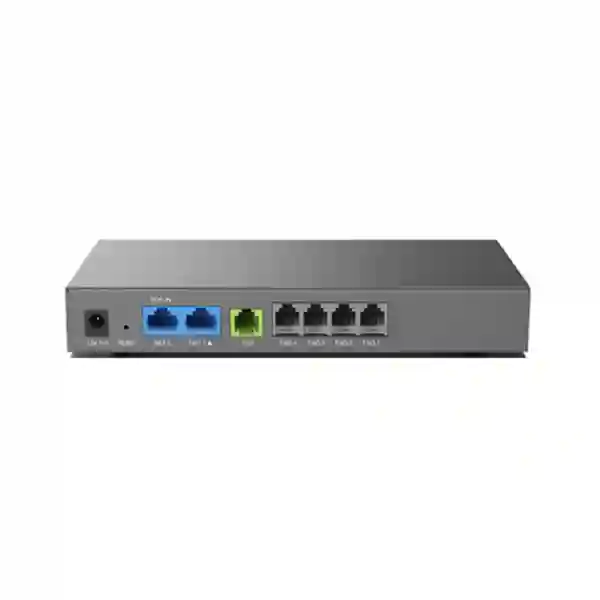
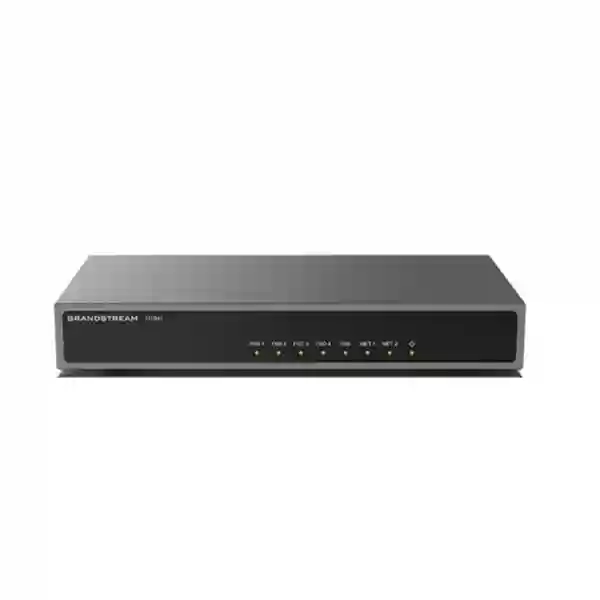
The Grandstream HT841 is an analog FXO gateway designed for organizations that still depend on conventional PSTN lines but want those lines to work with a modern SIP or IP PBX environment. It provides four RJ11 FXO ports for PSTN connectivity and one RJ11 FXS port, making it suitable for branch offices, small and mid-sized businesses, hospitality sites, remote locations, legacy PBX migration projects, and hybrid telephony deployments where analog carrier services cannot be removed immediately. Instead of replacing every existing telephone service at once, the HT841 creates a practical bridge between traditional lines and an IP-based communications platform.
For buyers in Dubai, Abu Dhabi, Sharjah and the wider UAE, the most important question is usually not whether an FXO gateway has a long feature list. The real question is whether it can reliably present existing PSTN lines to the chosen SIP platform, preserve required caller-ID and disconnect behavior, support the required routing logic, and remain manageable after installation. The HT841 addresses those requirements with SIP support, TLS/SRTP security, T.38 fax, automated provisioning, VLAN and QoS capabilities, SIP-server failover, PoE-PD support, and lifeline behavior for the FXS-to-FXO path during a power outage. Compatibility and line behavior should still be confirmed against the carrier, PBX, and deployment design before ordering.
Connect up to four analog PSTN lines to a SIP/IP telephony environment.
Provides an analog station interface and supports lifeline relay to an FXO port during power loss.
Two 10/100/1000 Mbps Ethernet ports; one supports 802.3af PoE-PD according to Grandstream’s datasheet.
Convert conventional analog trunk calls into SIP/RTP calls and route SIP traffic back to PSTN lines.
Where the HT841 fits in a real business telephone system
The HT841 is not an eight-port ATA and it is not intended to turn a group of analog desk phones into SIP extensions. Its main value is the FXO side: bringing carrier-provided analog lines, PSTN trunks, or analog PBX trunk interfaces into an IP communications design. This distinction matters because buyers sometimes confuse FXS and FXO products. An FXS interface supplies an analog station service for a telephone or fax device. An FXO interface receives service from the PSTN or another analog FXS source. With four FXO ports, the HT841 is primarily a trunk-side migration and integration gateway.
| Customer requirement | Relevant HT841 capability | Practical outcome | Planning point |
|---|---|---|---|
| Keep existing analog carrier lines while moving users to an IP PBX | Four FXO ports with SIP support | Phased migration instead of a forced cutover | Confirm carrier signaling, caller-ID and disconnect supervision |
| Route inbound PSTN calls to IVR, ring groups or SIP extensions | PSTN-to-SIP conversion with PBX routing | Traditional lines can participate in modern call flows | PBX dial plans and inbound destinations must be configured correctly |
| Use analog lines for outbound fallback or selected call routes | SIP-to-FXO routing and multiple SIP profiles | Preserve PSTN access for business continuity or routing policy | Define trunk selection, digit manipulation and failover behavior in the PBX |
| Support fax traffic over an IP path | T.38 Group 3 fax relay with G.711 pass-through fallback | Improved options for fax continuity in hybrid networks | End-to-end fax behavior depends on carrier, SIP platform and network conditions |
| Reduce separate power adapters in a structured network design | 802.3af PoE-PD support on one Ethernet port | Flexible installation near network and analog termination points | Confirm PoE switch budget and actual cabling topology |
How PSTN and SIP calls move through the HT841
A useful way to understand the HT841 is to follow the call path. For an incoming PSTN call, the carrier line reaches one of the four FXO ports. The gateway detects the analog signaling, applies its configured caller-ID and line settings, and then creates a SIP call toward the configured IP PBX or SIP server. The PBX can then process that call like another inbound trunk: it may send the caller to an IVR, receptionist, ring group, queue, extension, or time condition. This allows businesses to keep familiar PSTN numbers or analog line arrangements while gaining IP-PBX call control.
For an outbound call, the process is reversed. A SIP server or PBX sends a call toward the HT841 according to its routing plan. The gateway selects the appropriate FXO channel and places the call on the connected analog line. This design is useful when a company has moved its extensions to IP phones but still needs analog trunks for a transitional period, specific destinations, local carrier requirements, or a fallback route. The actual dial plan remains an engineering decision: organizations should define prefixes, emergency routing, least-cost routing rules, outbound permissions, busy behavior, and overflow logic before deployment.
→
HT841 FXO
→
SIP / RTP
→
IP PBX / SIP Server
→
Extensions / IVR / Queue
Verified Grandstream HT841 technical specifications
The following specification summary is based on Grandstream’s HT841/HT881 product documentation. It is intentionally limited to verifiable technical information and does not include unconfirmed stock, pricing, warranty, regional certification availability, or partner-status claims.
| Product type | Analog FXO VoIP gateway |
|---|---|
| FXO interfaces | 4 × RJ11 FXO PSTN line ports |
| FXS interface | 1 × RJ11 FXS port with lifeline support |
| SIP profiles | Grandstream product material lists support for 3 SIP profiles through the FXS/FXO gateway design |
| Ethernet | 2 × 10/100/1000 Mbps RJ45 ports; datasheet notes up to 1000 Mbps in bridge mode and up to 100 Mbps in NAT mode |
| PoE | 802.3af PoE-PD support on one RJ45 port |
| Voice codecs | G.711, G.723.1, G.729, G.726-32, iLBC and Opus, with dynamic jitter buffer and advanced line echo cancellation |
| Fax | T.38 Group 3 fax relay up to 14.4 kbps with automatic G.711 fax pass-through option |
| Caller ID | Bellcore Type 1 & 2, ETSI, BT, NTT and DTMF-based caller-ID formats |
| Disconnect methods | Busy tone, polarity reversal/wink and loop current |
| DTMF | In-audio, RFC2833 and/or SIP INFO |
| QoS / VLAN | 802.1Q VLAN, 802.1p plus Layer 3 ToS/DiffServ/MPLS and traffic shaping support |
| Security | SRTP for media, TLS/SIPS/HTTPS for control, secure provisioning and AES encryption capabilities |
| Provisioning | HTTP, HTTPS, TFTP, SSH, TR-069 and automated provisioning options |
| SIP resilience | Failover SIP server capability |
| Power | PoE input 48 V / 0.5 A or DC input 12 V / 1 A |
| Operating environment | 0°C to 40°C operating; -10°C to 60°C storage; 10–90% non-condensing humidity |
| Dimensions / weight | 190 × 100 × 28 mm; 0.46 kg |
| Compliance listed by manufacturer | FCC / CE / RCM / IC / UKCA |
Why four FXO ports can be the right capacity
Four analog trunks are common in sites that need more than a single emergency or fallback line but do not justify a larger eight-port gateway. A branch office might have several legacy PSTN numbers that must remain reachable while extension users move to SIP. A small hotel or clinic may have a few analog carrier lines tied to existing published numbers. A warehouse or remote location may keep analog access for resilience while adopting centralized IP telephony. In these scenarios, four FXO channels provide enough capacity without moving immediately to a higher port-count device.
Capacity planning should be based on simultaneous external call requirements, not just the number of telephone numbers. If a site regularly needs more than four concurrent PSTN calls, requires dedicated lines for fax or alarm-related applications, or expects near-term growth, an eight-FXO design such as the HT881 may be more suitable. Conversely, a site that only needs one FXO line may be better served by a smaller hybrid ATA depending on the exact call-flow requirement.
FXO and FXS: the buying distinction that matters
FXO and FXS are complementary analog interfaces. The carrier or PBX-side station service normally presents FXS, while the gateway or telephone-side interface that receives that service is FXO. The HT841 therefore uses its four FXO ports to connect to PSTN lines or compatible analog trunk sources. Its single FXS port serves a different purpose and includes lifeline behavior.
This is why the HT841 should not be selected merely because an organization has four analog phones. Four analog telephones normally require four FXS ports, not four FXO ports. Before purchasing, identify exactly what is being connected on each side: carrier PSTN line, PBX analog trunk, analog handset, fax machine, SIP trunk, SIP extension, or IP PBX. Correct interface mapping avoids one of the most common mistakes in analog-to-VoIP projects.
Deployment scenarios for the Grandstream HT841
1. Branch office retaining local PSTN lines
A company may centralize its IP PBX at headquarters or in a data center while a branch retains locally terminated analog lines. The HT841 can bridge those local lines into the IP communications environment. Incoming PSTN calls can reach centralized extensions, and selected outbound calls can use the branch’s local PSTN lines. This can reduce disruption during migration and preserve locally published numbers. The WAN design must still account for SIP reachability, NAT, firewall policy, QoS and outage behavior.
2. Legacy PBX coexistence during phased migration
Not every organization can replace a legacy analog or digital PBX in one maintenance window. During a phased migration, the HT841 can be used where FXO connectivity is required to exchange calls between a PSTN or compatible analog source and the new SIP platform. The exact topology depends on the interfaces available on the legacy system. A site survey should identify whether the existing PBX exposes analog station ports, analog trunks, PRI/BRI, or another interface before assuming an FXO gateway is the correct bridge.
3. Hospitality, clinics, schools and service organizations
Organizations in these sectors often retain long-established telephone numbers or analog carrier services while modernizing internal extensions. The HT841 can help present those external lines to an IP PBX so reception, departments, on-call staff or service desks can continue handling calls through new SIP endpoints. For critical environments, call-routing documentation should include what happens when the PBX, network, Internet service or gateway power is unavailable.
4. PSTN fallback alongside SIP trunks
A business may use SIP trunks as its primary external service but keep analog PSTN lines for selected fallback paths, legacy numbers or special routing. The HT841 can make those lines available to the IP PBX so administrators can define backup routes. This does not automatically create total business continuity: the PBX, switches, gateway, UPS, carrier service and routing rules must all be designed together. Still, the device can form a useful component in a layered telephony resilience plan.
IP PBX integration and call-routing considerations
Grandstream positions the HT841 for interoperability with SIP-based environments, including its own UCM family. In practice, an FXO gateway project should begin with a clear call-routing document. Define which PSTN lines are mapped to which inbound destinations, how outbound access is selected, what digits are sent to the PSTN, whether calls are permitted by extension or department, and how busy or unavailable trunks should overflow. This planning is especially important when multiple branches, SIP trunks and PSTN backup paths coexist.
The gateway can be configured with SIP registration or direct SIP/IP routing approaches depending on the platform and design. Grandstream documentation describes deployments with SIP accounts as well as scenarios where calls are sent directly to the gateway’s IP address. The correct choice depends on the PBX, security model, routing policy and supportability. Registered trunks are familiar in many business systems, while direct IP arrangements can be useful in controlled networks. Either approach should be protected with appropriate network access controls.
For a Grandstream UCM deployment, zero-configuration capabilities can simplify supported provisioning workflows, but administrators should still validate FXO line parameters. Analog line behavior varies by carrier and country. Caller-ID format, impedance, ring characteristics, disconnect detection and gain levels can affect user experience. The gateway offers several caller-ID formats and disconnect methods, which gives an installer useful flexibility, but values should be tuned to the actual circuit rather than copied blindly from another site.
Security
The HT841 supports SRTP for media and TLS/SIPS/HTTPS for control and administration. Secure provisioning and AES-encryption features further support managed deployments. Security should also include restricted management access, strong credentials, firewall policy, firmware maintenance and segmentation appropriate to the organization’s risk model.
QoS and VLAN
The gateway supports 802.1Q VLAN and QoS mechanisms including 802.1p and Layer 3 traffic marking. These features help fit the HT841 into managed voice networks where SIP and RTP traffic must receive predictable treatment, although end-to-end QoS requires configuration across switches, routers and WAN services.
Provisioning and operations
Grandstream supports automated provisioning methods including TR-069 and secure web-based mechanisms. For multi-site rollouts, standardized configuration, version control, documented line settings and monitoring are more important than one-time installation. A repeatable template reduces configuration drift between branches.
Lifeline support: useful, but understand exactly what it does
One of the HT841’s practical features is lifeline support. Grandstream states that the FXS port can be hard-relayed to an FXO port in the event of a power outage. This can allow an analog telephone connected to the FXS interface to access an analog line through the relay path when the gateway is not powered. For sites that want a simple local analog fallback, this is valuable because it does not rely on SIP registration or the IP network during the power-loss condition.
Lifeline behavior should not be described as complete disaster recovery. It is a specific physical relay function between the FXS and FXO interfaces. It does not keep IP phones, switches, PBX servers or WAN links operating. If the organization requires broader telephony continuity, consider UPS coverage, redundant network paths, alternate SIP trunks, PSTN backup routes, documented emergency calling and tested recovery procedures. The HT841 can participate in that design, but the overall resilience comes from the architecture.
Fax, caller ID and analog-line behavior
Analog integration is often considered simple until fax and line supervision are introduced. The HT841 supports T.38 fax relay and G.711 fax pass-through, providing two common methods for carrying fax traffic in VoIP environments. Whether a particular fax workflow is reliable depends on the full path, including the analog line, gateway, SIP platform, codec negotiation, packet loss and remote endpoint. For business-critical faxing, the deployment should be tested with the actual sending and receiving destinations.
Caller-ID support includes Bellcore Type 1 and Type 2, ETSI, BT, NTT and DTMF-based formats. This breadth is helpful because analog caller-ID signaling differs across carriers and regions. Administrators should select the correct format for the connected line rather than assuming the default will always work. Likewise, disconnect supervision can use busy tone detection, polarity reversal or wink, and loop-current methods. Correct disconnect detection prevents channels from remaining seized after callers hang up.
These settings are among the reasons professional configuration matters for FXO projects. A gateway can be correctly registered to a SIP server and still deliver poor operational results if line-specific parameters are wrong. During commissioning, test inbound caller ID, outbound dialing, answer supervision, hang-up detection, busy conditions, no-answer behavior, DTMF through IVRs, fax if required, and call recovery after a network or power event.
HT841 vs HT881: which model should you choose?
Choose based on required FXO port count and expected concurrent PSTN usage. Buying an eight-port model for a four-line site can provide growth room, but it may also be unnecessary. Conversely, selecting four ports when the site expects five or more concurrent analog trunks creates an immediate capacity constraint. Confirm current line count, call concurrency, future expansion and any dedicated analog services before deciding.
Network and installation planning checklist
A successful HT841 deployment starts before the device is connected. The gateway sits at the boundary between two different technologies, so both sides must be understood. On the analog side, identify the exact PSTN circuits and their electrical/signaling behavior. On the IP side, identify the SIP server, VLAN, IP addressing, firewall policy, QoS design, provisioning method and management access. The following checklist is useful for project scoping:
- Confirm the number of active PSTN lines and the expected maximum simultaneous calls.
- Verify that the required connection is FXO, not FXS, BRI, PRI, E1, GSM/LTE or another interface type.
- Document all inbound telephone numbers and their required PBX destinations.
- Define outbound routing rules, permissions, prefixes and fallback behavior.
- Confirm caller-ID format and disconnect supervision expected by the carrier.
- Decide whether the deployment uses SIP registration, direct IP routing, or another supported PBX method.
- Plan a voice VLAN and QoS treatment if the network uses segmentation.
- Confirm PoE availability if the gateway will be powered over Ethernet, including switch power budget.
- Restrict management access and use secure protocols where supported.
- Test fax, DTMF and IVR interaction if these functions are part of the business requirement.
- Test power-loss behavior and lifeline operation if analog fallback is part of continuity planning.
- Record the final configuration, firmware level, line mapping and PBX routes for future support.
Dubai and UAE deployment considerations
In Dubai and the wider UAE, FXO gateways are often required during telephone-system upgrades where a business has not fully moved to SIP trunks or where particular analog lines must remain in service. Offices in Deira, Bur Dubai, JLT, Business Bay and other commercial areas may operate mixed estates that include older PBX equipment, published PSTN numbers, analog fax usage and new IP phones. The HT841 can support a staged transition when four FXO channels are sufficient, but the deployment should be designed around the actual carrier service rather than a generic template.
For Abu Dhabi organizations, common project drivers include branch modernization, multi-site PBX consolidation and preserving local PSTN access while centralizing call control. In Sharjah and Ajman, small and medium businesses frequently need a practical migration path that does not require replacing every external line immediately. In each case, the value of the HT841 is the same: it provides a controlled analog-to-SIP boundary. The configuration, however, may differ by carrier presentation, PBX platform, network topology and business call flow.
Fourteck can assist with requirement assessment, model selection, IP PBX integration planning, line mapping, network readiness and deployment guidance for customers evaluating Grandstream FXO gateways in the UAE. Availability, lead time and commercial terms should be confirmed at quotation stage rather than assumed from website content.
GCC and Africa project relevance
The same hybrid telephony requirement appears across GCC and African markets: organizations adopt SIP or IP PBX platforms while retaining analog PSTN infrastructure for some sites. A four-port FXO gateway can be useful for distributed branches, hotels, schools, clinics, logistics sites and offices that need to preserve local analog lines. For projects in Kuwait, Oman, Uganda, Kenya, Tanzania, Ghana and Nigeria, selection should still be based on the local line characteristics, regulatory environment, carrier behavior and IP-PBX design.
Cross-border procurement also makes documentation important. Project teams should identify the exact model, required power method, regional compliance expectations, shipment destination, quantity, deployment schedule and PBX platform before requesting a quotation. Avoid assuming that one configuration can be copied to every country. Caller-ID standards, analog supervision and network policies can differ even when the hardware model is the same.
Who should choose the HT841 — and who should look at another model?
HT841 is a strong fit when
- You need to connect up to four analog PSTN lines to a SIP/IP PBX.
- You are moving from legacy telephony to IP in phases.
- You want PSTN fallback routes available to an IP PBX.
- You need T.38 fax support in the gateway path.
- You value PoE-PD installation flexibility.
- You require SIP security and managed provisioning features.
Consider another design when
- You need more than four FXO channels; evaluate a higher port-count gateway such as the HT881.
- Your primary requirement is connecting several analog phones; you likely need multiple FXS ports instead.
- Your carrier handoff is PRI, BRI, E1, GSM/LTE or SIP rather than analog PSTN.
- You require a gateway for a specialized analog device whose signaling has not been validated.
- Your project depends on a specific PBX feature that has not yet been compatibility-tested.
Practical commissioning sequence
- Document the lines. Label each PSTN circuit and record its telephone number, caller-ID behavior and intended business use.
- Prepare the IP network. Assign the required addressing, VLAN, DNS, NTP, gateway and management-access controls.
- Configure SIP connectivity. Add the required SIP server, account or direct-IP routing information according to the PBX design.
- Tune FXO parameters. Apply carrier-appropriate caller-ID, disconnect and tone settings instead of relying on assumptions.
- Build inbound routes. Confirm each analog line reaches the correct IVR, ring group, queue, extension or other PBX destination.
- Build outbound routes. Define which users can access the PSTN lines and how the gateway selects channels.
- Test both directions. Make and receive calls on every connected FXO port and verify caller ID, DTMF and hang-up behavior.
- Test exception states. Check busy lines, no answer, PBX loss, SIP-server failover, network interruption and power-loss lifeline behavior where required.
- Record the final state. Save configuration details, firmware information, port maps and support notes for handover.
Frequently asked questions about Grandstream HT841
What is the Grandstream HT841?
The HT841 is an analog FXO VoIP gateway that bridges traditional PSTN lines with SIP-based telephone systems. It has four RJ11 FXO ports for PSTN lines and one RJ11 FXS port, allowing businesses to integrate analog trunk services with an IP PBX or SIP server.
How many FXO ports does the HT841 have?
It has four RJ11 FXO ports. This makes it appropriate for sites that need to connect up to four analog PSTN lines to an IP communications environment.
Does the HT841 have an FXS port?
Yes. It includes one RJ11 FXS port. Grandstream also provides lifeline behavior in which the FXS port can be hard-relayed to an FXO port during a power outage.
Can the HT841 connect PSTN lines to an IP PBX?
Yes. That is one of its primary use cases. Incoming analog PSTN calls can be converted into SIP calls for an IP PBX, while outbound SIP calls can be routed through the FXO ports to the PSTN. PBX routing and line parameters must be configured for the deployment.
Does the HT841 support fax?
Yes. Grandstream lists T.38 Group 3 fax relay and G.711 fax pass-through support. Fax reliability should be validated across the complete carrier and SIP path because network conditions and remote endpoints can affect results.
Does the HT841 support PoE?
Yes. Grandstream’s datasheet specifies 802.3af PoE-PD support on one of the Ethernet interfaces, allowing the gateway to receive power from a compatible PoE source.
What security features are available?
The HT841 supports SRTP for media and TLS/SIPS/HTTPS for secure control and administration, along with secure provisioning and AES-encryption capabilities. A secure deployment should also use strong credentials, restricted management access and appropriate firewall rules.
What is the difference between HT841 and HT881?
The main model difference is FXO capacity. The HT841 provides four FXO ports, while the HT881 provides eight. Both belong to the same gateway family, so the decision is primarily driven by the number of analog trunk interfaces required.
Can the HT841 be used with Grandstream UCM IP PBX systems?
Yes. Grandstream documentation describes use with its UCM series and zero-configuration provisioning support. The final integration should still be tested for the site’s call routing, analog line parameters, security policy and firmware combination.
Is the HT841 suitable for four analog telephones?
Not as a four-phone FXS adapter. Its four main analog ports are FXO ports for PSTN or compatible analog trunk services. If the requirement is to connect four analog telephones as extensions, a multi-FXS gateway or ATA is generally the appropriate product category.
Can the HT841 provide complete telephone service during a power outage?
It provides a specific lifeline relay function between the FXS and an FXO path during power loss. That is useful for an analog fallback telephone, but it does not keep IP phones, switches, PBX servers or WAN services powered. Broader continuity requires a complete resilience design.
What should I confirm before ordering an HT841?
Confirm that you actually need FXO interfaces, the number of PSTN lines, expected concurrent calls, caller-ID and disconnect behavior, the IP PBX platform, SIP routing method, PoE requirement, fax requirement, VLAN/QoS design and any country- or carrier-specific line characteristics. Fourteck can help review these requirements before quotation.
Plan your Grandstream HT841 deployment with Fourteck
If your requirement is to integrate up to four analog PSTN lines with a SIP or IP PBX, the HT841 is a focused gateway option worth evaluating. Fourteck can assist with model confirmation, PBX compatibility review, PSTN line mapping, network readiness, routing design and deployment planning for UAE, GCC and selected Africa projects. For an accurate quotation, share the number of analog lines, PBX model, site location, required quantity and any fax or failover requirements. Stock, lead time and pricing should be confirmed at the time of enquiry.

Reviews
There are no reviews yet.